
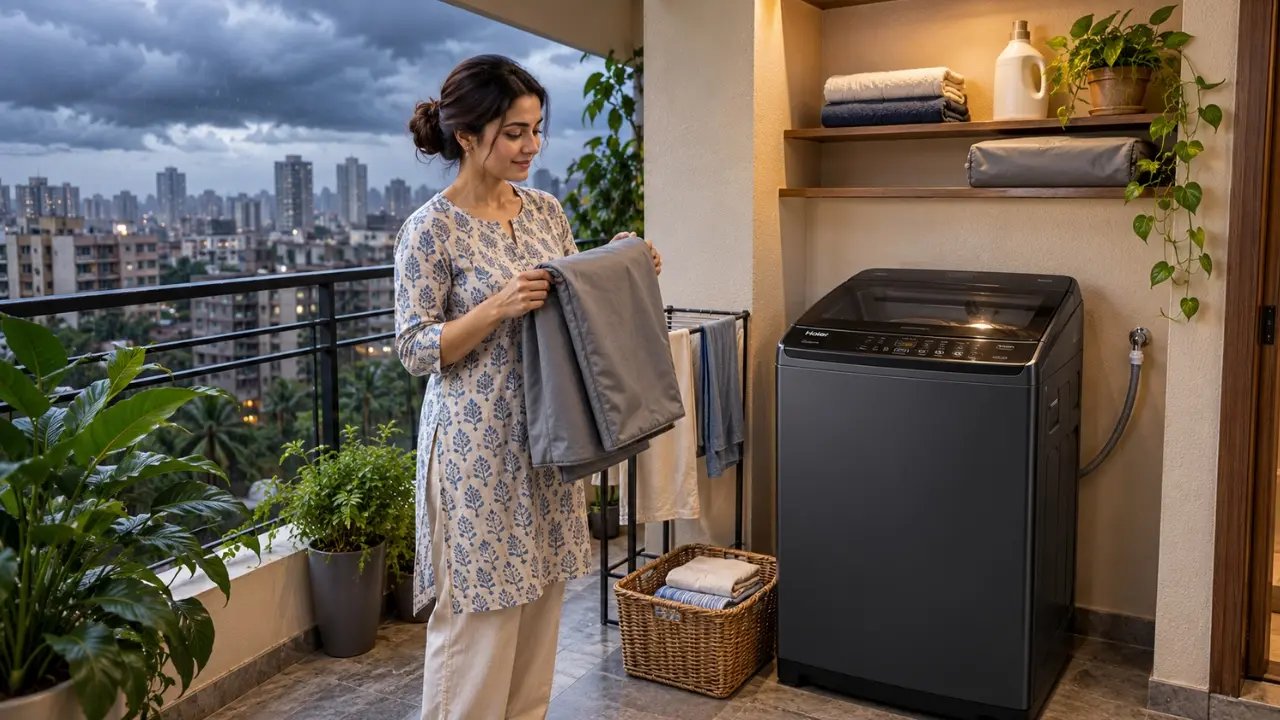

A washing machine in an open balcony has a different life from one in a dry utility room. One is exposed to dust, occasional rain and the hot afternoon sun. The other may need just a light dusting every couple of days.
However, many homes purchase a washing machine cover without taking into account where the washing machine is installed and whether the cover will interfere with its operation.
So, do you need to cover your washing machine?
Not always. When not in use, a well-fitted cover can help protect the appliance from dust and everyday splashes. However, inappropriate material or a poorly designed cover can trap moisture, prevent adequate ventilation or make regular maintenance difficult.
It’s important to know what a cover can genuinely protect and when it may be advisable to leave the machine uncovered.
Does Every Washing Machine Need a Cover?
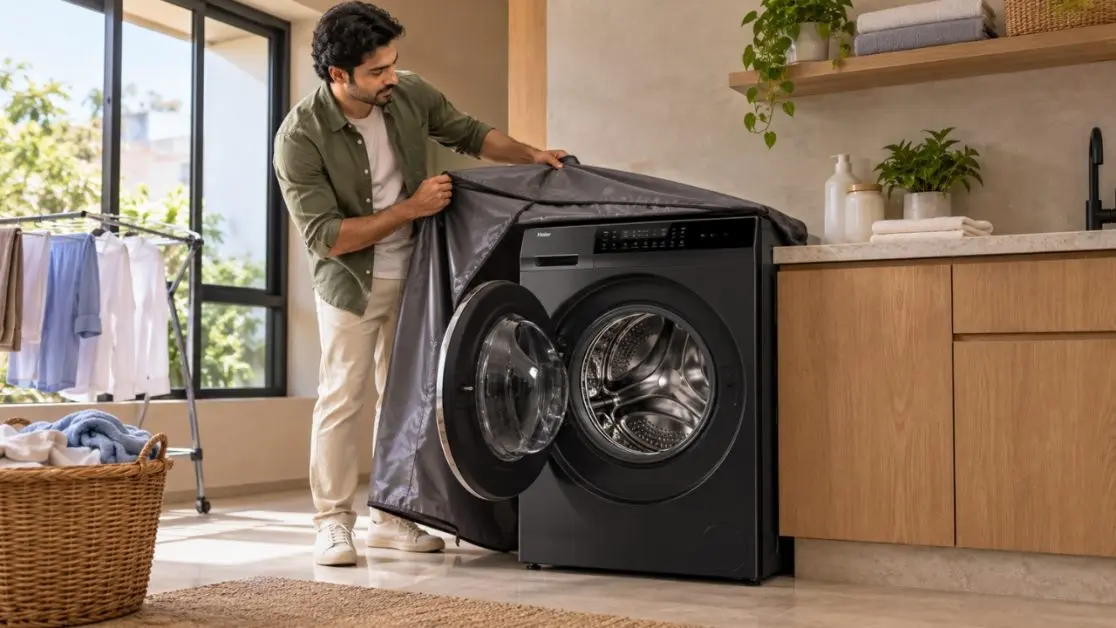
A washing machine cover is a protective accessory, not an essential part of the washing machine.
It can only be used effectively if the machine is installed in the right environment.
A washing machine placed in a dry, enclosed room, for example, might not require additional protection. Regular cleaning and proper maintenance could be sufficient.
However, in homes where washing machines are located in semi-open utility areas, a removable cover may be helpful.
When Does a Washing Machine Cover Make Sense?
Consider using one if:
- A lot of dust accumulates around your washing machine.
- The appliance is located in a sheltered balcony or utility space.
- The exterior is affected by nearby cooking or construction activities.
- You prefer to clean the machine’s exterior panels less often.
- The appliance goes unused for long periods.
However, keep in mind that using a fabric cover is no substitute for appropriate installation conditions.
If your machine is directly exposed to rain, standing water or harsh weather, moving it to a sheltered area is more important than buying a waterproof cover.
Why Use a Washing Machine Cover?
For everyday exterior protection, a cover can be helpful, particularly in Indian homes where laundry spaces are sometimes combined with balconies or storage areas.
1. Helps Keep Dust Away
Dust settles quickly on appliances, particularly near windows, roads and construction sites.
A cover creates a removable barrier over the exterior of the washing machine. Instead of repeatedly wiping the entire control panel and cabinet, you can clean the cover when needed.
This can be handy if the appliance is not used daily.
2. Helps Protect Against Minor Surface Splashes
Marks may appear on the exterior panels of an appliance as a result of accidental splashes or household residue.
Depending on the material used, a cover can provide some protection against these everyday situations.
It should never be used as a waterproof enclosure capable of protecting electrical components from rain or leaks.
3. Protects the Exterior During Storage
In some households, washing machines are not used as often, especially in second homes or properties that are occupied infrequently.
Provided the appliance has been properly dried and prepared for storage, a breathable dust cover can help keep the exterior clean during these periods.
4. Maintains a Tidy Laundry Area
Practicality isn’t the only consideration.
When the washing machine is in a corner and the room is full of household storage, a neatly fitted cover can help give the space a more organised appearance.
However, appearance should come second to fit, accessibility and ventilation.
The Disadvantages People Often Overlook
A washing machine cover may look harmless, but it can cause unnecessary problems if left on all the time.
Trapped Moisture Can Become a Problem
Imagine that you have just completed a wash cycle, closed the machine door and immediately covered the entire appliance with a heavy plastic cover.
Moisture around the drum or door seal may take longer to dissipate.
Excessive moisture over time can lead to unpleasant odours and mould growth.
The safer approach is to let the washing machine dry and ventilate according to its user manual before covering it.
Poorly Fitted Covers Can Restrict Airflow
Washing machines require appropriate clearance around the cabinet for proper operation and maintenance.
If there is inadequate ventilation, covers might block airflow or get in the way of hoses and electrical connections.
Do not operate a washing machine with a cover in place unless the manufacturer explicitly permits it.
Covers Can Make Maintenance Less Convenient
If the cover has to be fully removed every time you need to access the detergent drawer or clean the appliance, it can become a hassle.
When something gets in the way, people tend to delay it.
Regular cleaning is more important than keeping the appliance permanently covered.
Which Washing Machine Cover Material Should You Choose?
The choice of material is important, since not all fabrics perform well in a laundry environment.
These are the most popular options to consider.
Polyester Covers
Household appliance covers are commonly made from polyester because it is lightweight and relatively easy to maintain.
Depending on the fabric construction, it can provide useful protection against dust and minor surface splashes.
Look for:
- Washable fabric with durable stitching
- A design that is easy to remove
- Appropriate clearances for the machine’s layout
- Enough space to prevent the cover from pressing against the appliance
Polyester can be a convenient everyday option in dry, sheltered spaces.
Cotton Covers
Cotton is generally breathable, making it suitable for dust protection in dry indoor environments.
However, cotton absorbs moisture and can become damp in humid conditions.
This is worth considering for homes in coastal cities such as Mumbai, Chennai or Kochi, particularly during the monsoon season.
If you choose cotton, the cover should be washed and dried thoroughly whenever it becomes damp.
Plastic-Based and PVC Covers
PVC-coated materials are frequently used for their water-resistant properties.
They can protect the exterior of an appliance from accidental splashes, but may not be very breathable.
Do not tightly wrap a damp washing machine in plastic.
Furthermore, a PVC cover does not make an outdoor installation safe.
Quilted or Padded Covers
Padded covers may offer an additional layer of physical protection against contact with surrounding objects.
Thicker materials can, however, retain moisture and may not be suitable for every application.
Choose them only if their fit and intended use are compatible with the appliance manufacturer’s recommendations.
Does Cover Design Matter for Front Load vs Top Load Washing Machines?
Absolutely. A cover designed for one type of washing machine may be inconvenient or unsuitable for another.
For Top Load Washing Machines
Top load models require unobstructed access from above.
The Haier 6.5 Kg Ultra Air Fresh Top Load Washing Machine (HWM65-306S8), for example, features a toughened glass lid and Softfall Technology, which allows the lid to close gently.
This convenient access could be affected by an ill-fitting cover.
When selecting a cover for a top load washing machine, make sure that:
- The upper part can be removed completely.
- The lid can be opened easily.
- The control panel remains accessible when needed.
- No fabric obstructs the appliance during operation.
For Front Load Washing Machines
Front load machines have a door that opens at the front, and their design may also include a detergent drawer above the drum.
For instance, the Haier F3 8 Kg Front Load Washing Machine (EFL80-IM12F3BKU1) features a front-loading design and a smart LED display.
The cover should be easy to remove to allow convenient access to the door, detergent drawer and control panel.
Most importantly, front load washing machines need to be cared for after washing, particularly with regard to moisture around the door gasket.
A cover should never prevent the drum and seal area from drying properly.
How to Choose the Right Washing Machine Cover Size
One of the most common mistakes is purchasing a cover based only on the machine’s capacity.
A 6.5 kg washing machine and an 8 kg washing machine do not necessarily have corresponding external dimensions.
Take a look at these Haier models:
| Haier washing machine | Dimensions (W × D × H) |
| Haier Ultra Air Fresh Top Load 6.5 Kg (HWM65-306S8) | 520 × 550 × 950 mm |
| Haier 8 Kg Top Load (HWM80-310BKN) | 520 × 540 × 930 mm |
| Haier 8 Kg Front Load F3 (EFL80-IM12F3BKU1) | 600 × 500 × 850 mm |
The two models with an 8 kg capacity have the same laundry capacity but differ in their external dimensions and loading arrangements.
When buying a cover, measure the actual appliance and take into consideration any installation clearance requirements.
The cover should not fit too tightly against the control panel, door or connections.
A Good Cover Cannot Replace a Good Washing Machine
It’s important to remember why you bought the appliance in the first place.
The main purpose of a washing machine is to clean clothes effectively whilst making laundry easier. A cover is an optional accessory, not an essential component.
That’s why selecting the right washing machine with the right features is more important.
Haier 6.5 Kg Ultra Air Fresh Top Load Washing Machine
The Haier HWM65-306S8 is a compact top load washing machine suitable for households that need to do laundry every day.
Its highlights include:
- Ultra Air Fresh: Designed to help eliminate odours during the washing cycle.
- Oceanus Wave Drum: Uses wave-inspired water movement for thorough yet gentle cleaning.
- Eight wash programmes: Provides options for different laundry requirements.
- Softfall Technology: Helps the lid close gently.
- 5-star energy rating: Makes it easier to identify energy-efficient appliances.
These features cater to actual washing needs, which cannot be addressed by an external cover.
Haier 8 Kg Top Load Washing Machine
The Haier HWM80-310BKN is a good choice for families with larger amounts of laundry to wash.
It comes with an Oceanus Wave Drum, a convenient front control panel and Softfall Technology.
It also features a Magic Filter for capturing lint and other particles, along with a 5-star energy rating.
Its design makes everyday operation convenient, provided the machine is installed and maintained properly.
Haier F3 8 Kg Front Load Washing Machine
If you are considering a front load model, the Haier EFL80-IM12F3BKU1 is another option for laundry care.
It features AI One Touch technology, which automatically selects washing settings according to the fabric type, load and dirt level.
Other highlights include:
- 525 mm Super Drum: Supports effective fabric movement.
- Multiple wash programmes: Includes options such as Quick Wash and Baby Care.
- Eco Wash: Supports water- and energy-conscious washing.
- Smart LED display: Makes it easier to select and monitor programmes.
- Inverter motor and 5-star energy rating: Additional features to consider when choosing a washing machine.
The key difference is that these are built-in washing features. A cover can help keep the exterior cleaner, but it will not improve the machine’s cleaning performance.
How to Maintain Your Washing Machine With or Without a Cover
Even if you don’t use a cover, there are several simple habits that can make appliance care easier.
- Clean the exterior regularly. Use a soft cloth and follow the manufacturer’s cleaning recommendations.
- Allow moisture to escape. After washing, follow the manual’s instructions for ventilating the drum and detergent compartment.
- Keep the surrounding area dry. Fix leaks, wet flooring and inadequate drainage promptly.
- Remove the cover before washing. Avoid blocking ventilation openings and controls.
- Wash the cover separately. There’s no point in having a dusty or damp cover.
- Inspect the installation area. Maintain the clearances specified for your model.
Lastly, don’t use a cover to conceal damaged wiring or an existing leak. These problems must be addressed properly.
Give Your Washing Machine the Care It Actually Needs
A washing machine cover can be helpful, particularly in dusty utility areas. However, it should remain a secondary consideration.
The more important priorities are proper placement, good ventilation, regular cleaning and selecting a suitable appliance for your family’s laundry needs.
Haier India’s washing machine collection includes both front load and top load machines, with features designed for different household requirements, from Oceanus Wave Drum technology to AI-assisted washing.
Visit the Haier India official store to choose a washing machine for your home, and follow the instructions in the user manual for cleaning and installation.
After all, keeping the appliance clean is useful. Choosing one that makes laundry easier every day matters even more.
Frequently Asked Questions
1. Is a washing machine cover necessary?
No. A washing machine cover is optional. It may help reduce dust accumulation when the appliance is not in use, but proper installation, ventilation and maintenance are more important.
2. Can I keep a washing machine cover on while washing clothes?
It is generally safer to remove the cover before operating the machine unless the manufacturer specifically allows its use during operation. Covers may obstruct airflow, controls or moving components.
3. Which material is best for a washing machine cover?
Breathable, washable polyester or cotton can be suitable for dry indoor spaces. The right choice depends on humidity, exposure conditions and compatibility with your washing machine.
4. Can a waterproof cover protect a washing machine on a balcony?
A water-resistant cover may reduce incidental splashes, but it cannot make an unsuitable outdoor installation safe. Protect the appliance from direct rain and standing water, and follow the manufacturer’s installation instructions.
5. Should I cover my washing machine immediately after use?
No. Allow the appliance to dry and ventilate as recommended in its user manual. Covering a damp machine too soon may trap moisture and encourage odours.
6. Do Haier washing machines require a separate cover?
A separate cover is not identified as a required accessory in the supplied specifications for the three Haier models discussed here. Owners should follow their model-specific user manuals for installation, cleaning and any accessory restrictions.