


4K TVs dominate shop shelves in 2026. From 43 inches upward, almost every new model sold is 4K by default and the price gap versus Full HD has narrowed to the point where “just get 4K” seems like a no-brainer.
But there’s a quiet question most buyers don’t ask until later: what if you mostly watch cable TV and standard-definition channels? Does spending extra on 4K actually help? Or does the resolution just sit there, waiting for content that never comes?
This guide answers is a 4K TV worth it honestly including when the extra resolution really matters, and when it genuinely doesn’t.
Is a 4K TV Worth It? (The Short Answer)
For heavy streamers, gamers, and anyone with a 43-inch or larger screen, yes. 4K is worth the step up.
For viewers who stick almost entirely to cable TV and SD channels, the honest answer is: 4K doesn’t help much today, but it future-proofs you for when streaming eventually takes over in your home. The decision depends on your mix.
What 4K Actually Improves
4K (3840 x 2160 pixels) is four times the resolution of Full HD. On a 43-inch or larger screen, that extra pixel count delivers:
- Sharper detail faces, text, fine patterns hold up visibly better
- Better HDR support most 4K TVs also ship with HDR10, HDR10+, or Dolby Vision
- Richer streaming experience Netflix, Prime Video, YouTube, and Disney+ Hotstar all have substantial 4K libraries
- Future-proofing most new content is produced in 4K, including gaming consoles and Blu-ray
The real-world punch depends entirely on what you feed the TV. 4K content on a 4K TV looks noticeably better. SD or HD content on a 4K TV? That’s where it gets more complicated.
The Catch: 4K Only Shines with 4K Content
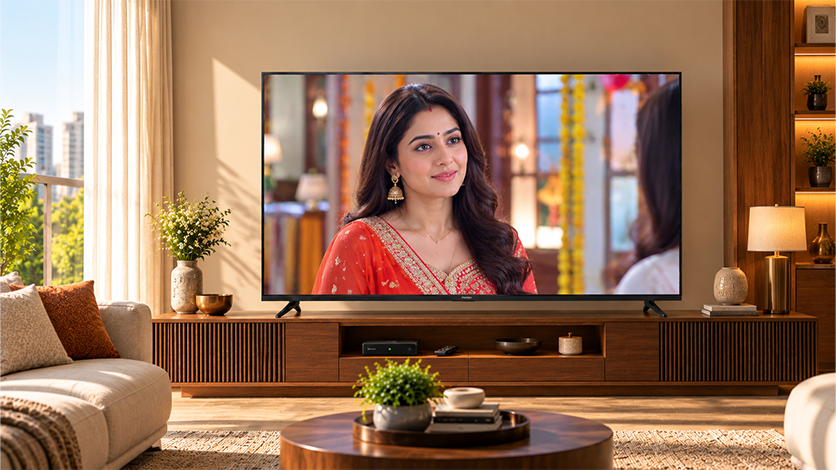
How SD and Cable Channels Look on a 4K TV
Indian cable TV is still largely broadcast in SD (720 x 576) or HD (1280 x 720). On a 4K panel, these channels get stretched to fill the screen and that stretching can emphasise flaws rather than smooth them over.
What this looks like in practice:
- SD channels: often slightly soft, with visible compression on fast-moving content
- HD channels: cleaner than SD, but still not sharp enough to visibly benefit from 4K
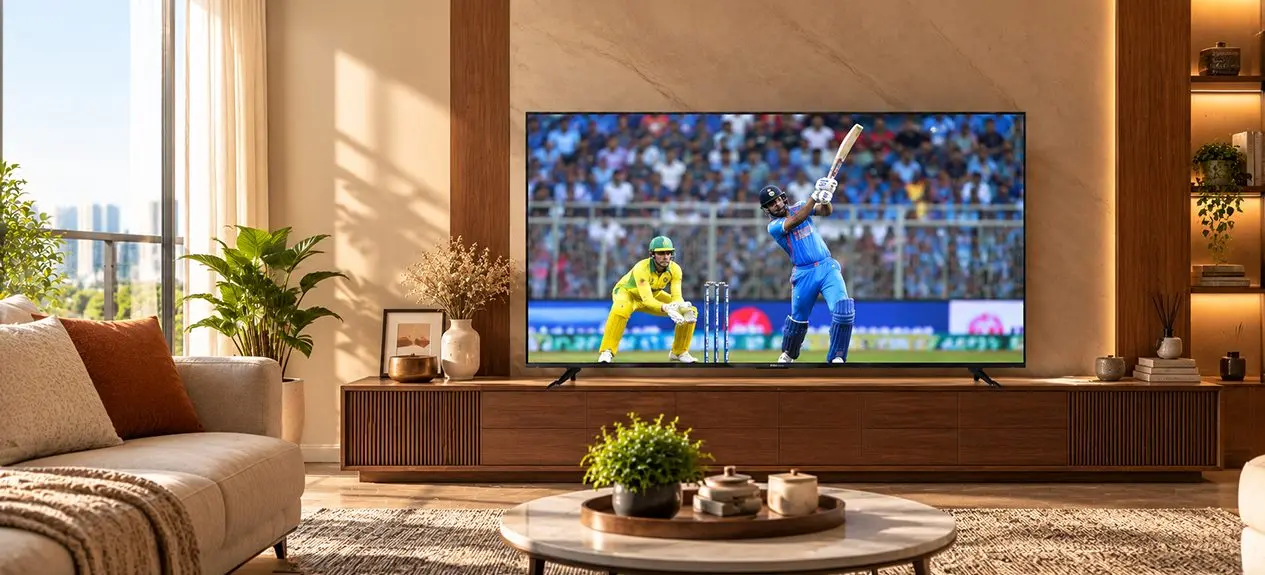
- Live cricket on cable: typically HD at best, sometimes SD on smaller operators
The TV’s 4K panel is doing its best, but it can’t invent detail that was never captured.
Upscaling: What It Can and Can’t Fix
Modern 4K TVs include upscaling the TV takes a lower-resolution signal and intelligently fills in pixels to make it look better on the 4K panel. Good upscaling genuinely helps, but it has limits:
- It can: sharpen edges, reduce noise, improve clarity on HD content
- It can’t: add detail that isn’t in the original signal, make SD look like 4K, or compensate for heavy broadcast compression
A good upscaling chip (common on Haier Google TV models) can make HD cable look respectable, but it won’t match native 4K content.
Do You Mostly Watch Cable and SD? Here’s What to Expect
If 80% of your viewing is cable TV news, soaps, and matches, buying a 4K TV today means:
- You’ll pay 15–30% more than a comparable Full HD model
- Most of your actual viewing won’t look visibly sharper
- The TV will shine the moment you start streaming Netflix, Prime, JioCinema in 4K
That trade-off is worth it if you plan to stream more over the next few years. If you’re genuinely a cable-only household and don’t see that changing, Full HD at 40–43 inches may be the smarter buy today.
When 4K Is Still Worth It (Streaming, Screen Size, Future-Proofing)
Three reasons that still tilt the decision toward 4K even for cable-heavy households:
- Streaming is growing fast JioCinema, Hotstar, Netflix, and YouTube already carry huge 4K libraries. Household habits shift over 2–3 years.
- Screen sizes keep going up if you’re buying 50-inch or larger, Full HD starts to look soft at normal viewing distances
- Price gap has narrowed Haier’s 43-inch 4K A9UG starts at ₹31,990, close enough to Full HD that the premium isn’t huge
Does Screen Size Matter for 4K? (32″ vs 43″ vs 55″)
Yes, significantly:
- 32-inch: 4K doesn’t visibly help at typical viewing distances. Full HD is enough.
- 43-inch: 4K starts earning its keep, especially for streaming. The 4K premium is worth it for most buyers.
- 55-inch and up: 4K is a clear win. Full HD at this size looks visibly soft.
So is 4K resolution good for a 43-inch TV? Yes this is exactly the size where 4K starts delivering a visible benefit, even if cable content doesn’t fully show it off.
4K vs Full HD for a Cable-Heavy Home
A simple comparison for cable-dominant viewers:
| Factor | Full HD TV | 4K TV |
| Cable / SD look | Good | Good (with upscaling) |
| HD streaming | Sharp | Sharp |
| 4K streaming support | No | Yes |
| HDR support | Limited | Standard |
| Price (43-inch) | ₹26,990–30,000 | ₹31,990+ |
| Future-proofing | Low | High |
| Best for | Cable-only, 40–43 inches | Mixed cable + streaming, 43+ inches |
Should You Buy 4K? A Simple Decision Guide
- Buy 4K if: you stream regularly, you’re buying 43 inches or larger, you want HDR content, or you plan to add a gaming console
- Stick with Full HD if: your viewing is 90%+ cable, you’re buying 40–43 inches, and you don’t see streaming growing in your home
- Skip 4K at 32 inches: at that screen size, the resolution doesn’t visibly help
So, is 4K worth buying in India in 2026? For most households, yes the price gap has shrunk, streaming is growing, and 43-inch is now the practical starting size. For stubbornly cable-only homes, Full HD still makes a sensible case.
Explore both Full HD and 4K options in the Haier Google TV lineup to compare feature-by-feature. And is 4K OLED worth it? Only for buyers with a dedicated dim-viewing space and premium HDR streaming otherwise a 4K QLED or Mini LED delivers more practical value.
FAQs
Is a 4K TV worth it if I mostly watch cable and SD channels?
Not primarily for the cable viewing itself SD and HD channels don’t visibly benefit from 4K resolution. But 4K is still worth it if you plan to add streaming apps or if you’re buying 43 inches or larger.
Does SD or cable content look bad on a 4K TV?
Not bad, but not noticeably better either. Modern 4K TVs include upscaling that improves clarity, but they can’t add detail that wasn’t in the original SD or HD signal.
Do I need a 4K TV for a 32-inch screen?
No. At 32 inches and typical viewing distances, 4K isn’t visibly different from Full HD. HD Ready or Full HD panels work well at this size.
Is 4K worth buying in India?
For most households, yes. Streaming is growing, 43-inch is now the standard size, and the price gap over Full HD has narrowed. 4K is the sensible default from 43 inches upward.
Is 4K streaming better than HD?
Yes, visibly. 4K streaming on Netflix, Prime Video, or YouTube delivers noticeably sharper detail than HD, especially on a 43-inch or larger screen.
Does a 4K TV upscale normal channels?
Yes. Modern 4K TVs use upscaling to improve lower-resolution content. It helps most on HD content; SD content shows mild improvement but not dramatic change.
Is 4K worth it for a 43-inch TV?
Yes. 43 inches is the size where 4K starts delivering a visibly sharper picture compared to Full HD, especially for streaming and gaming.