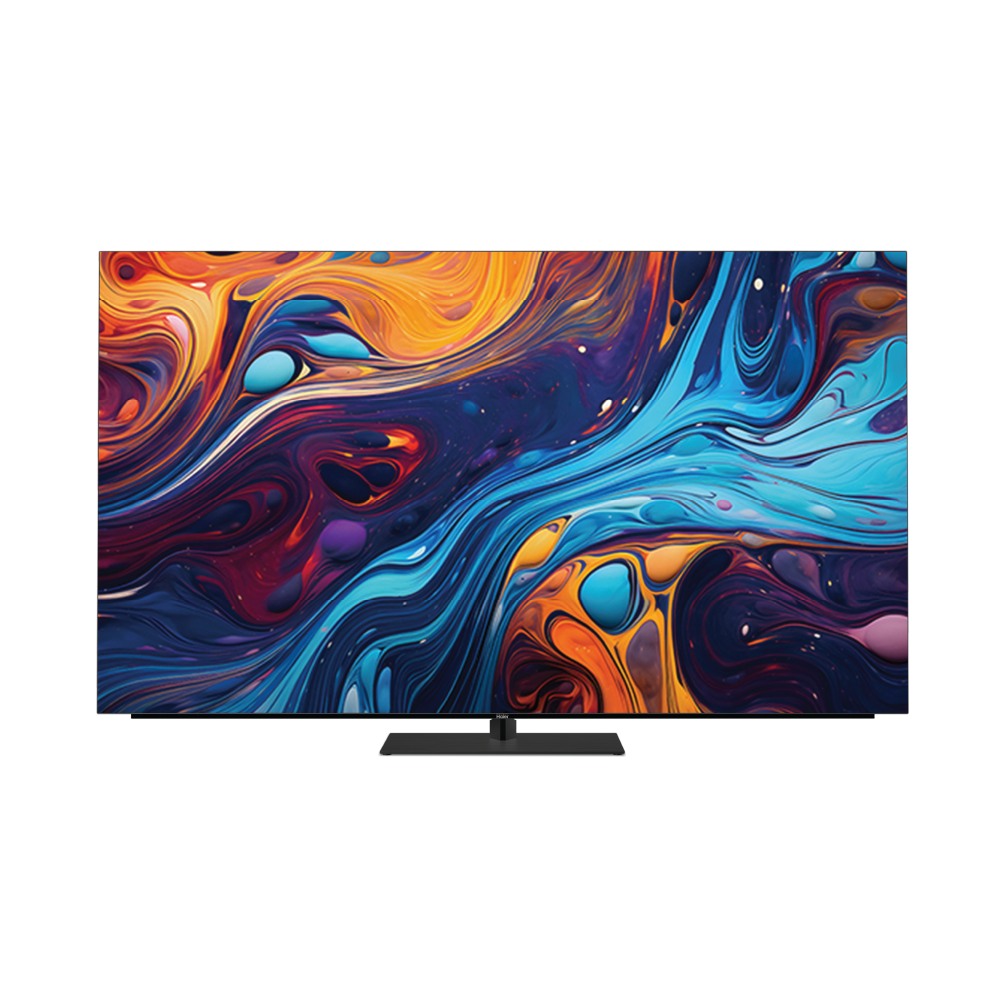
Haier C90 OLED 194cm (77) Google TV | Dolby Vision IQ
₹3,44,990 ₹41,248 Cash back
MRP (Incl. of all taxes) ₹5,50,990Save ₹51,248.

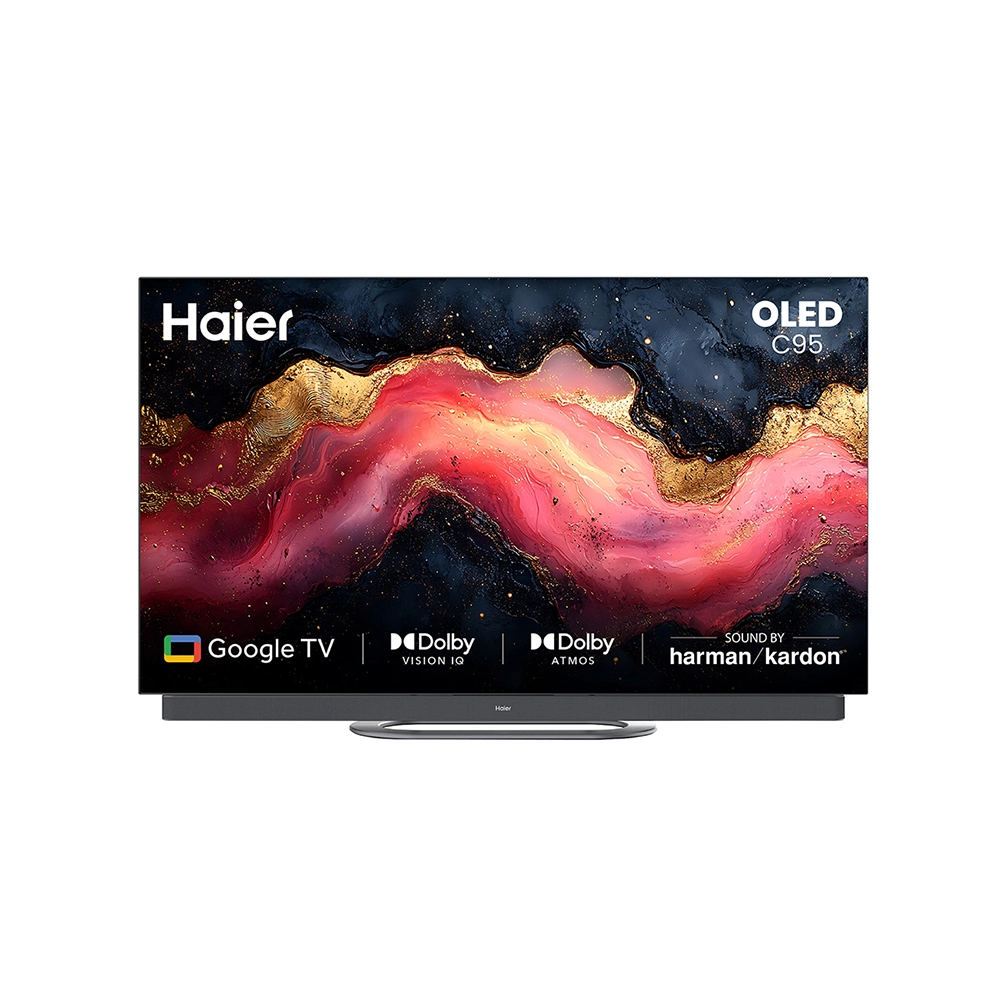
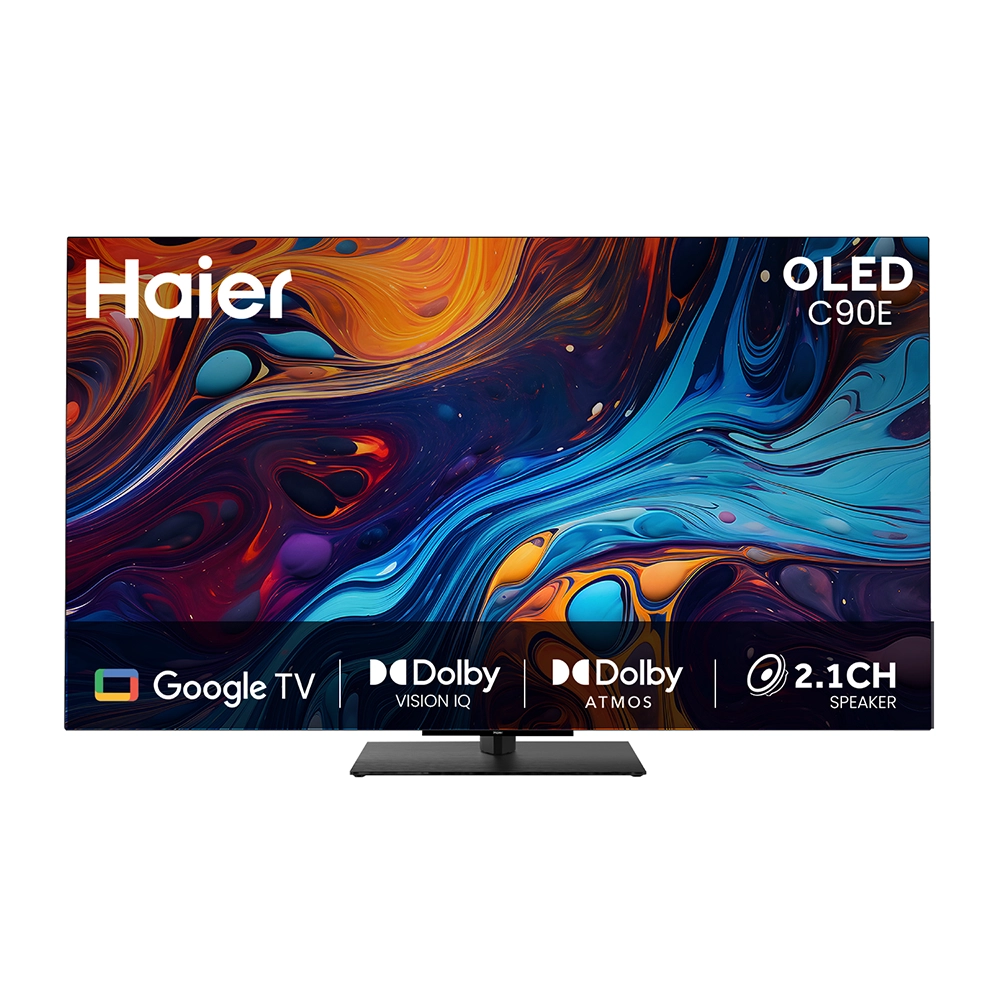
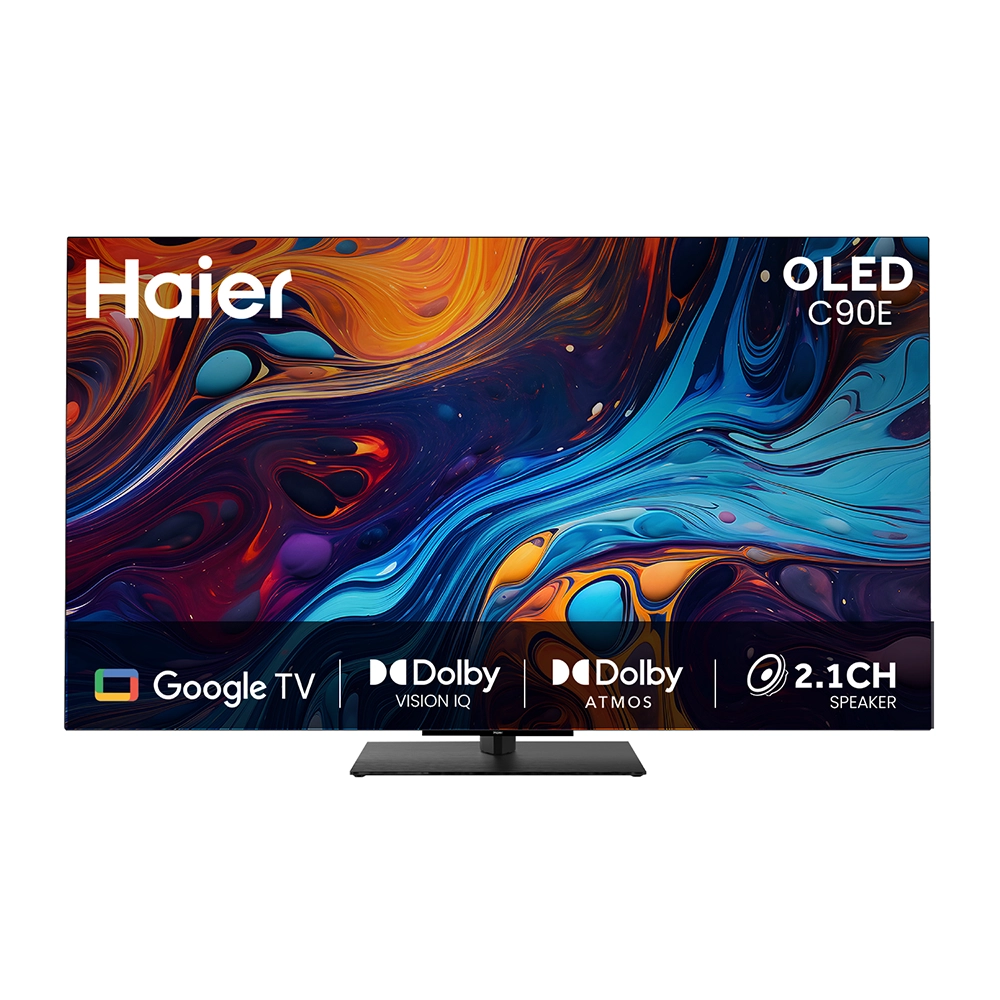
An OLED (Organic Light Emitting Diode) TV uses self-lit pixels rather than a backlight. Each pixel produces its own light and can switch off entirely, which is what gives OLED its perfect blacks and pixel-level contrast.
OLED delivers deeper blacks, better contrast, and wider viewing angles. QLED offers higher peak brightness, which is well-suited to sunlit rooms. The right pick depends on your lighting and viewing habits.
4K is a resolution, and OLED is a panel type, so they aren't directly comparable; most OLED TVs are also 4K. Compared to LED, OLED offers deeper blacks, better contrast, and wider viewing angles.
For movie and streaming enthusiasts, yes. OLED delivers cinematic contrast in dim rooms. For bright, sunlit living rooms, a QLED or Mini-LED may be a better practical choice.
Advantages: true blacks, pixel-level contrast, wider viewing angles, faster response times.
Disadvantages: lower peak brightness than premium QLED and Mini-LED, higher price per inch, and some risk of screen burn-in with static content over years.
In India, 55-inch OLED TVs are priced between ₹1,00,000 and ₹2,00,000, while 65-inch models range from ₹1,50,000 to ₹3,00,000. Haier's C95 OLED 55" is between ₹1,00,000 and ₹1,50,000, and the 65" C95 is between ₹1,50,000 and ₹ 2,00,000.
Home viewing has moved past standard picture quality, and OLED sits at the top of what a modern television can deliver. Instead of relying on a backlight, every pixel produces its own light, which is why blacks look genuinely black, and colours carry a depth that other display technologies struggle to reach.
Haier's OLED TV range is built around that shift. The C90 and C95 series bring cinematic picture quality into Indian homes across OLED 55-inch and OLED 65-inch configurations, with Dolby Vision IQ, high refresh rates, and audio tuned by Harman Kardon. Whether the television anchors a family living room or a dedicated home-theatre setup, the OLED smart TV lineup from Haier is the best choice.
An OLED smart TV works differently from the LED and QLED sets most people are used to. There's no backlight; instead, each pixel is a tiny light source. When a scene needs black, that pixel simply switches off. Nothing dims, nothing bleeds; it just goes dark.
That one design choice changes almost everything about the picture:
Blacks look properly black, not dark grey
Contrast holds up down to individual pixels
Viewing angles stay clean, even from the side
Fast-moving content looks sharper thanks to quicker response times
The OLED vs QLED and OLED vs 4k questions get mixed up more often than they should. 4K is a resolution of 3840 by 2160 pixels. QLED and OLED describe the panel itself, or more precisely, how the light is produced on that panel.
4K: pixel count; standard on almost every panel above 43 inches today
QLED: an LCD panel with a quantum-dot layer, which boosts colour and brightness
OLED: self-lit pixels, no backlight, best-in-class contrast
Most OLED TVs sold today are also 4K, so the technologies work together rather than compete. QLED handles bright, sunlit rooms well thanks to higher peak brightness. OLED delivers its strongest picture in dimmer, curtain-controlled spaces where contrast can breathe.
OLED TV price ranges in India in 2026 depend mostly on screen size, followed by audio and processor specifications. Rough bands to plan around:
55-inch OLED: ₹1,00,000 to ₹2,00,000
65-inch OLED: ₹1,50,000 to ₹3,00,000
77-inch OLED and above: ₹3,00,000 and up
Festive offers, exchange programmes, and no-cost EMI plans can noticeably shift these numbers. The current Haier OLED lineup covers 55-inch and 65-inch options across the C90 and C95 series, and it's worth checking pricing at the time of purchase since these do move.
The best OLED TV for you isn't necessarily the most expensive one on the shelf. What actually matters is room size, seating distance, and whether you can dim the space during peak viewing. Here's how three Haier OLED models compare:
Model | Size | Refresh Rate | HDR | Sound | Price |
Haier C95 OLED (55") | 55" | 144Hz | Dolby Vision IQ, HDR10+ | Harman Kardon | ₹1,29,990 |
Haier C90 OLED (65") | 65" | 120Hz | Dolby Vision IQ | 50W 2.1Ch | ₹1,74,990 |
Haier C95 OLED (65") | 65" | 144Hz | Dolby Vision IQ, HDR10+ | 50W Harman Kardon | ₹1,79,990 |
For a mid-sized bedroom or a compact living room, the 55-inch C95 gets you into premium OLED at the lowest entry point. For a larger living room or a proper home theatre, either 65-inch model delivers more screen presence. The C95 adds a higher refresh rate and richer HDR support if that mix matters to you.
Is OLED worth it for most Indian households? It really comes down to how you watch. If your evenings are movies, series, sports, or premium HDR content in a room you can dim, then yes, the picture quality is on a different level from LED and QLED.
If your TV lives in a bright, sunlit living room and stays on through the day, a high-brightness QLED or Mini-LED may serve you better in day-to-day use. OLED shines the most where you can control the light for at least part of the day.