


A bath towel can take three days to dry during the monsoon months in India from July to September. Clothes may come out of the wash perfectly clean, yet the damp air slows down drying, leaving towels and shirts hanging around for days. A tumble dryer helps by drying laundry indoors, without relying on the weather.
This blog covers the benefits of a tumble dryer for everyday household use, along with a practical question: when do you need a dryer, and when is a balcony rack still enough?
What a Clothes Dryer Actually Does
A clothes dryer releases warm air through a rotating drum. The tumbling keeps fabric loose, so the air reaches every fold and the moisture leaves as vapour. You load wet clothes and take out dry ones.
People often ask whether a washing machine can have a dryer built in. Yes, a washer dryer does both jobs in one drum, so wet clothes never travel between two machines. Haier’s front-load washer dryers work this way.
Key Benefits of Using a Dryer
- Dry Clothes in Any Weather (Monsoon & Winter)
During the rains, clothes hung indoors can stay damp for a day or more and often pick up a musty smell. A dryer for monsoon weeks removes that wait. Wet clothes go in after the wash, and warm, dry clothes come out the same evening. Winter works the same way, when short days and weak sun leave jeans and hoodies half dry on the line. School uniforms and office shirts are ready by morning, whatever the sky is doing.
- Time, Space and Convenience
Flats with a small balcony know this problem well. One drying rack fills up with towels and bedsheets, and the rest of the laundry waits its turn. A dryer takes that load off the rack and gives the balcony and living room back. Hanging, flipping and collecting clothes also takes effort, especially on a packed weekday morning. With a dryer you start a load, get on with your day, and fold it when the cycle ends. Sudden rain stops being an emergency, because nobody needs to run to the terrace.
- Softer, Fluffier Fabrics
Towels and cotton shirts dried in strong sun can feel stiff. Tumbling keeps the fibres moving and lifting, so towels come out fluffier, and shirts often need less ironing. This softness is one of the benefits of a tumble dryer that people notice first.
Do You Really Need a Dryer in India?
It depends on where you live and how your home runs. In coastal cities such as Mumbai, Chennai and Kochi, humidity stays high for most of the year, and clothes dry slowly even outside the rainy months. In north India, the monsoon brings a few damp weeks, and winter fog adds a few more. For many families, a dryer for monsoon weeks is reason enough. Apartments with no sunny balcony, or housing societies that keep clothes off the railings, have a similar need.
Homes with open terraces and plenty of sun can manage with a clothesline for most of the year, and that is a fair choice too. A dryer covers the days when the weather refuses to cooperate.
If you want one machine for both jobs, the Haier F11 12 kg washer dryer washes 12 kg and dries up to 7 kg in a single drum. A family load doesn’t have to wait for the sun.
When a Dryer Is Worth It (and When It Isn’t)
The easiest way to answer when you need a dryer is to look at your own week. A dryer pays off in these situations:
- The monsoon or winter keeps your clothes damp for more than a day.
- Your home has a small balcony or no sunny spot for drying.
- School uniforms, office wear or sports kits must be ready on a fixed morning.
- Towels, bedsheets and other bulky items fill your rack every week.
- A baby or a large family adds laundry every single day.
If your loads are light and the sun shines most days, a clothesline covers you well, and the dryer can wait for later.
Capacity comes next, and many buyers ask whether a 7 kg dryer is big enough. Drying capacity is lower than wash capacity because clothes need room to tumble and let warm air pass through. That is why a 12 kg washer dryer lists a 7 kg dry capacity. According to Haier’s own capacity guide, 7 kg of dry laundry works out to roughly 25 to 28 everyday garments plus a few light towels, which suits a family of two or three.
Dryer vs Washer-Dryer vs Line Drying
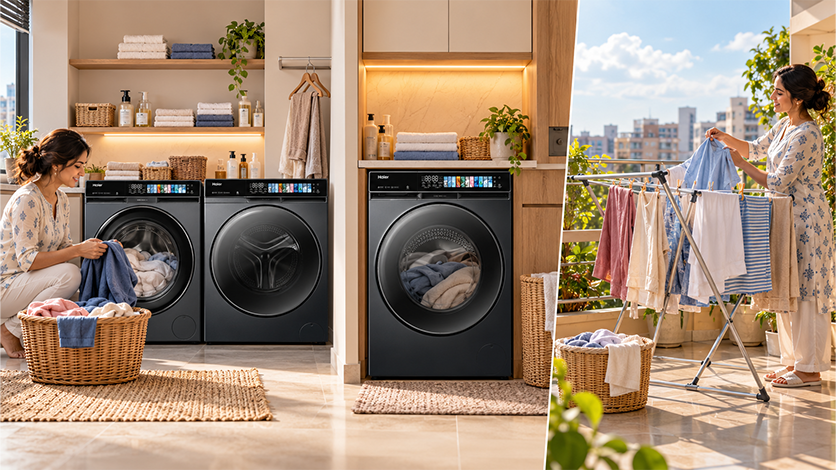
Each option has a place, and the right pick comes down to space and routine.
| Standalone dryer | Washer dryer | Line drying | |
| Machines needed | Two (washer and dryer) | One | None |
| Floor space | Separate spot with a power point | One footprint | Balcony or terrace |
| Works in rain | Yes | Yes | Weather decides |
| Effort | Move clothes between machines | Load once | Hang and collect |
| Best for | Larger homes with a laundry room | Flats and small families | Sunny homes with light loads |
Many Indian flats have one utility corner for laundry, so a washer dryer fits in more easily than two machines. Washer dryer combos work well for homes that want both jobs done without extra floor space. Haier’s front-load washer dryers wash and dry in the same drum. Our semi-automatic models bring Oxyi Dry, an advanced spin technology that reduces moisture in clothes after washing, so line drying goes quicker on sunny days. You can browse the full range of semi-automatic washing machines here.
Want to know how many clothes fit in a 7 kg drum before you pick a washer dryer?
Read this blog: How Much Laundry Is 7kg, 9kg or 10kg? A Practical Guide to Estimating Your Wash Load
Does a Dryer Damage Clothes?
Cotton clothes, towels, bedsheets and denim generally handle tumble drying well, provided you use the right heat setting. Silk, lace, wool and garments with embellishments need more care. Check the label before putting them in the drum, as some are better suited to a low-heat cycle or air-drying on the line. The lint filter also needs attention after every load. A clogged filter restricts airflow and can slow drying, while leaving enough room in the drum allows clothes to tumble freely.
On the Haier F11, the Dry only program lets you run a drying cycle without a wash. A jacket that got caught in the rain is a good example.
How Haier Brings Drying Into Everyday Laundry
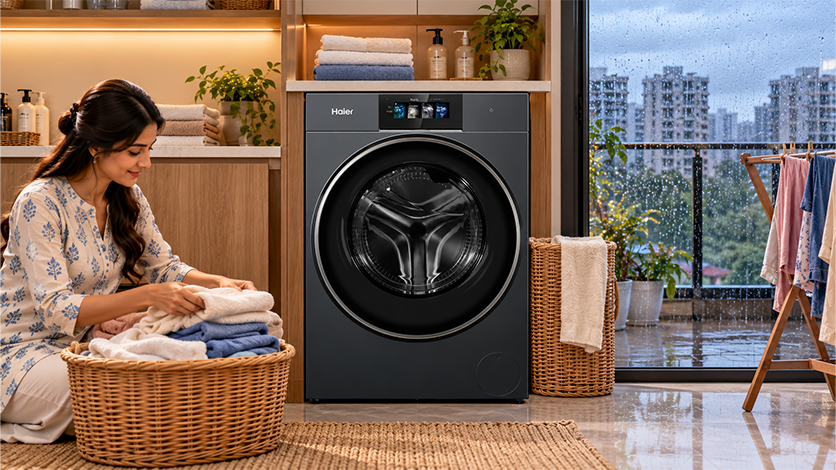
At Haier, we design our washer dryers around the way Indian homes do laundry. Our F11 and F17 washer dryers wash 12 kg and dry up to 7 kg in the same drum, so one machine handles the whole job. You can see both in our front-load washing machine range.
We fit these models with a Direct Motion Motor, which is attached straight to the drum. This cuts friction and vibration, so the machine runs with less noise and saves energy. The 525 mm Super Drum, Steam, ABT, Dual Spray and Self Clean features look after hygiene, and Smart Dosing works out the right amount of detergent for your load size and fabric type. AI Wash detects the load weight and recommends a wash cycle.
Ultra Fresh Air is the feature our monsoon customers mention most. After the wash, fresh air blows through the drum and stops bad smells and moisture, so clothes stay fresh even if you forget to take them out. For anyone looking for a dryer for monsoon weeks, this fits the way rainy days go: the cycle ends, you are still stuck in traffic, and the laundry waits without a smell.
Prefer a top-load or semi-automatic machine instead? Our top-load washing machines and semi-automatic range are ready for you, and a balcony rack takes care of the sunny days.
Conclusion
A dryer earns its place in homes where weather, space or time decides the laundry day. The benefits of a tumble dryer are easy to see in the monsoon weeks: dry, soft clothes, a free balcony and no waiting on the sun. A washer dryer gives you all of that in one machine, and the clothesline stays useful for the sunny days.
Frequently Asked Questions
Why should you use a clothes dryer?
A clothes dryer gives you dry, soft clothes in any weather. It frees up balcony space, cuts the effort of hanging and collecting, and keeps rainy-day laundry from turning musty. Families with busy mornings find it especially handy.
Do you need a dryer in India?
It depends on your home. Coastal cities and monsoon weeks leave clothes damp for days, so a dryer helps there. Homes with open terraces and strong sun can manage with a clothesline for most of the year.
Is a clothes dryer worth it?
It is a good fit for homes with small balconies, long monsoons or busy mornings. A washer dryer adds more value by handling both jobs in one machine, so clothes come out dry without hanging or waiting for sun.
Is a dryer useful during the monsoon?
Very much. Humid air slows drying and leaves clothes with a musty smell. A dryer removes the moisture in one cycle, so uniforms, towels and bedsheets are ready the same day, even when it rains for days.
Does a clothes dryer damage clothes?
Dryers are gentle on most clothes when you follow the care label. Pick a setting that matches the fabric and keep the load light. Delicates such as silk or lace do better on low heat or the line.
When do you actually need a dryer?
You need one when weather, space or time controls your laundry day. Long monsoons, small balconies, daily uniforms and bulky items such as bedsheets and towels that crowd the rack are the usual signs.