
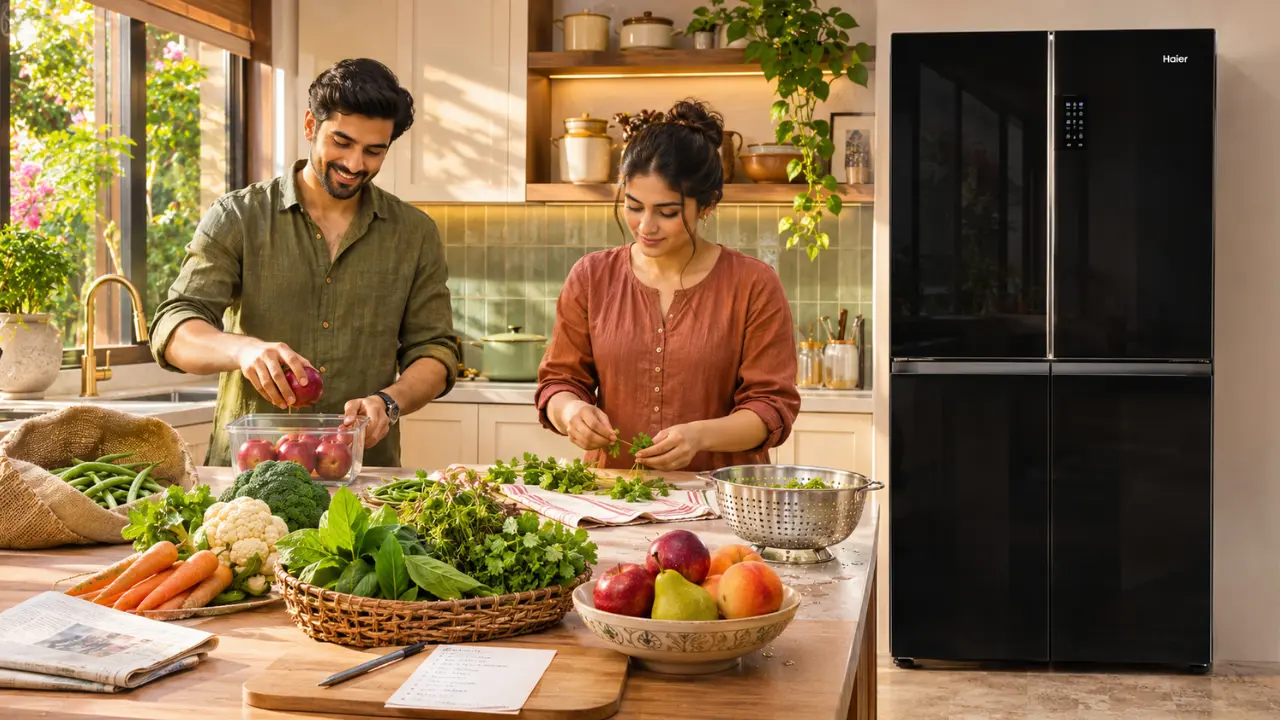

On Sunday, you purchased some fresh coriander. By Wednesday, 50% of the bunch is now yellow. That spinach feels like it’s been in a coma, the carrots have lost their “Oooh” factor, and those tomatoes you purchased at the vegetable stand have gotten soft.
Meanwhile, the apples in another corner of your fridge are all good.
What’s happening here?
It usually boils down to moisture. Some fruits and vegetables benefit from high humidity in the refrigerator, while others don’t, and it is not always ideal to store all produce in the same place.
That’s why refrigerators have crisper drawers.
These special storage chambers provide a more conducive environment for fresh produce. If your refrigerator has adjustable humidity controls, knowing how to utilise them can make a difference to your everyday food storage routine.
Let’s learn how these drawers work, what settings are best for various food items, and how a well-designed refrigerator from Haier India can help in organising fresh groceries better.
What Is a Crisper Drawer in a Refrigerator?
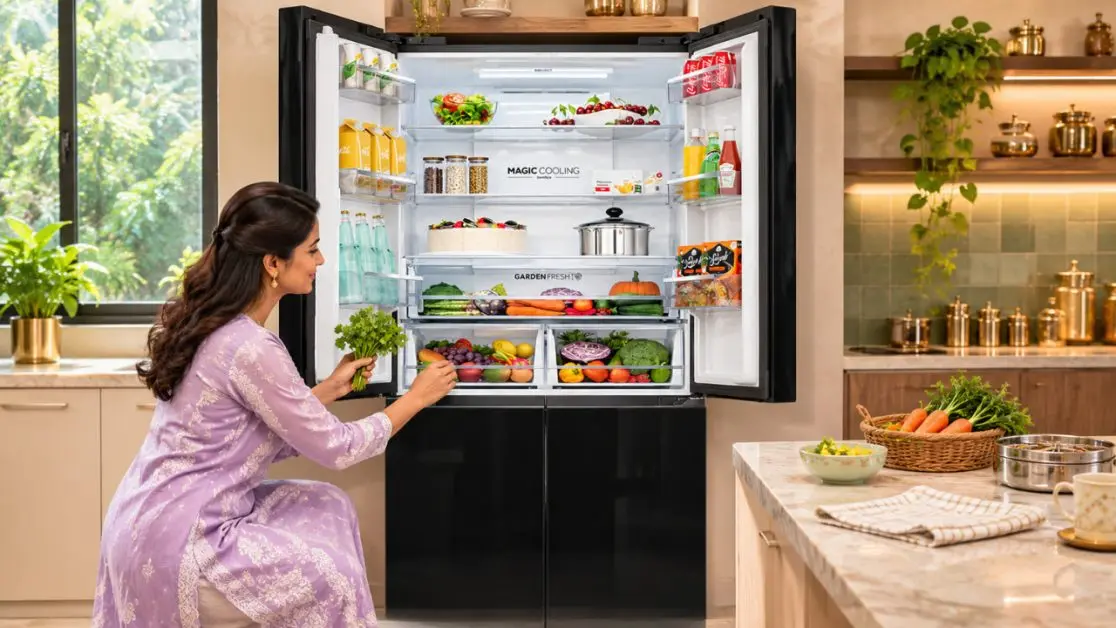
A crisper drawer is a special compartment that is usually at the bottom of the refrigerator’s fresh-food section and is used to keep fruits and vegetables.
Crisper drawers offer a more protected storage space than regular refrigerator shelves, which are open to regular air circulation whenever the refrigerator door is opened.
They serve primarily to aid in moisture control for fresh produce.
Consider a bunch of spinach and a bag of apples. Both require refrigeration, but they do not require the same conditions for refrigeration.
Spinach is a relatively fast water-loss vegetable. Apples, by contrast, tend to do better in environments that are less humid and don’t experience moisture build-up.
These differences are accommodated by a crisper drawer.
How Does a Crisper Drawer Work?
After picking, fresh fruits and vegetables continue to transpire, releasing moisture.
Some vegetables become floppy if the humidity in the air is too low. In an overly humid environment, condensation can promote spoilage.
This balance is maintained with a crisper drawer, which regulates the amount of moisture in the drawer.
This is typically done with an adjustable humidity control on the refrigerator, which is usually a small sliding vent.
- When the vent is closed, there is less air exchange and more humidity is retained.
- The vent allows more air to circulate, helping excess moisture escape.
- Properly separating produce helps limit excess moisture.
Not all refrigerators have humidity vents that can be adjusted, however. A few models come with produce sections that don’t require manual adjustment of humidity settings.
Before adjusting the settings, it is important to understand the specific design of your refrigerator.
High Humidity vs Low Humidity: Which Setting Should You Choose?
This is where many homes go wrong.
Think of freshness and high humidity: they are not necessarily correlated. Nor are freshness and low humidity.
The correct setting will depend on the type of produce that you want to store.
High Humidity: For Vegetables That Lose Moisture Quickly
Now imagine that you have fresh palak in an open refrigerator compartment for several days.
Its leaves can start to lose water and wilt.
This moisture loss is slowed by a high-humidity environment.
This is an appropriate setting for:
- Spinach, methi and other leafy greens
- Coriander and mint
- Carrots
- Broccoli
- Cauliflower
- Cabbage
- Green beans
Many of these vegetables benefit from a high-humidity environment because they can become dry if their moisture is reduced.
Carrots may get rubbery if they dry out too much, for instance. Even if the leaves don’t show signs of spoiling, they can become limp.
A more humid drawer helps maintain a better storage environment.
However, too much surface moisture is not desirable. Never leave vegetables in pools of water or against heavily condensed drawer walls.
Low Humidity: For Fruits That Benefit from Better Airflow
Now look at apples, pears and ripe peaches.
These fruits may emit ethylene, a natural plant hormone that is associated with ripening.
Many fruits that produce ethylene will benefit from being stored away from sensitive vegetables.
A low-humidity drawer will usually have a more open vent that lets in more air and helps keep moisture build-up to a minimum.
It is generally suitable for:
- Apples
- Pears
- Peaches
- Plums
- Nectarines
- Mature avocados requiring refrigeration
Humidity control and ethylene management go hand in hand, but they are not the same.
Opening a vent may help some ethylene escape, but it doesn’t completely prevent ethylene exposure.
It’s still recommended to keep sensitive vegetables away from ethylene-producing fruits.
A Quick Reference Guide to Crisper Drawer Settings for Indian Food Items
Most Indian kitchens have a mix of leafy greens, regular cooking ingredients and seasonal fruits.
Use this as a handy reference for how to arrange them.
| Food Item | Recommended Storage | Important Consideration |
| Palak and methi | High humidity | Keep dry on the surface |
| Coriander and mint | High humidity | Remove damaged leaves |
| Carrots | High humidity | Cut off leafy tops before storage |
| Broccoli | High humidity | Avoid excessive condensation |
| Apples | Low humidity | Isolate from sensitive greens |
| Pears | Low humidity | Refrigerate when appropriate for ripeness |
| Grapes | Refrigerated produce compartment | Store in a dry, airy place |
| Tomatoes | Depends on ripeness | Refrigerate ripe tomatoes as needed |
| Potatoes | Cool, dark pantry | Avoid routine refrigeration |
| Onions | Cool, dry, ventilated location | Do not let them come into contact with water |
Remember that these are general recommendations. The most appropriate storage method may be affected by produce condition, packaging and refrigerator design.
How to Use Humidity Controls Correctly
Suppose you’ve just returned from your weekly vegetable shopping.
There are two bags of leafy vegetables, some carrots, apples, grapes and a few ripe pears.
Rather than dumping everything into any drawer that will hold it, follow this approach.
Step 1: Identify the Humidity Control
Look for a humidity slider or vent on your refrigerator.
Some models feature HIGH, LOW or vegetable and fruit symbols.
Usually:
- HIGH = low ventilation.
- LOW = increased ventilation.
Control designs can vary, so always refer to your refrigerator’s user manual for instructions.
Step 2: Sort Your Groceries Before Storing
Place ethylene-producing fruits away from leafy vegetables.
Store moisture-sensitive vegetables in an appropriate high-humidity compartment.
For suitable fruits, use a low-humidity area.
When a refrigerator has only one produce drawer, the most important step towards separation is to use appropriate containers or packaging rather than relying on one humidity setting for everything.
Step 3: Drain Excess Surface Water
This is of particular importance during the monsoon season.
Coriander or spinach bought from local markets can contain moisture from washing or spraying.
If leaves are wet, storing them in tightly closed plastic bags can encourage spoilage.
Take off visibly damaged leaves and drain excess water before refrigeration.
Depending on the produce, breathable or appropriately vented packaging can help.
Step 4: Do Not Overfill the Drawer
A crisper drawer isn’t designed to be so tightly packed that its contents are compressed.
Delicate produce can be damaged by overcrowding, and it may be hard to detect spoilage.
Ensure adequate space for arranging vegetables without crushing them.
Step 5: Regularly Review the Contents
Even properly refrigerated vegetables will not keep fresh indefinitely.
Check stored food regularly and discard anything that has decayed.
One bad tomato or bruised bunch of greens can affect nearby produce.
What’s the Consequence of Using the Wrong Humidity Setting?

Not all storage errors result in an immediate issue.
Sometimes the changes take place slowly.
A cucumber softens. Spinach starts wilting. Water collects under a packet of vegetables.
These signs may indicate that the storage conditions should be addressed.
Here are some of the most frequent indicators of improper humidity.
| What You Notice | Possible Reason | What to Do |
| Leaves have become limp | Excessive moisture loss | Use higher humidity |
| Water droplets inside the drawer | Too much moisture or condensation | Dry produce and improve ventilation |
| Fruits developing mould | Excess moisture or spoiled produce | Check fruit and minimise excess moisture build-up |
| Carrots becoming rubbery | Dehydration | Keep in appropriate high humidity |
| Vegetables going bad very rapidly | Problems with separation, moisture or temperature | Review storage conditions |
Humidity is just one of the factors.
Keep the fresh-food compartment at 4°C or lower to ensure safe refrigeration. The actual temperature may be checked using a refrigerator thermometer.
Unsafe temperatures or poor food-handling procedures will not be corrected by humidity controls.
How the Haier Lumiere 520L Refrigerator Makes Fresh Food Organisation Easier
Knowing about the humidity settings is helpful, but the design of the refrigerator’s storage is also important.
After all, typical Indian households rarely store only a limited number of vegetables.
There’s food for the week, milk packets, homemade chutneys, fruits, leftovers, and sometimes more than enough to feed visiting relatives, too.
The Haier Lumiere 520L 3 Star Black Glass French Door Refrigerator (HRB-600KGU1) is engineered to provide ample and organised storage space, which may be helpful for fulfilling these daily needs.
Its four-door configuration and dedicated fruit and vegetable cases make it easier to organise different food categories.
Dedicated Fruit and Vegetable Storage
The Haier Lumiere 520L refrigerator features dedicated fruit and vegetable cases.
These compartments allow households to keep their fresh produce separate from other items instead of using regular shelves to store everything in a single place.
For example, vegetables bought for daily cooking can be stored in their designated compartment, while fruits can be kept in their own storage space.
This facilitates access to produce and reduces unnecessary handling.
According to the model’s specifications, the refrigerator has dedicated fruit and vegetable cases, with no mention of manually adjustable humidity controls.
520 Litres of Storage for Larger Households
When buying groceries in bulk, space is a crucial factor.
The Haier Lumiere has a total capacity of 520 litres, with flexible storage.
It has the following highlighted attributes:
- 520-litre total refrigerator capacity
- 440-litre fresh-food storage configuration
- 90-litre convertible section
- Dedicated fruit and vegetable cases
- Three toughened glass shelves
- Four-door French-door design
The convertible section enables users to configure storage spaces as needed.
This can be helpful during festivals, family reunions or weekly grocery shopping.
Enjoy Deo Fresh Technology for Everyday Food Storage
Many foods have different aromas inside the refrigerator.
Imagine having a storage space where you keep chopped onions, leftover rajma, chutney and fresh fruits.
Haier Lumiere is equipped with Deo Fresh Technology, which is designed to absorb odours and impurities while supporting freshness.
It complements organised food storage; however, foods with strong smells should still be stored in well-sealed containers.
Smart Food Management for Better Grocery Planning
Ever bought another bunch of coriander because you didn’t realise there was already one in the fridge?
It happens.
Haier Lumiere offers Smart Food Management, which can be used to record and track stored food items, create shopping lists and share them with family members.
The refrigerator is also connected through its Haismart connectivity, enabling connected controls.
These functions can help streamline food organisation for households managing multiple grocery requirements.
Five Crisper Drawer Mistakes Worth Avoiding
While a big refrigerator will help, certain everyday practices can cut the shelf life of fresh produce.
1. Storing All Vegetables in Plastic Bags
Some packages trap too much moisture, particularly if vegetables are already moist.
Use different packaging for different types of produce rather than the same packaging for everything.
2. Mixing Apples with Leafy Vegetables
The ethylene gas emitted by apples can cause the deterioration of some sensitive vegetables.
Isolate them as much as possible.
3. Washing Everything Before Refrigeration
Washing is not always necessary before storage.
For many fruits and vegetables, washing just before consumption is preferable, unless they can be dried thoroughly before being refrigerated.
4. Ignoring Drawer Cleanliness
Decaying leaves and vegetable juices may create poor storage conditions.
Wipe down drawers with mild detergent and water, and dry them thoroughly before putting food back in.
5. Assuming Humidity Controls Preserve Food Indefinitely
They don’t.
Humidity control helps keep food stored under appropriate conditions, but it cannot prevent the natural deterioration of food or make spoiled food safe.
Make Better Use of Your Refrigerator’s Fresh Food Storage
A crisper drawer may appear like a regular plastic drawer, but how you use it can have an impact on the condition of your everyday groceries.
Small changes in the way leafy vegetables are stored can make food storage more effective, such as keeping them in an appropriate high-humidity environment, separating ethylene-producing fruits and avoiding excess moisture.
These habits should be easier to follow when your refrigerator offers convenient storage options.
The Haier Lumiere 520L 3 Star Black Glass French Door Refrigerator (HRB-600KGU1), with its dedicated fruit and vegetable cases, flexible storage configuration, Deo Fresh Technology and Smart Food Management, provides an efficient solution for Indian households to manage their groceries effectively.
Discover Haier India’s refrigerator collection and explore solutions that cater to the everyday needs of contemporary Indian kitchens.
Frequently Asked Questions
1. What is the purpose of a crisper drawer?
A crisper drawer provides a dedicated storage environment for fruits and vegetables. Depending on its design, it can help retain or regulate moisture and reduce exposure to circulating refrigerator air.
2. Should vegetables be stored at high or low humidity?
Most leafy vegetables, carrots and broccoli benefit from higher humidity because it helps reduce moisture loss. However, the appropriate setting depends on the specific vegetable and its condition.
3. Should fruits and vegetables be stored in separate drawers?
Where possible, yes. Separating ethylene-producing fruits from sensitive vegetables can help prevent premature deterioration. Dedicated compartments also make groceries easier to organise.
4. Does the Haier Lumiere 520L refrigerator have separate fruit and vegetable cases?
Yes. The Haier Lumiere 520L 3 Star Black Glass French Door Refrigerator (HRB-600KGU1) includes dedicated fruit and vegetable cases. Its published specifications do not confirm adjustable humidity sliders.
5. Why is there water inside my crisper drawer?
Water may accumulate because of wet produce, condensation or restricted ventilation. Remove excess moisture, inspect the drawer’s contents and check that the refrigerator is maintaining the recommended temperature.
6. How often should a refrigerator crisper drawer be cleaned?
Inspect the drawer during regular grocery organisation and clean it whenever spills, dirt or spoiled produce appear. A more thorough cleaning every few weeks is a reasonable household practice.