




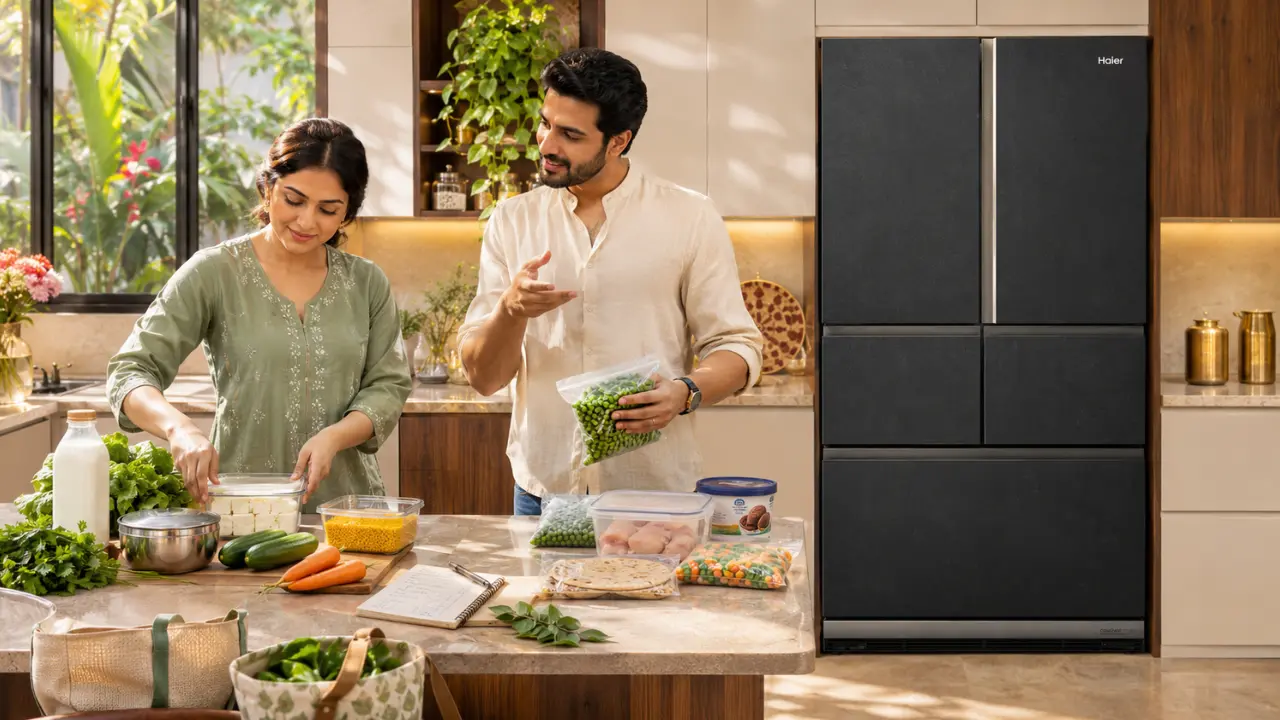

You’ve come back from your trip to the grocery store. You have fresh paneer for lunch tomorrow, vegetables for the week, a packet of frozen peas, ice cream and some chicken that you are going to cook over the weekend.
Here is a surprisingly significant decision. Where to put the things in the chiller and what is in the freezer?
While both are used in most Indian homes, there is often a misunderstanding between chiller and freezer. They can appear as two parts of one refrigerator, but are designed for different functions.
A food chiller is used to keep food cool, but not frozen. A freezer cools the temperature of food below the freezing point of water and keeps food frozen for extended periods of time.
It can make a difference in how you plan your food, limit food waste, and maximize the use of your refrigerator.
With the Haier 552L In-Vista 5 Door Free Built-In Side By Side Refrigerator (HRM-800P2OBU1), it becomes much easier to handle various food storage needs.
Chiller vs Freezer: What Is the Difference?
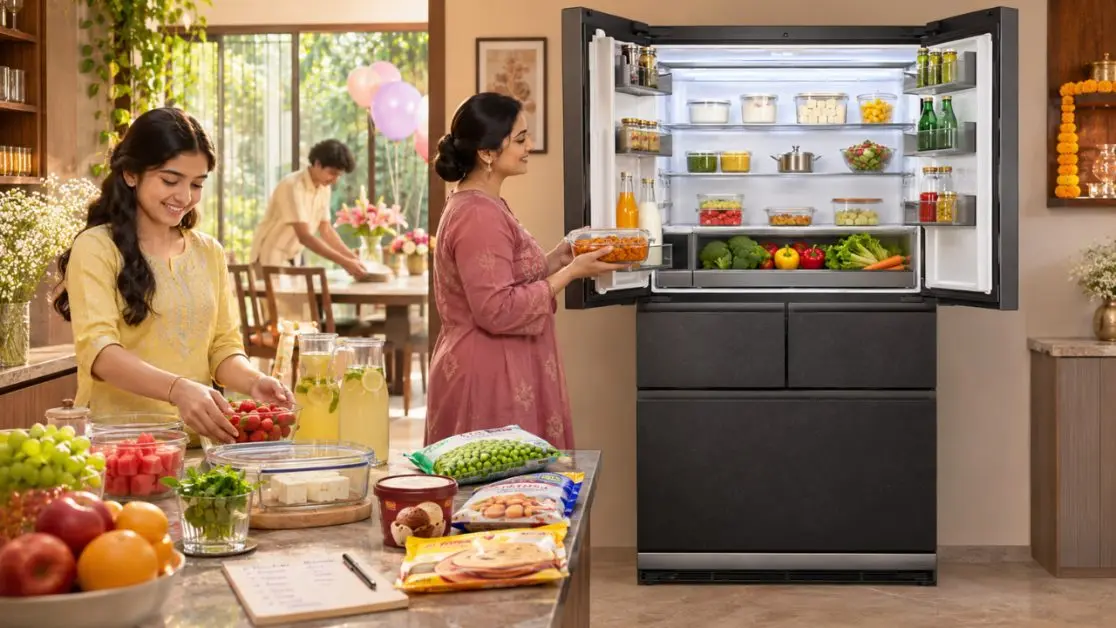
The main difference between a chiller and freezer is their temperatures.
A chiller is an apparatus that is used to keep the temperature low and suitable for the storage of refrigerated foods. The freezer works much cooler and can freeze and keep foods frozen at very low temperatures.
But there is one thing to note.
Depending on the refrigerator model, the term ‘chiller’ may be applied to the standard refrigerated compartment, or to a separate extra-cold compartment.
What Is a Chiller?
A chiller is a refrigerated unit for storage, in which the temperature of the food is kept cold and will generally stay above freezing.
Typical temperatures used for everyday refrigeration are between 1°C and 4°C, but may vary depending on the specific chill compartment.
Chillers are suitable for refrigerating foods which are not meant to be frozen.
Common examples include:
- Dairy products like milk, curd and so on.
- Lemonade, fresh paneer and cheese.
- Cooked food and leftovers that have been safely refrigerated.
- Fresh fruits and vegetables in appropriate containers.
- Chilled desserts and beverages.
For example, if you make curd at home each day, storing it in the refrigerator keeps it fresh, but not solid as ice.
This is true for fresh paneer, where there may be some changes in texture after freezing and thawing.
What Is a Freezer?
The purpose of a freezer is to keep food cold.
Household freezers are designed to keep the temperature around -18°C or lower for frozen foods.
If kept at these temperatures, the growth of microorganisms is suspended, and food is frozen, but freezing will not necessarily kill all harmful microorganisms.
Generally, foods are stored in a freezer:
- Frozen vegetables and peas.
- Ice cream/frozen desserts.
- Bulk meat, poultry and seafood processing for longer periods of storage.
- Frozen snacks (nuggets, French Fries).
- Frozen ready to eat food items.
- Ice cubes.
Slow freezing makes an important difference in slowing down the deterioration of food, but it will not prevent it from spoiling.
Properly frozen food can still lose flavor, moisture and texture over time.
The Real Difference Becomes Clear When You Store Food
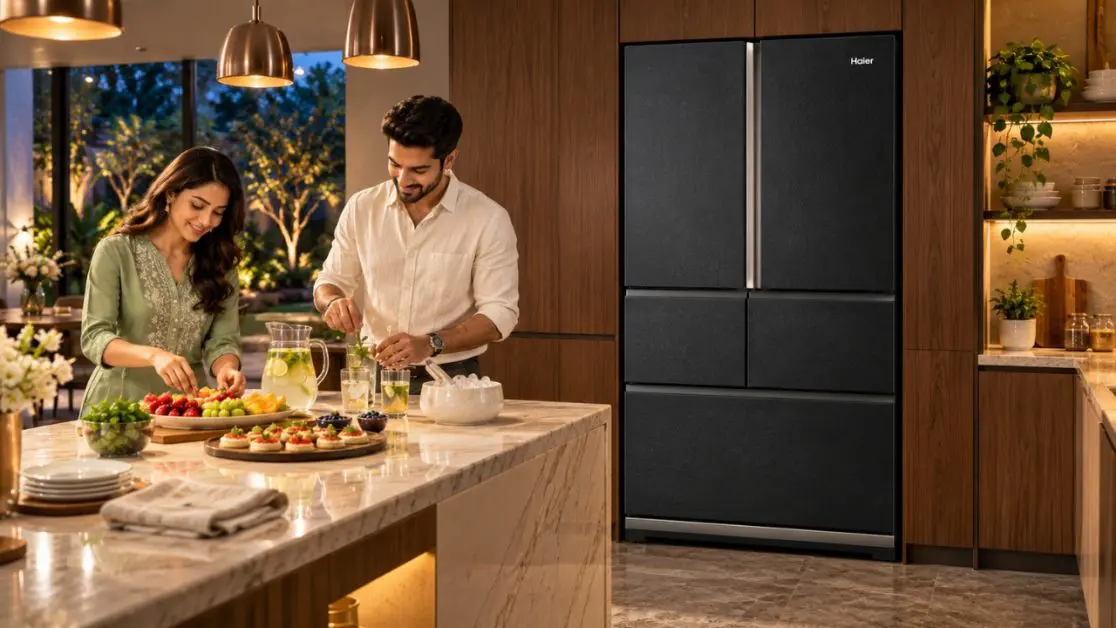
Suppose two bags of chicken were bought on Sunday.
You want to make one on Monday and the other this weekend.
It may not be the most practical solution to leave both packets in the same compartment.
If the chicken has been set to refrigerate correctly, it may be safe to store for a short period until Monday. Chicken that is meant for use on Monday may be safe to store for a short time, provided the temperature has been refrigerated properly. The second packet should be frozen immediately for longer storage.
These are three points of importance in this example.
1. Temperature Requirements
A chiller is a device used to keep food at a cool temperature and a freezer at a temperature of freezing or lower.
A freezer is a cold storage place that can be used for longer storage of food items that are cold tolerant.
2. Food Texture and Quality
Some foods change in texture when they’re frozen.
For instance, fresh cucumbers have a lot of water. After freezing and thawing, it can be soft and watery.
Frozen peas are usually processed for the specific purpose of freezing and can be kept in good condition if stored properly.
This is why it’s important to select the right compartment.
3. Storage Duration
Most chillers can be used for short-term refrigerated storage.
Freezers provide longer Storage Periods depending on the Food, Packaging and Storage Conditions.
Keep in mind that refrigeration and freezing will not restore the quality of spoiled foods. Proper handling and storage practices should be used from the start.
Is It Possible to Use a Chiller as a Freezer?
Not all chillers are fit to be used as a freezer.
You can’t use a standard refrigerator compartment to keep frozen foods as it is not built to keep refrigerated food at the low temperatures needed for food storage.
Some high-end refrigerators, however, come with convertible compartments which can work in both refrigerated and frozen temperature ranges.
This is very handy in households in India where storage needs vary from month to month.
You may require extra space for fresh supplies one week. Frozen foods could take up a lot more space the following week.
A convertible compartment offers more flexibility without the need for an extra appliance.
Haier’s Magic Convertible Zone Provides More Storage Flexibility
Haier’s 552L In-Vista 5 Door Free Built-In Side By Side Refrigerator (HRM-800P2OBU1) has a 66L Magic Convertible Zone.
This compartment can be used as refrigerated storage as well as frozen storage, with temperatures ranging between -20°C to +5°C.
It has the following temperature settings:
- Make sure to freeze food in a container with a lid at 0° or below.
- If the product is frozen, use the Ice Cream mode.
- Slow Freeze for certain foods that need slow freezing.
- The chill mode is for refrigerated storage.
- Additional chilled for those items which need a colder refrigerated atmosphere.
Now picture planning an event for the entire family.
Additional refrigerated areas may be necessary for beverages and ingredients pre-event. There may also be value in extra freezer space in the future for frozen snacks and desserts.
These adjustments can be accomplished in a single refrigerator with the Magic Convertible Zone.
What Foods to Put in the Chiller and Freezer?
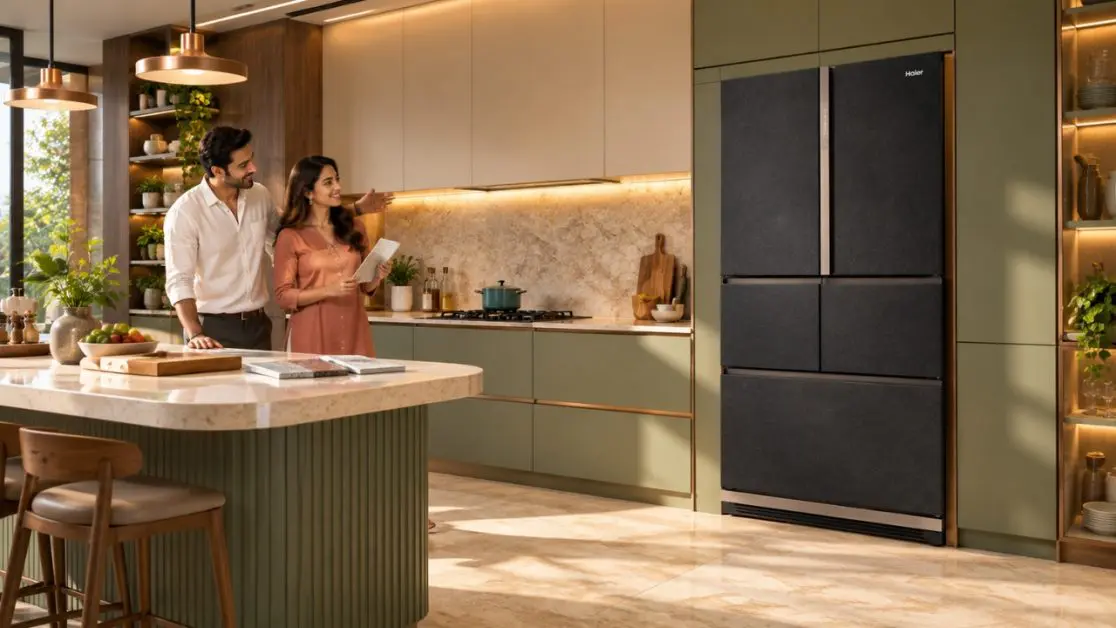
The key to good food organisation is knowing what and when you’re going to cook.
Foods That Are More Suitable for Storing in the Refrigerator
There are some ingredients that are best consumed fresh, and will usually need to be kept in the refrigerator and not the freezer.
These include:
- The milk and curd to be consumed on a daily basis.
- Fresh paneer which will be used for cooking in a few days.
- Refrigerated dairy products such as cheese. Refrigerated dairy products (cheese, etc.).
- Dals, sabzi and rice cooked for short-term storage.
- Any fresh produce that needs to be refrigerated.
Storage requirements may vary depending on the type of food.
For instance, leafy vegetables would benefit from proper humidity management while leftovers or cooked foods should be cooled quickly and stored in covered containers in the refrigerator.
These Are Foods That Freeze Well and Are Suitable for Freezing
Freezing can be a good option if the ingredients are not going to be eaten right away.
Examples include:
- Frozen peas and mixed vegetables.
- Raw poultry and seafood that will be consumed later.
- For frozen parathas and ready to cook snacks.
- Ice cream and Frozen desserts.
- Gravies made at home for future use.
Avoid opening, minimize air exposure and freezer burn by using freezer-safe packaging materials.
Refrigerate or freeze perishable food as soon as possible (usually within two hours of preparation or purchase) and sooner in very hot weather to help keep it safe.
How Haier In-Vista Makes Chilled Storage and Frozen Storage More Convenient
While a large refrigerator can be handy, it’s not necessarily the answer to all storage problems.
The important thing is the effectiveness of how the available space can be used to accommodate different food categories.
The 5-door design and multiple dedicated storage zones of the Haier 552L In-Vista 5 Door Free Built In Side By Side Refrigerator (HRM-800P2OBU1) help to solve the problem.
Five Doors, Five Zones for Organised Storage
The refrigerator comes with 5 storage compartments and 12 storage sections.
It comes with the following storage options:
- Fresh food capacity of 283L.
- 66L convertible zone.
- 67L is an ice zone dedicated to the 67th lot of the 1967 model.
- 136L deep freezer capacity.
This allows the family to keep the refrigerated food and ice-making supplies separate from the food they eat regularly.
Instead of searching through overcrowded shelves, users can organise ingredients according to their storage needs.
Cold Storage Zone, Deep Freezer Zone, Cooling Down to -30°C
The In-Vista refrigerator has a unique Bottom Cooling Technology in the Deep Freezer Zone.
As per the product specifications, this system circulates the cold air 50% faster, provides frost free environment and enables deep freezing of -30°C.
This is another alternative for families which have a habit of putting away frozen foods regularly.
There is also an automatic ice maker in the freezer compartment of the refrigerator.
MRA Fresh Technology Featuring Fruits and Vegetables
Some things don’t need very cold storage.
It is important to take care of moisture control when handling fresh vegetables and fruits to ensure the products retain their firmness.
The MRA Fresh Technology of Haier keeps moisture above 90% and is engineered to provide the moisture retention of 2 to 6 times greater.
This is especially true for Indian households who buy fresh vegetables in bulk.
In a refrigerator, each ingredient is not stored the same, but has its own separate storage space for different food needs.
Smart Features to Suit Everyday Convenience
In addition, the In-Vista refrigerator can be controlled using the Haier Smart App.
It has a range of innovative functions such as food management, ice-making, and sterilisation.
Also, ABT Pro Sterilisation’s automated cycles help to keep the refrigerator and freezer environment a bit more hygienic.
The features are to augment and not supplant good food handling and cleaning practices.
Five Storage Mistakes That Can Have a Negative Impact on Food Quality
Even the highest technology refrigerators have to be used sensibly throughout the day.
These are some of the most frequent pitfalls you might want to steer clear of.
1. Overcrowding the Compartments
Filling shelves too closely together can impede ventilation.
Make sure there is adequate room for cold air to flow around the refrigerator as specified by the manufacturer.
2. Hot Dog Covers and Coatings
Cooked food shouldn’t sit out for long periods at room temperature.
Splitting large amounts into shallow containers will ensure rapid cooling before refrigerating.
3. Repeatedly Freezing and Thawing Food
It can also impact food quality and pose a safety risk if food is not handled properly when temperatures fluctuate repeatedly.
Thaw frozen food in the refrigerator, under cold water, or in the microwave (if it is to be cooked right away).
4. Using Incorrect Storage Containers
Bad packaging can let food dry out, smell and become contaminated.
Where necessary, use clean and appropriate containers and freezer-proof packaging.
5. Using a Faulty Gas Analyzer or Applying Incorrect Calibration for the Gas Analyzer
Not all the compartments are necessarily at the same temperature.
Inspect refrigerator settings as recommended and measure refrigerator temperature as needed with an appliance thermometer.
Make Everyday Food Storage More Flexible With Haier India
A chiller and a freezer have different functions and are both a vital component of any modern Indian kitchen.
The chiller maintains any day to day ingredients in a cool state for use. The freezer is used to store foods which must stay frozen for longer periods.
If you’re not interested in the traditional fixed compartments, the Haier 552L In-Vista 5 Door Free Built-In Side By Side Refrigerator (HRM-800P2OBU1) is a more flexible option.
The Magic Convertible Zone (66L), Deep Freezer Zone (dedicated), MRA Fresh Technology and the 5 Zone storage solution of its compartments add to the flexibility in food organisation.
The refrigerator additionally has an Ornate Black Stone Finish, sensor-actuated ambient lighting and a seamless built-in style for contemporary modular kitchens.
It’s a matter of how you set up your food storage whether you are planning for your weekly shopping, family holiday, or simple chilled and frozen food storage, the right configuration could make a difference in your food storage.
Check out Haier In-Vista refrigerator range and find a storage solution, tailored to the evolving needs of Indian homes.
Frequently Asked Questions
1. Is a chiller colder than a freezer?
No. A freezer generally operates at much lower temperatures than a chiller. A regular refrigerated compartment commonly maintains temperatures around 1°C to 4°C, while a household freezer is typically maintained at approximately -18°C or below.
2. Can I store ice cream in a chiller?
Ice cream should be stored in a freezer. A regular chiller cannot maintain the frozen temperature required to preserve its intended texture.
3. What is the difference between a chiller and a convertible freezer?
A regular chiller is designed for refrigerated storage. A convertible compartment can operate at different temperature settings, potentially supporting both chilling and freezing, depending on the refrigerator model.
4. What temperature range does Haier’s Magic Convertible Zone support?
The Haier 552L In-Vista refrigerator’s 66L Magic Convertible Zone supports temperatures from -20°C to +5°C, providing flexibility for different refrigerated and frozen storage requirements.
5. Is freezing better than chilling for all foods?
No. Freezing is useful for longer storage of suitable foods, but certain fresh ingredients can lose their original texture after thawing. The correct method depends on the food and intended storage duration.