




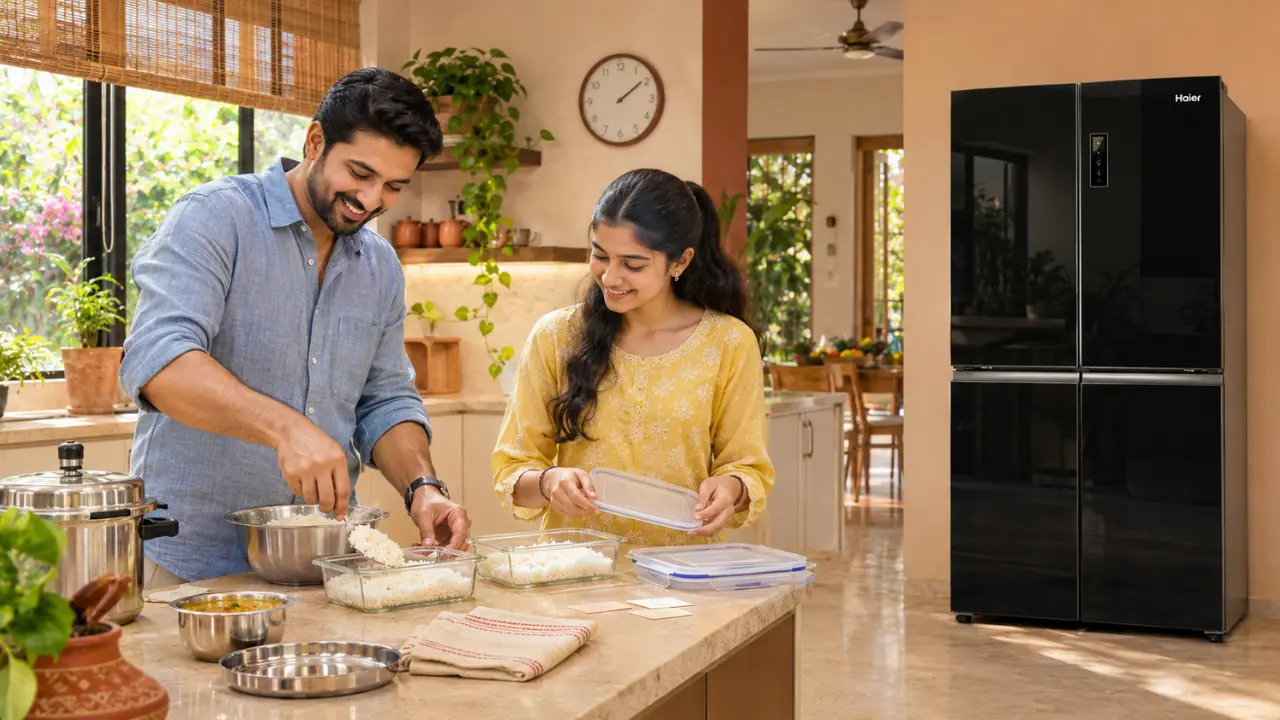

Half of the rice has been eaten at dinner. Throwing it in the trash seems like a waste, as it can be made into the next day’s lemon rice, fried rice or a quick lunch with dal.
So, into the refrigerator it goes.
However, one thing is worth keeping in mind. Rice that appears fine the next afternoon does not necessarily mean it is safe to eat, because several factors go into evaluating its safety. The rate of cooling, the temperature inside the refrigerator and the number of days it has been stored all matter.
With rice consumption being almost daily in Indian households, knowing these details can help minimise food waste without compromising food safety.
How Many Days Can Cooked Rice Be Stored in the Refrigerator?
Cooked rice should ideally be eaten within 24 hours as a prudent food safety practice. While general leftover-food guidelines state that food can be refrigerated for three to four days, there are specific considerations for rice due to its association with Bacillus cereus bacteria.
The most practical and safe approach is to refrigerate cooked rice as soon as possible and eat it within 24 hours.
Here’s a quick breakdown:
| Storage Method | Recommended Storage Time | Important Consideration |
| Room temperature | Cool as quickly as possible, preferably within 1 hour | Bacteria can multiply if rice is left warm |
| Refrigerator at 4°C or below | Preferably within 24 hours | Store promptly in a covered, shallow container |
| Freezer at -18°C or below | Best quality within 1–2 months | Cool and freeze promptly, then thaw safely |
| After reheating | Consume immediately | Avoid repeatedly cooling and reheating |
These recommendations are based on the assumption that the rice has been handled hygienically and cooled quickly after cooking.
Keep in mind that refrigeration slows bacterial growth. It does not make rice that has been left out too long safe to eat.
Why Does Cooked Rice Go Bad Even When Refrigerated?
Rice may seem harmless compared with meat, fish or dairy products. However, it poses its own food safety concerns.
The Bacillus Cereus Factor
Bacillus cereus is a naturally occurring bacterium that can be present in uncooked rice.
Its spores can survive normal cooking temperatures.
If cooked rice is stored at room temperature, especially in warm conditions, the surviving spores can develop into bacteria that multiply and produce toxins.
Some of these toxins are heat-stable, which means that reheating may not eliminate the danger.
That’s why leaving rice on the kitchen counter overnight and reheating it the next morning is not a safe practice.
India’s Climate Makes Proper Storage Even More Essential
Think about a typical summer afternoon in Delhi, Chennai or Hyderabad.
The kitchen is still warm, lunch is over, and the remaining rice is still sitting in the cooking pot.
Several hours may have passed by nightfall.
During this period, the rice may be exposed to conditions that encourage microbial growth.
This is particularly concerning when the weather is humid.
Instead of leaving rice out until dinner, divide it into smaller portions and put it in the refrigerator promptly.
The Right Way to Refrigerate Cooked Rice
Safe rice storage begins before the container reaches the refrigerator.
A few simple habits can make a big difference.
Step 1: Cool the Rice Quickly
Don’t leave a large pot of cooked rice sitting on the counter for several hours.
Instead:
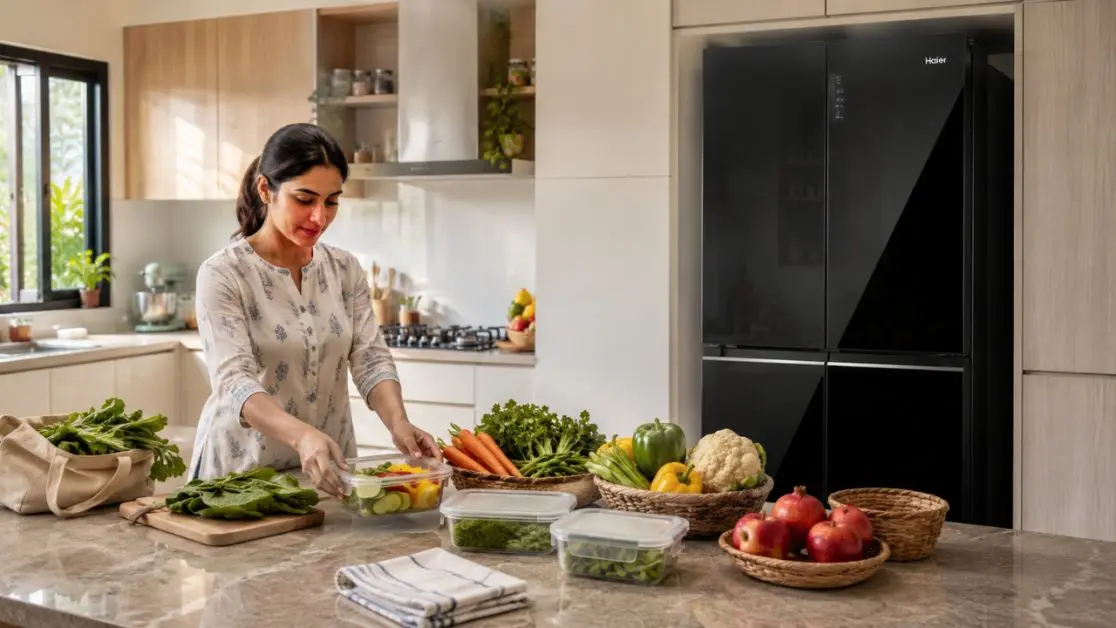
- Transfer any leftover rice into shallow containers.
- Divide large quantities into smaller portions.
- Spread the rice slightly to allow heat to escape.
- Refrigerate promptly, ideally within one hour.
- Avoid leaving cooked rice at room temperature for more than two hours, or one hour in very hot conditions.
Rice does not have to cool to room temperature before refrigeration. Small portions of warm rice can be placed directly in the refrigerator.
Step 2: Select Appropriate Storage Containers
An open bowl of rice is not the best option.
Use clean, food-grade containers with properly fitting lids.
Smaller containers are especially helpful for everyday meals because you can take out only what you need for your next meal.
This also minimises handling of the remaining rice.
Step 3: Keep the Refrigerator at the Proper Temperature
For safe chilled food storage, the refrigerator should be maintained at 4°C or below.
A refrigerator thermometer can help verify the actual temperature.
Also, avoid storing rice in an overcrowded area where cold air cannot circulate properly.
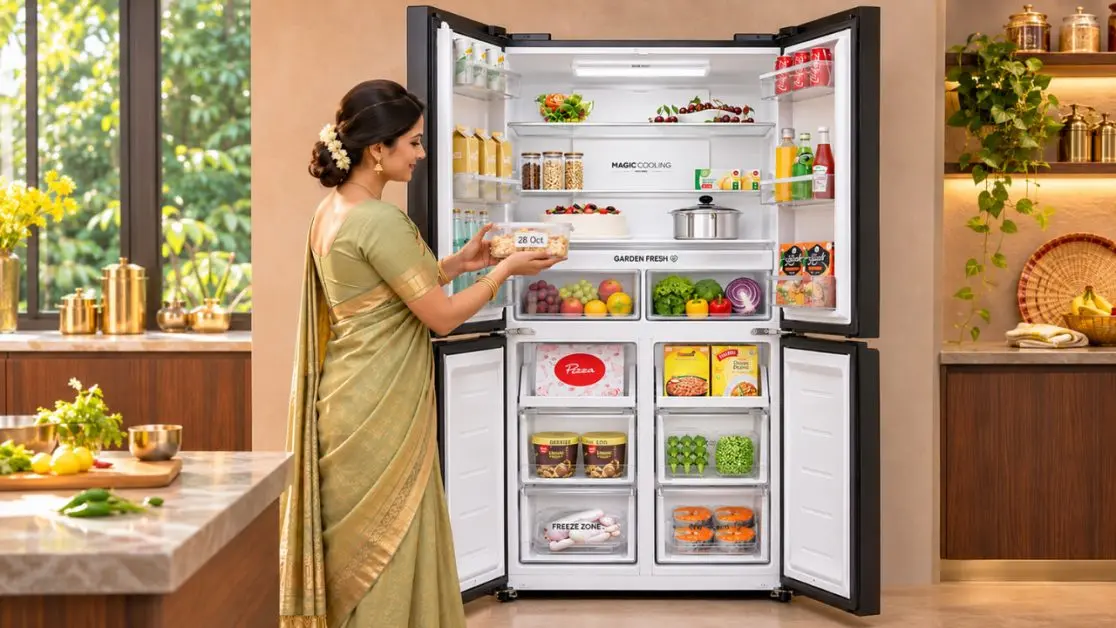
Step 4: Label Your Leftovers
Writing the storage date on a container can prevent confusion.
Was the rice cooked yesterday morning or yesterday evening?
These questions are surprisingly common when several family members use the same refrigerator.
A simple label eliminates the guesswork.
Is the Storage Life of Rice in the Refrigerator Affected by the Type of Rice?
Rice comes in several different varieties, and their textures can change after refrigeration.
However, the basic food safety guidelines remain the same.
Basmati Rice
Basmati rice is used to prepare pulao, biryani and everyday meals.
After refrigeration, it may become firmer because of changes in the starch as it cools.
Use a little water during reheating to help restore moisture.
Sona Masoori Rice
Sona Masoori rice is widely used in South Indian households and has a softer texture when freshly cooked.
It can become slightly firm or dry when refrigerated.
Keep it in a covered container to reduce moisture loss.
Brown Rice
The characteristic texture of brown rice comes from its bran layers.
It should be cooled and refrigerated using the same safe practices as white rice.
Rice-Based Dishes
Curd rice, vegetable pulao, fried rice and biryani need special care because they contain other ingredients.
Rice dishes containing dairy products, eggs or meat should be stored according to the safety requirements of their most perishable ingredients.
A useful rule? Cooked rice cannot be kept safe for longer simply by adding spices, salt or curd.
How the Haier Lumiere 520L Refrigerator Helps With Organised Food Storage
If a refrigerator is routinely used to store cooked meals, vegetables, milk, fruits and ingredients for the next day, organised storage becomes important.
The Haier Lumiere 520L 3 Star Black Glass French Door Refrigerator (HRB-600KGU1) is designed to meet the needs of families who require spacious, flexible refrigeration and value convenient food management features.
This four-door model, with its multiple storage areas, is particularly relevant for families who like to prepare meals in advance.
Spacious 520L Capacity for Everyday Indian Kitchens
When people buy a family refrigerator, they don’t typically store just one type of food.
There may be leftover dal from lunch, cooked rice for tomorrow, fresh vegetables for dinner and containers of homemade chutney.
The Haier Lumiere has a capacity of 520 litres, including a spacious fresh-food compartment and adaptable convertible storage.
This provides households with room to organise different types of food without unnecessary stacking.
Having sufficient space makes it easier to use shallow, covered containers rather than squeezing leftovers into large vessels.
360° Surround Cooling for Even Refrigeration
The Haier Lumiere is equipped with Magic Cooling and 360° Surround Cooling technology, designed to distribute cooling throughout the refrigerator.
Its Triple Inverter technology supports temperature management while optimising energy use.
These features are helpful in busy households where the refrigerator is opened frequently throughout the day.
Despite the use of advanced cooling technology, cooked rice still needs to be cooled quickly and stored safely.
Smart Food Management for Better Organisation
A particularly useful feature is Smart Food Management.
Users can add and monitor stored food items through the Haismart App, create shopping lists and share information with family members.
Imagine preparing rice one Monday evening and adding it to your food inventory.
The next day, another family member can check the stored items while planning the lunch menu.
This can help minimise forgotten leftovers and unnecessary purchases.
Remember, digital food tracking is an organisational tool, not a replacement for proper temperature control or food safety checks.
Deo Fresh Technology and Toughened Glass Shelves
The refrigerator also features Deo Fresh Technology, designed to help remove odours and impurities.
This can be useful when storing different food items, especially in Indian kitchens where cooked dishes often contain aromatic spices.
It has three toughened glass shelves designed for durability and spill resistance, accommodating everyday Indian cooking utensils.
The result is an organised storage space for everyday household needs.
How to Reheat Rice Safely After Refrigeration

If stored properly, refrigerated rice can be used in several familiar Indian recipes.
However, reheating requires attention.
Reheating Rice in a Microwave
Follow these steps:
- Transfer the required amount into a microwave-safe container.
- Add a little water if the rice looks dry.
- Cover it with a microwave-safe lid that allows steam to escape.
- Heat until the rice is steaming hot throughout, stirring halfway through to eliminate cold spots.
Reheating Rice on the Stove
- Add the rice to a pan with a little water.
- Cover and heat, stirring occasionally.
- Ensure that the centre becomes steaming hot rather than merely warm.
Important Reheating Precautions
- Reheat only what you plan to eat.
- Make sure the rice reaches at least 74°C throughout.
- Never reheat the same batch repeatedly.
- Do not rely on reheating to make improperly stored rice safe.
- Throw out rice if you’re unsure how long it remains outside the refrigerator.
A cautious rule of thumb is to reheat refrigerated rice only once.
How to Tell If Rice Has Gone Bad in the Refrigerator
In some cases, rice develops noticeable changes in appearance, smell or texture.
These may include:
- An unusual or unpleasant odour
- Visible mould growth
- An excessively thick or slimy consistency
- Unexpected discolouration
If you notice these signs, discard the rice immediately.
But there’s a catch.
Harmful bacteria or toxins may cause no noticeable changes in the appearance or smell of rice.
Therefore, appearance alone cannot establish whether leftover rice is safe to eat.
If you’re uncertain about its storage history, throwing it away is the safer choice.
Common Rice Storage Mistakes Indian Households Should Avoid
Many food storage problems arise from habits that seem harmless.
Leaving Cooked Rice in the Cooker Overnight
Don’t mistake a rice cooker for a refrigerator!
Cooked rice should not remain in the appliance for extended periods unless a safe hot-holding temperature above 60°C is being maintained.
Otherwise, refrigerate the rice promptly after cooking.
Refrigerating Rice in a Large, Deep Vessel
The larger the quantity of rice, the longer it can take to cool.
Shallow containers help rice cool more quickly than deep containers.
Storing Rice in the Refrigerator Door
Refrigerator doors experience frequent temperature fluctuations because they are exposed to warmer air whenever the door is opened.
Cooked rice is better stored on an interior shelf.
Mixing Fresh Rice With Leftover Rice
It is difficult to keep track of storage times when freshly cooked rice is added to leftovers from the previous day.
Keep batches separate and label them accordingly.
Make Everyday Food Storage More Convenient With Haier India
Cooked rice is one of the most common leftover foods in Indian households. Whether it’s a small amount saved after dinner or an extra pot of rice prepared for the next day’s lunch, proper refrigeration makes a difference.
The principle is simple: cool it quickly, refrigerate it promptly and preferably consume it within 24 hours.
For families looking to improve their everyday food storage experience, the Haier Lumiere 520L 3 Star Black Glass French Door Refrigerator (HRB-600KGU1) brings together spacious storage, 360° Surround Cooling, convertible space and Smart Food Management features.
Its thoughtful storage design helps families organise cooked meals alongside fresh ingredients, while smart connectivity adds convenience to everyday kitchen planning.
Explore the Haier Lumiere 520L French Door Refrigerator from Haier India and discover a more organised approach to storing your family’s everyday essentials.
Frequently Asked Questions
1. Can I Eat Cooked Rice After Three Days in the Refrigerator?
Some general leftover guidelines allow three to four days of refrigerated storage, but a more cautious recommendation for cooked rice is to consume it within 24 hours. Proper cooling and continuous refrigeration are essential.
2. Is It Safe to Eat Cold Rice Directly From the Refrigerator?
Cold rice can be eaten without reheating if it was cooked, cooled and refrigerated correctly, and consumed within a safe storage period. Rice left unrefrigerated for too long should be discarded.
3. Can Cooked Rice Be Frozen for Later Use?
Yes. Cool it promptly, divide it into portions and freeze it in suitable airtight containers. For best quality, aim to consume frozen rice within one to two months.
4. Why Does Refrigerated Rice Become Hard?
Rice becomes firmer because its starch molecules reorganise during cooling. This natural process is known as starch retrogradation. Adding a little water during reheating can improve its texture.
5. What Is the Ideal Refrigerator Temperature for Cooked Rice?
Keep the refrigerator at 4°C or below. The freezer should ideally remain at -18°C or below.
6. Does a Large Refrigerator Keep Cooked Rice Fresh for Longer?
Not automatically. A larger refrigerator can provide more space for organised storage and proper air circulation, but food safety still depends on prompt cooling, appropriate temperatures and storage duration.