
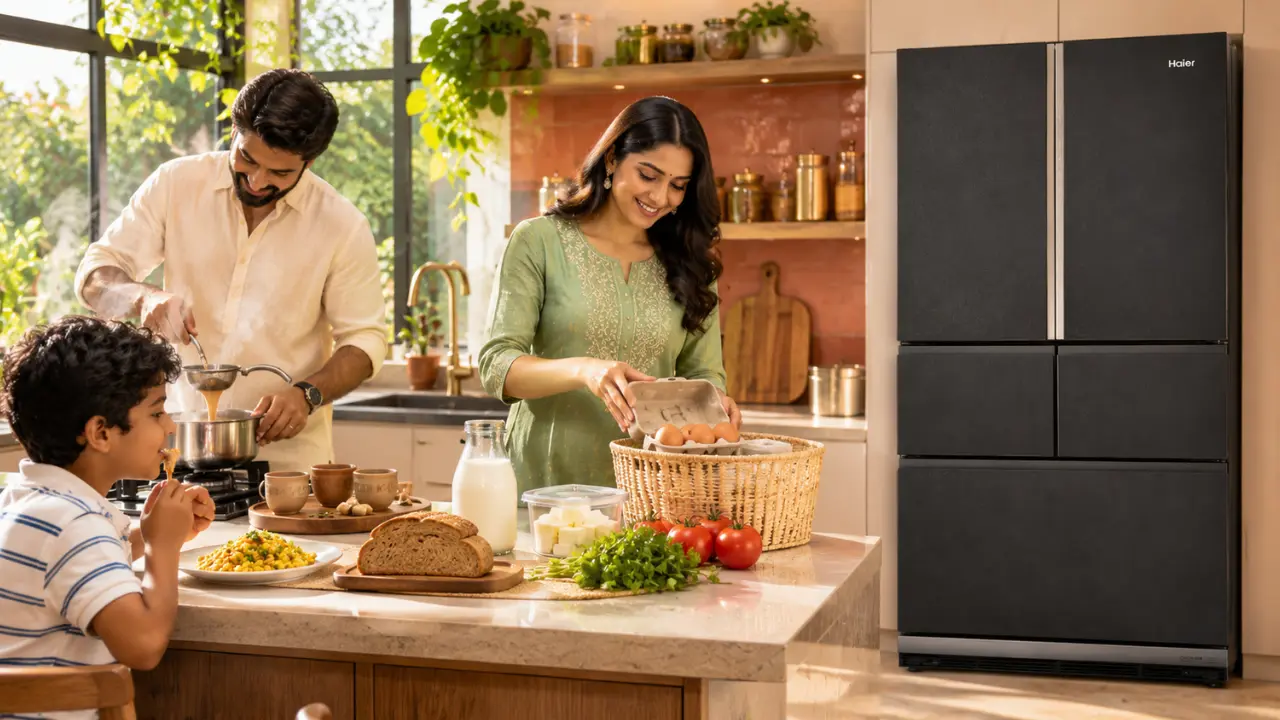

You bring home a basket of eggs from the supermarket, then open the fridge and put the eggs in the egg tray on the fridge door. Job done, right?
Well, not quite.
You may think that it’s an obvious place, but it’s not always the best place to store fresh eggs. Each time milk is taken out of the refrigerator or sabzi (vegetables) is removed from the refrigerator, the refrigerator will have a wider temperature difference between the refrigerator door and the food stored on the refrigerator door than the food stored in the middle and back of the refrigerator.
And eggs? They are given a steady cold temperature.
So, no matter which store you purchase eggs from, a neighbourhood kirana shop, local poultry vendor or supermarket, knowing how to store eggs in a fridge can make sure that food is not wasted unnecessarily whilst ensuring the quality of eggs.
Fortunately, the storage of eggs does not involve any complicated arrangement. With a proper shelf, even temperature and some common sense, it can be done.
Where to place eggs in a refrigerator?
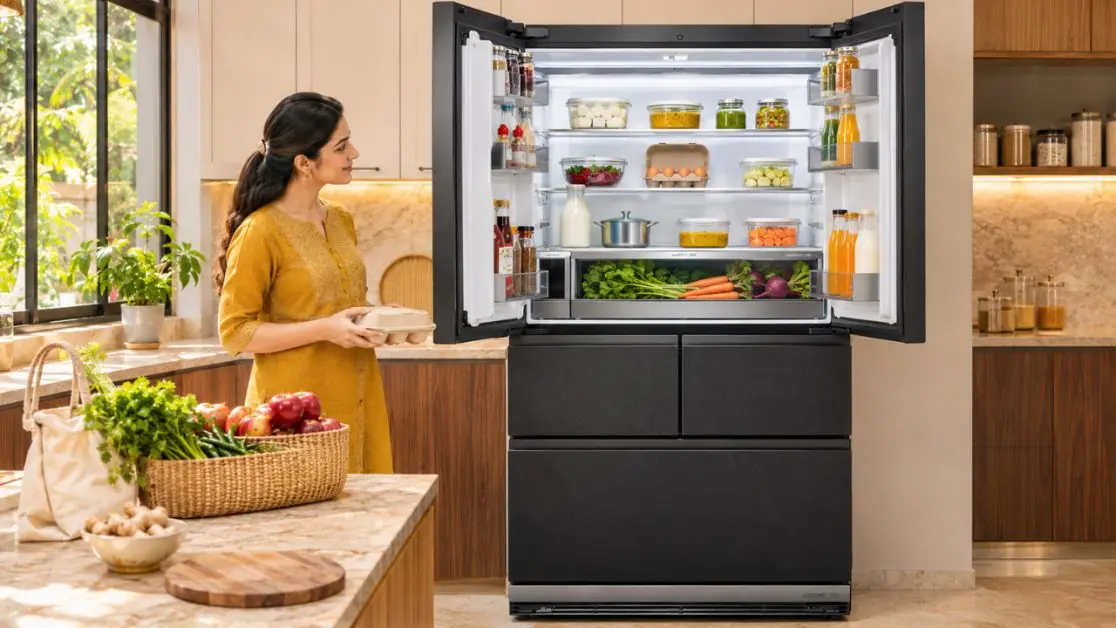
Eggs can be stored in the refrigerator on an inside shelf towards the middle or back of the refrigerator where the temperature is more stable.
Keep refrigerated eggs at a temperature of 4ºC or lower.
The interior shelves are less likely to be subject to changes in temperature as refrigerator doors are exposed to the warmer room air when opened.
The following are some comparisons of how storage locations differ.
| Refrigerator Location | It is appropriate for use in egg storage | Reason |
| Middle interior shelf | Recommended | Provides fairly uniform cooling |
| Rear half of an inside shelf | Suitable | Reduced exposure to warm air, as long as eggs are not in contact with freezing surfaces |
| Refrigerator door | Less suitable | Experiences frequent temperature changes |
| Vegetable crisper drawer | Not recommended to use (default). | Wallace’s blade is designed for cutting fruits and vegetables. Wallace’s blade is meant for cutting fruits and vegetables. |
| Freezer compartment | Do not use for whole eggs in shells | Crack shells and quality may be impacted by freezing. |
The middle shelf is typically the most convenient choice for everyday use in Indian homes.
The designs of the refrigerator, however, vary. Always follow the manufacturer’s guidelines for setting the temperature and placing food.
Why the Refrigerator Door isn’t the Best Place for Eggs
Consider the number of times your refrigerator opens up in an average Indian morning.
Milk is required for chai. Another person desires to have butter for their toast. Next comes searching for yesterday’s chutney.
Before breakfast is even finished, the refrigerator door may have opened several times.
Eggs can be stored at different temperatures.There are various storage temperatures for eggs.
The interior shelves in a refrigerator are usually colder and have less temperature change than the refrigerator doors.
If eggs are repeatedly exposed to warm environments, it will be more challenging to keep them in good condition.
Opening the door a few seconds will not spoil an egg. Concerns are repeated exposure to variable temperature, especially after eggs are refrigerated.
What About Built-In Egg Holders?
Some refrigerators have a special egg holding compartment in the door.
These holders provide convenient organisation and help prevent eggs from rolling around. However, their presence doesn’t necessarily mean the door offers the most temperature-stable storage location.
An interior shelf is generally better for longer periods of refrigerated storage.
If a door mounted egg holder is used, special attention shall be given to the refrigerator temperature, the frequency at which the door is opened as well as to the speed with which the eggs will be used.
Should You Keep Eggs in Their Original Carton?
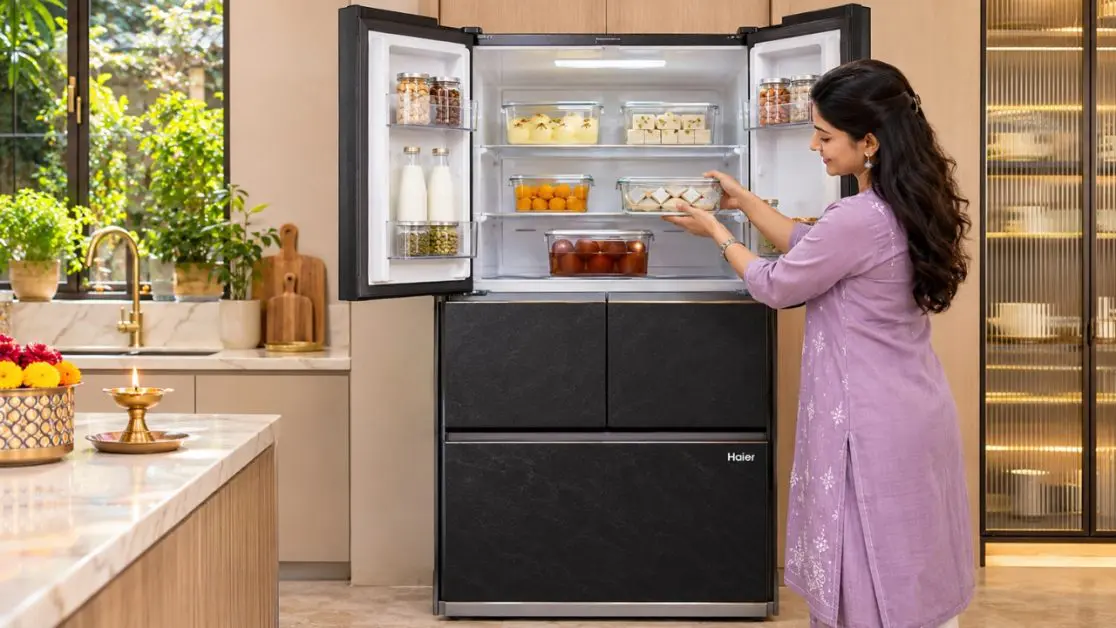
Yes. Generally, it is a good idea to store eggs in their cartons.
The carton is not just for the purpose of holding eggs together.
It also shields them from being accidentally knocked and helps to minimise direct contact with other food items within the refrigerator.
There are three reasons for preserving the carton
- Damage resistant: Eggshells are brittle. A carton ensures that there is no unnecessary movement and no accidental cracking.
- Enhanced freshness control: Packaged eggs frequently include pack dates, best-before dates and other useful information.
- Lower odour exposure: Eggshells have tiny pores, which are also further protected by the carton from the smell outside the carton.
If buying loose eggs, it should be in a clean, separate, food-safe container.
Don’t set eggs next to uncooked fish, raw meat or heavily flavored foods.
One more thing. If possible, place the eggs with the pointed end down. This prevents the air cell from being displaced in the egg.
How long do eggs last in the refrigerator?
No single storage period for all eggs that are sold in India.
Several factors contribute to the freshness such as condition of the egg at the time of purchase, previous storage, refrigeration temperature and handling.
A general rule for commercially refrigerated eggs stored at 4°C or colder is three to five weeks until they are unsuitable for use.
This is not to replace the use by date, storage guidelines or local food-safety advice.
Before refrigerating the eggs, read these details.
- Examine the shells for any cracks or damage.
- Look for the pack date and best before date.
- If the eggs were bought from a chilled display then refrigerate them promptly.
- Store refrigerated eggs at the chilling temperature.
- Consume older eggs prior to new ones.
Sometimes eggs are sold in Indian markets at room temperature. The conditions in which they were previously handled and stored might not be known.
If those eggs are eggs, don’t assume that the “typical” refrigerated shelf-life rule is applicable.
If in any doubt, adhere to local trusted food-safety guidelines and use eggs at the right time.
Five Egg Storage Mistakes Worth Avoiding
Egg freshness may not just be the result of purchasing better eggs; it may be a reflection of normal egg storage practices.
1. Washing Eggs Before Refrigeration
The eggshells possess a protective coating, called the cuticle, that is natural.
The washing of eggs when it is not necessary, and in an unsuitable manner can have a negative influence on this barrier and the risk of contamination.
Do not wash eggs to keep them clean before storing.
If an egg is visibly soiled, adhere to the proper food safety instructions, and not soaking or washing all eggs at once.
2. Keeping Cracked Eggs With Intact Eggs
Microorganisms can enter through a broken shell.
Throw away either cracked eggs at the time of purchase, or eggs with unknown handling history.
If an egg is cracked during home handling, put the eggs contents into a clean, covered container, refrigerate and use the egg right away if there is no suspicion that it has been contaminated.
3. Leaving Refrigerated Eggs on the Kitchen Counter
Indian summers can cause kitchens to heat up to a specific temperature.
It is not recommended to remove eggs from the refrigerator and leave them near the stove for too long.
Take out just the number of eggs needed for cooking; do not leave refrigerated eggs at room temperature for more than 2 hours or 1 hour if the temperature is above 32°C.
4. Overcrowding Refrigerator Shelves
To keep the refrigerator cool, cold air must be able to circulate.
Airflow may be limited if the containers, vegetables and food packets are too close together.
There should be space between items and never obstruct air vents.
5. Assuming Refrigeration Makes Eggs Completely Safe
It is assumed that all eggs will be completely safe if they are refrigerated.
While refrigeration will slow food-safety risks, it does not kill all of them.
Eggs should still be cooked completely and handled unhygienically.
When it comes to egg dishes like egg bhurji, omelettes and boiled eggs, proper cooking is still important.
How is the freshness of food maintained with refrigerator organisation?
Storing eggs is just one aspect to a fully loaded household refrigerator.
Think in terms of a regular shopping trip to the grocery store on a weekend.
You bring the eggs, milk, paneer, leafy vegetables, fruits, drinks and ingredients for the week’s meals.
If you don’t have specific space to store, it’s hard to keep things neat and tidy.
Plus, when food is covered by other containers, it can be easier to forget what food should be eaten first.
That’s where a well-planned refrigerator can make everyday food planning easier.
Introducing the Haier 552L In-Vista 5 Door Free Built-In Side By Side Refrigerator
The Haier 552L In-Vista 5 Door Free Built-In Side By Side Refrigerator (HRM-800P2OBU1) is a unique solution for Indian households seeking to combine ample space with efficiency when it comes to food storage.
It has a Family Care Storage layout with five zones and 12 storage sections, which offers separate storage for various food groups.
This facilitates the catering of food for the household’s regular use without putting food with varying storage needs together for no good reason.
Fruits, vegetables, frozen foods and beverages can be stored in their separate places in the refrigerator, and eggs can be stored in an appropriate covered container on an inner refrigerator shelf.
More space is not the sole benefit. The ability to locate and retrieve what is needed without having to move the rest of the items over and over again.
Haier In-Vista features that make refrigerating a more convenient everyday experience
The Haier In-Vista refrigerator features a 552-litre capacity, flexible storage and a kitchen appealing design.
Some of the features are especially relevant for Indian households with diverse food needs.
5 Zones for Organised Storage 5 Doors.
Foods require various storage methods.
Fresh vegetables are not a frozen food and beverages are not always a dairy item.
The refrigerator comes with a 5 zone design and 12 storage spaces to accommodate these different categories.
This organization is convenient for shopping families who purchase food in bulk.
MRA Fresh Technology for Fruits and Vegetables
Eggs can be held under stable refrigeration and many fruits and vegetables require proper humidity.
With the help of Haier’s MRA Fresh Technology, the humidity level is maintained at over 90%, thus ensuring fruits and vegetables are kept moist.
This technology also offers the brand 2 to 6 times better moisture retention.
This is a feature that can be used for fresh produce, but not for egg storage—an example of the benefit of separate storage spaces for various food products.
Magic Convertible Zone for Flexible Storage
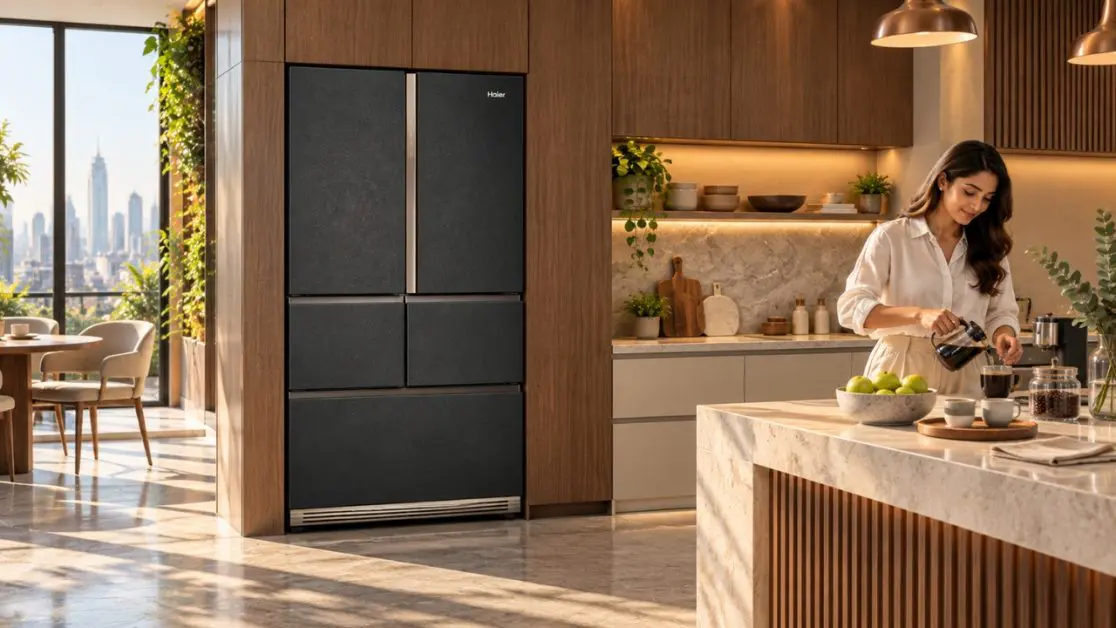
The fridge has a Magic Convertible Zone which can be heated or cooled at will, and has a capacity of 66 litres.
This zone can be operated as either a refrigeration or freezing zone as per household needs.
For instance, when having a celebration, families can require more frozen space, or special chilled storage during meal preparation.
This versatility makes it easy to adjust refrigerator storage needs.
Whole eggs in shells should not be put in the zone while it is cooling to the freeze point.
ABT Pro Sterilisation for a More Hygienic Environment
The ABT Pro Sterilisation feature of Haier refrigerators and freezers is designed to help keep the interior of a refrigerator and freezer in a hygienic setting through automated cycles of sterilisation.
This simplifies everyday food storage yet again!
It is not a substitute, however, for good food handling, cleaning and safe cooking procedures.
The high quality design features practical visibility.
The In-Vista refrigerator has an Ornate Black Stone Finish, 270° interior illumination and sensor activated ambient lighting.
It has a free design that fits into a space in a seamless way when it is built to fit with appropriate cabinetry in the kitchen, depending on the manufacturer’s installation specifications.
Optimising storage within the kitchen and the premium styling are both functional and stylish for those looking at contemporary modular kitchens’ designs.
The Indian family has to make use of a simple refrigerator arrangement
While no two families will keep the same items in their refrigeration units, a general structure makes daily use of the fridge and freezer simpler.
To organize your refrigerator, think of the following organization:
- Interior shelves: Store eggs in their carton, covered leftovers and other foods that need constant refrigeration.
- Make a special place for fresh produce: Store appropriate fruits and vegetables at proper temperatures.
- Door compartments: For items that can withstand small changes in temperature, such as appropriate beverages, condiments and items.
- Freezer sections: Store properly packaged frozen foods.
- Convertible storage: Set up the controlled temp zone as needed for foods stored.
Use the lowest possible shelf in the fridge to make sure juices from raw meat and fish stay out of contact with other foods.
Also, do not rest eggs on refrigerator walls or cooling outlets where there is the potential for localized freezing.
Daily cooking is a lot easier if you have a little organisation, especially if you have multiple family members who rely on the same refrigerator.
Provide Everyday Ingredients the Storage Attention They Deserve
While eggs may seem like the simplest of ingredients in an Indian kitchen, proper storage requires a bit of thought.
An interior refrigerator shelf, a protective carton and consistent refrigeration are generally all that’s needed to establish better storage habits.
The Haier 552L In-Vista 5 Door Free Built-In Side By Side Refrigerator (HRM-800P2OBU1) combines all the benefits of spacious storage, five separate zones, MRA Fresh Technology and flexible temperature controlled storage into one package.
The well-structured compartments guide the use of its products, from day-to-day breakfast components to weekly grocery delivery and family parties.
See how the Haier In-Vista refrigerator range can partner with the way your family shops, cooks and stores food, with a well-organised refrigerator.
Frequently Asked Questions
1. Is it better to store eggs in the refrigerator door or on a shelf?
An interior refrigerator shelf is generally better because it experiences fewer temperature fluctuations than the door. Keep eggs in their carton and maintain a refrigerator temperature of 4°C or below.
2. Should eggs be washed before putting them in the refrigerator?
No. Routine washing before storage is generally discouraged because it may affect the eggshell’s protective cuticle. Follow appropriate food-safety guidance for dirty eggs.
3. Can eggs be stored in a vegetable drawer?
Although eggs may fit inside a vegetable drawer, it is not their preferred storage location. Vegetable drawers are primarily designed to manage fresh produce. A suitable interior shelf is generally more appropriate.
4. Can you freeze raw eggs?
Yes, but not inside their shells. Crack the eggs into a suitable freezer-safe container and prepare them appropriately for freezing. Label the container with the date and follow recommended frozen-storage guidance.
5. How can you tell whether an egg has spoiled?
An unpleasant smell after cracking is a clear warning sign. However, harmful bacteria may be present even when an egg looks and smells normal. Do not rely solely on appearance, smell or the floating egg test to determine safety.
6. What refrigerator temperature is best for storing eggs?
A refrigerator temperature of 4°C or below is recommended for refrigerated eggs. Use a refrigerator thermometer when necessary to verify the actual temperature.