
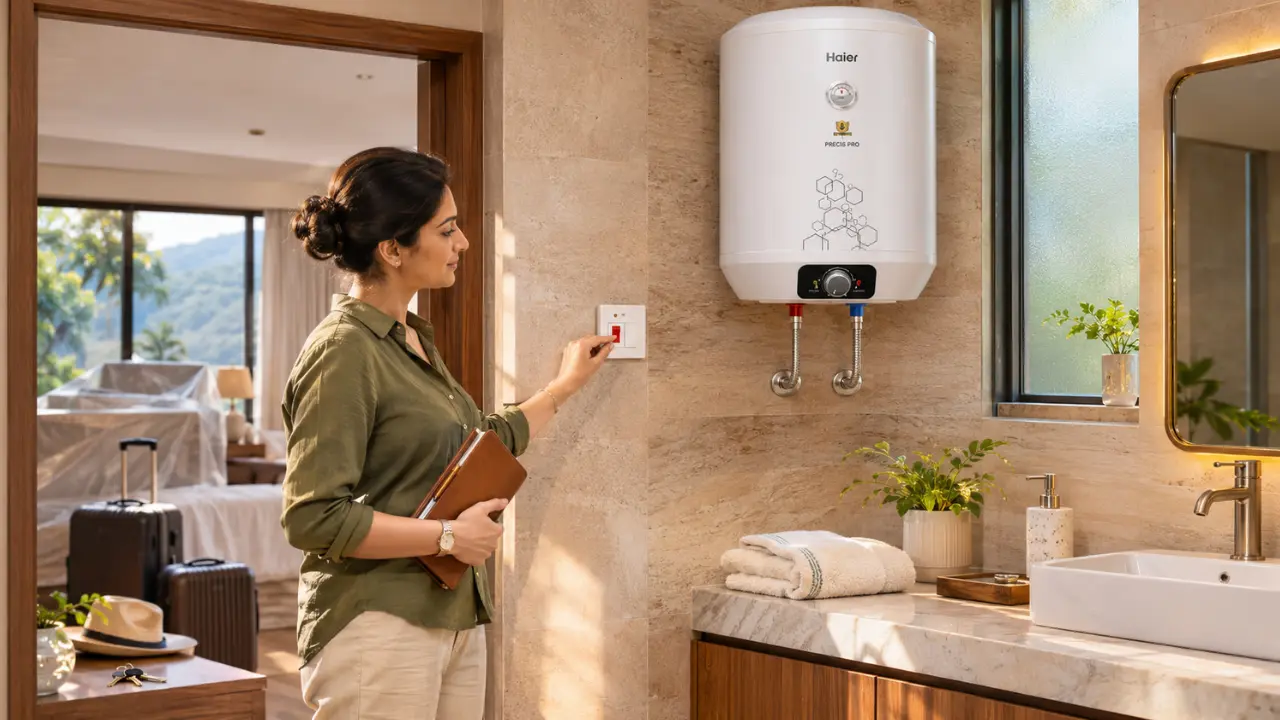

The geyser is turned off, the bathroom is cleaned and the house is locked. Before that long vacation or summer break, everything appears to be in order. However, one thing that homeowners don’t think about is what happens to the water heater when no one uses it for a few weeks or months?
A storage geyser does not necessarily get damaged when it is not used. But stagnant water in the tank, fluctuations in water pressure, mineral deposits and extended periods of inactivity can pose maintenance issues, especially in hard water regions.
If you are moving out of your apartment for a few months, closing your holiday home or just not using hot water in the summer, it is important to prepare your geyser properly to make it easier to start up again.
Here are some tips for Indian households to keep in mind before turning off their water heaters.
Should You Empty a Geyser Before You Leave It Unused?
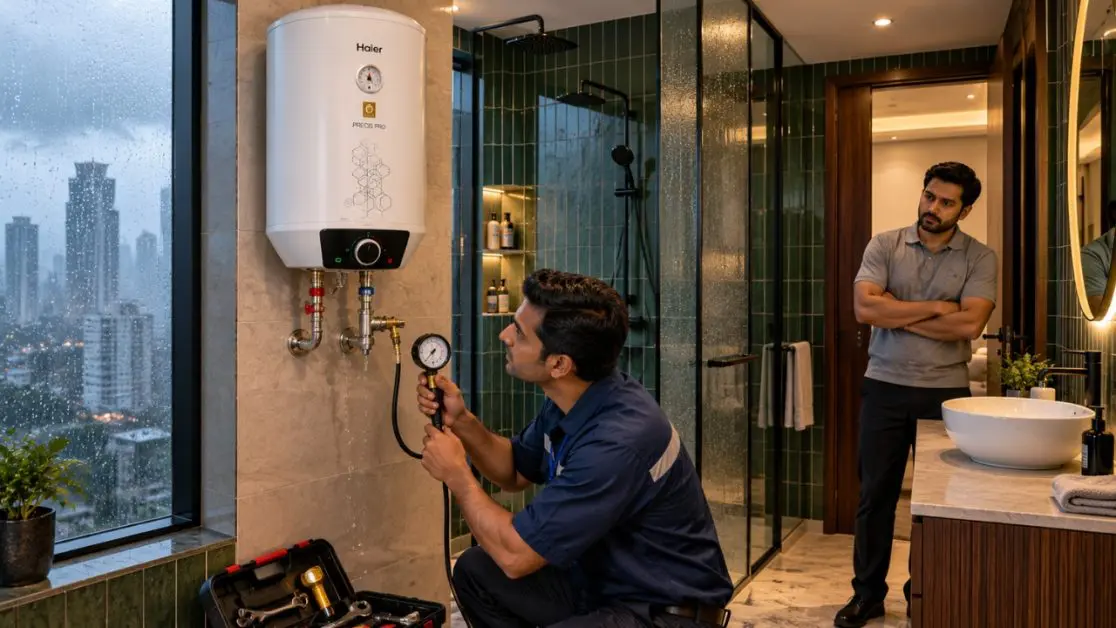
Not necessarily. The decision is based on the length of time the geyser has not been used, the quality of the water, the manufacturer’s instructions and the installation conditions.
In most cases, turning off the power supply is enough for a few days. Longer periods require more consideration.
When Leaving the Tank Filled May Be Appropriate
It may be acceptable to keep the tank filled if the geyser is not used for a few weeks, as long as the manufacturer’s instructions allow it and the water supply conditions are appropriate.
However, switching off the electricity doesn’t prevent water from becoming stagnant.
When Draining May Be Necessary
Draining may be worth considering when:
- The property will be empty for a few months.
- There are significant mineral deposits in the water supply.
- The installation is exposed to freezing temperatures.
- Manufacturer’s recommendation: Drain during long storage.
- Planned maintenance or plumbing work is done prior to next use.
There are hot water and electrical safety hazards associated with draining a pressurised storage geyser. Always read the product instructions and make sure to call in professional help when needed.
Pre-Holiday Geyser Checklist: What to Do Before You Leave
Some planning ahead can save you from unnecessary hassles on your return.
1. Shut Off the Electrical Supply
First, turn off the geyser at the dedicated electrical switch or circuit breaker.
Don’t depend entirely on the thermostat. A thermostat is used to control heating during normal use, but it is not a replacement for unplugging the appliance when it is to be used for extended periods of time.
Make sure that the electrical switch and the surrounding area are dry.
If you see any damaged wiring, loose switch or unusual heating around the electrical connection, schedule a check before you leave.
2. Check for Visible Leakage on the Geyser
It’s easy to forget about a small leak in the day-to-day. Over several weeks, however, it may cause considerable moisture damage.
Check the accessible areas around:
- Cold water inlet and hot water outlet connections.
- Safety valve and discharge pipe.
- Flexible plumbing connections.
- External tank casing.
- Wall mounting brackets.
Check for any persistent drips, rusty stains, damp spots or unusual corrosion.
Never take apart the geyser casing. Only qualified service personnel should do the internal inspection.
3. Determine if the Water Supply Needs to Be Turned Off
If the property is unoccupied, shutting off the water supply can help minimize the potential for unattended plumbing leaks.
The proper configuration, however, will depend on the geyser’s installation and if other appliances are connected to the same plumbing system.
A plumber can recommend if the geyser’s inlet or the main water supply should be isolated.
Importantly, never energise a storage water heater unless its tank is completely filled with water.
4. Schedule Safe Tank Draining as Needed
If it is recommended that you drain your specific model, please request an authorised technician to do so according to the manufacturer’s instructions.
Typically, the process involves electrical isolation, cooling of the water, safe pressure release, and draining through an appropriate outlet.
Do not release water from a pressurised connection or remove a safety valve.
What Happens to Water in an Unused Geyser?

Standing water can become polluted, especially if it is stored at ambient temperatures.
This does not imply that all unused geysers are unsafe. However, being aware of the potential impacts can assist homeowners in making informed maintenance decisions.
Bacterial Growth and Stagnant Water
Stagnant water can be warm and provide conditions that are conducive to microbial growth.
Risk is dependent on water quality, temperature, plumbing conditions, and length of time of inactivity.
Therefore, it is important to flush the system after a long period of non-use. When in doubt, consult a professional before bathing in water.
Mineral Deposits Within the Tank
Hard water is water that has minerals in it, mainly calcium and magnesium.
These minerals can cause scale on the heating elements and on the inside of the heater when heated over and over again.
Heavy scaling does not always occur in an unused geyser. But deposits that formed in previous operations may still be in the tank.
This is especially important for households in Indian areas where hardness of ground water is a common problem.
Choosing a Haier Water Heater for Reliable Everyday Performance
It is important to prepare a geyser for non-use, but it is also important to choose a water heater that is properly constructed, has the right heating technology, and has the necessary safety features.
Haier India provides storage water heaters that cater to these practical household needs.
Haier 15L REGENTA Cylindrical 5 Star Water Heater – ES15V-REGENTA (I)
The Haier 15L REGENTA Cylindrical 5 Star Water Heater provides a few helpful features for households that are thinking about using a 15 litre storage water heater.
It features a CrystalShield Tank that helps to inhibit bacterial growth, and an Incoloy 800 heating element that helps to ensure heating performance and durability.
Other features include:
- 2.2 kW heating power for quick heating of water.
- In his special mode, heats water to 80°C, which is enough to kill bacteria, called the Bacteria Proof System.
- RSC U-turn Flow Technology, which is designed to increase the internal water flow and decrease stagnant water deposition.
- Overheating protection with Dual Thermal Proof technology.
- 8-bar rated working pressure, suitable for compatible high-rise installations.
- PUF/EPS insulation to minimize normal operating heat loss.
These features enable normal water-heating operation. They do not replace the need for proper shutdown, flushing, or servicing after long periods of inactivity.
Haier 25L REGENTA Cylindrical 5 Star Water Heater – ES25V-REGENTA (W)
If you need more hot water storage, the Haier 25L REGENTA Cylindrical 5 Star Water Heater offers a 25 litre option.
It has a CrystalShield Tank, Incoloy 800 heating element, Bacteria Proof System antibacterial heating mode and RSC U-turn Flow Technology.
The model is also equipped with a multi-use valve that has pressure relief, anti-vacuum, non-return and drainage functions.
Its 5-star energy rating and thermal insulation make it worth considering for households prioritising efficient everyday water heating.
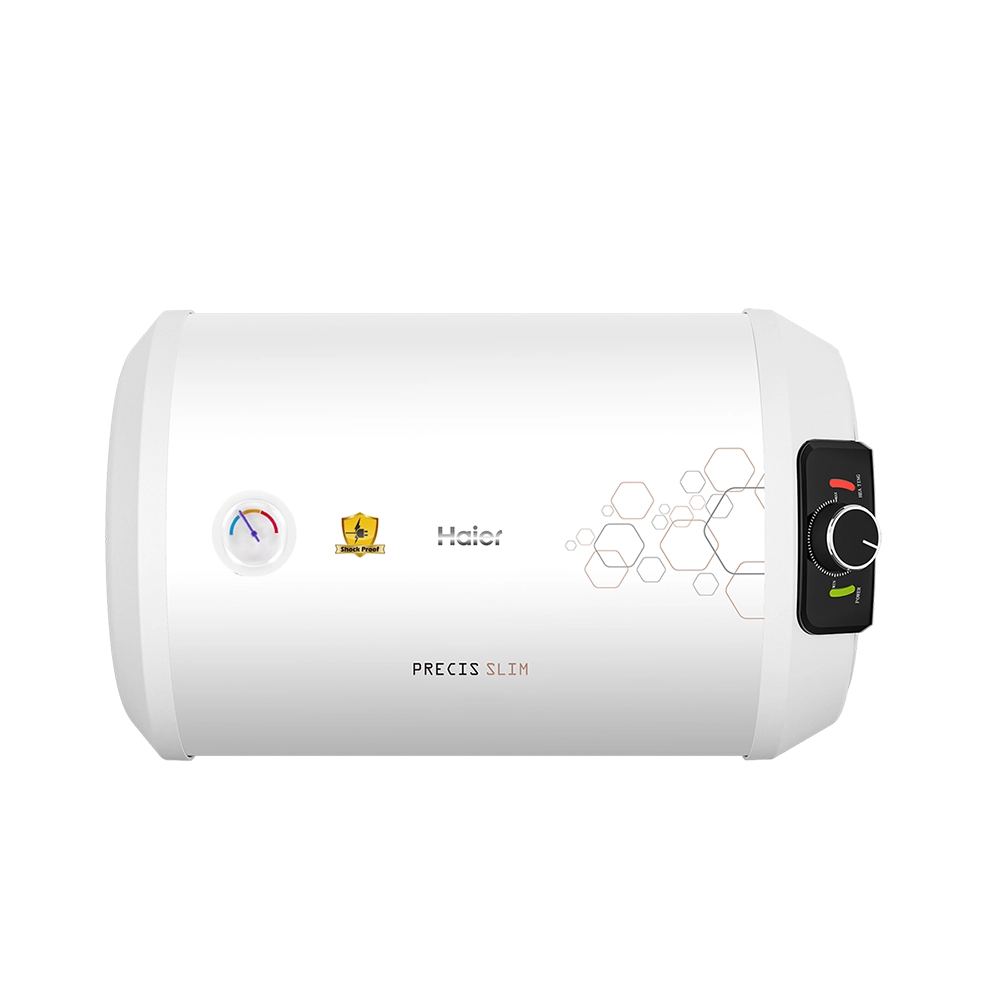
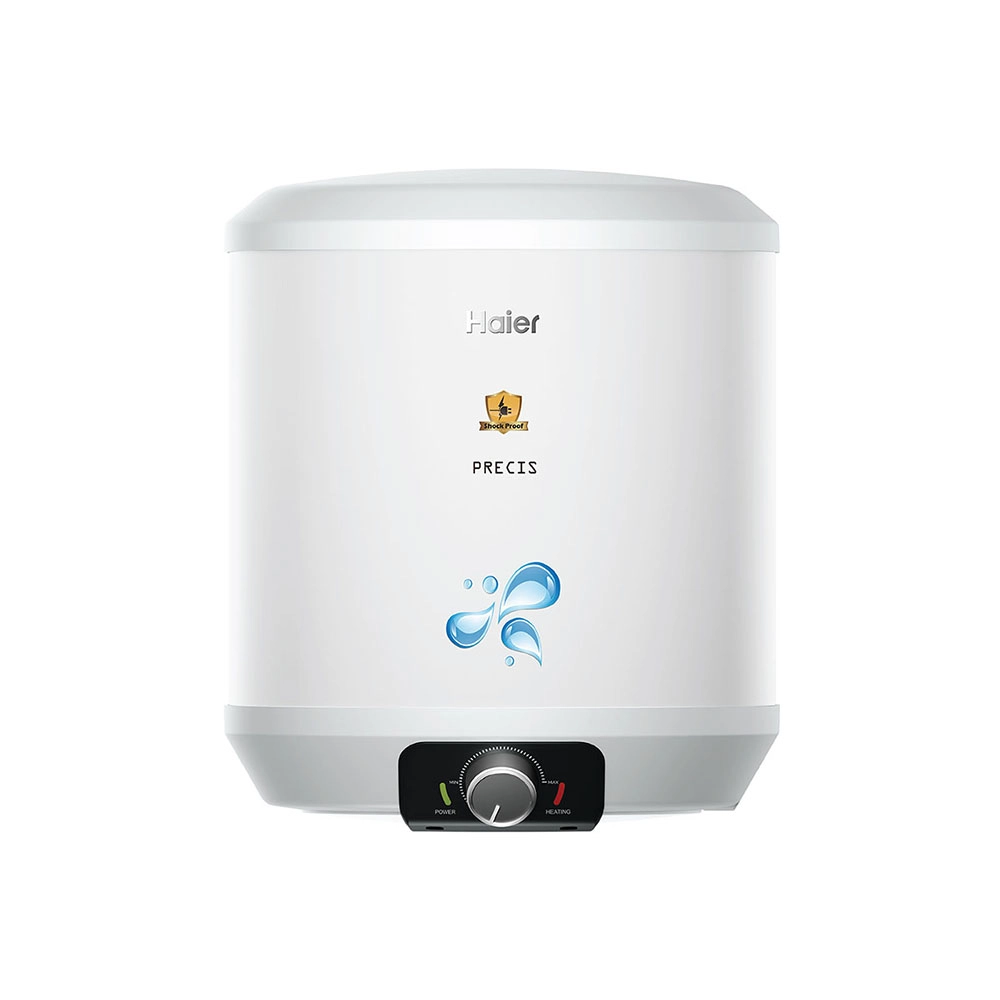
Haier 15L PRECIS PRO ABS 5 Star Cylindrical Water Heater – ES15V-PRECIS PRO
The Haier 15L PRECIS PRO ABS 5 Star Cylindrical Water Heater is another choice.
This model is equipped with a glass lined tank that is more corrosion resistant and an Incoloy 800 heating element.
It also features Shock Proof technology, Dual Thermal Proof protection, IPX4 water resistance and 8 bar pressure rating.
It also offers additional features for normal water heating and circulation with its Bacteria Proof System mode and RSC U-turn Flow Technology.
These features are important for homeowners to consider when comparing storage geysers, and are not just about the size of the tank.
After Several Months, Returning? Don’t Switch On the Geyser Immediately
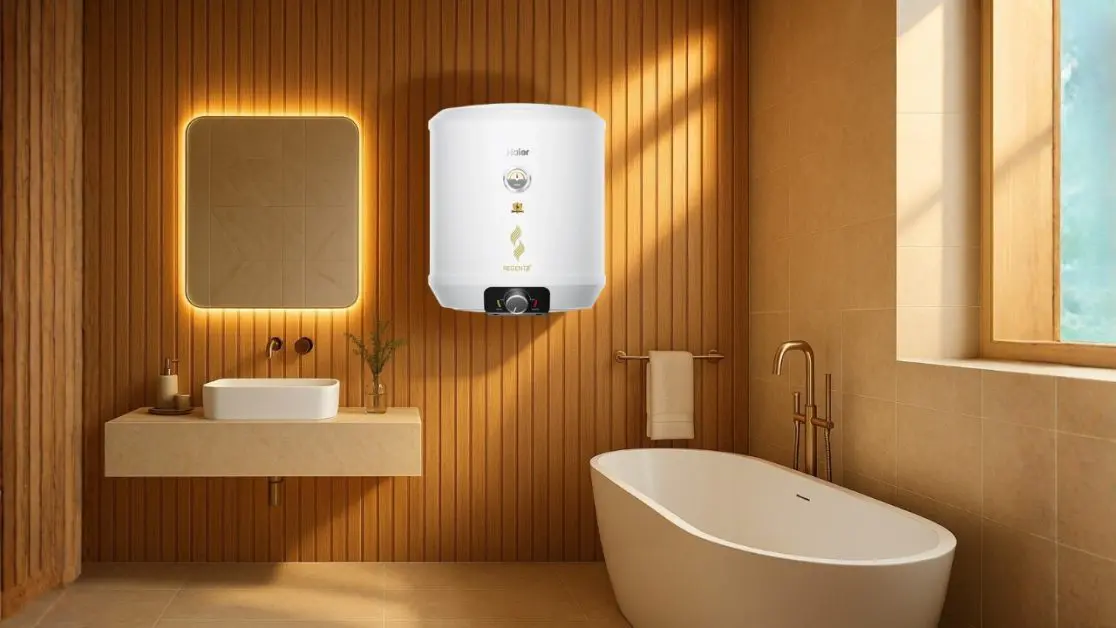
Now think about coming back to your holiday house after three months. The power is on, the faucets are running and you want a hot shower.
Do a couple of checks before turning on the geyser.
Check the Plumbing Connections
Check for leaks or damage in accessible pipes, valves and fittings.
Have water reconnected if it has been turned off, but do so in a safe manner.
Run the Water System for a Minimum of 20 Minutes
Stagnant water should be flushed as necessary prior to normal use.
If water quality is not known and/or if the water is not used for long periods, professional inspection and flushing may be required.
Check if the Tank Is Full
This is essential.
A storage geyser should never be used with a partially or completely empty tank.
Proceed with the manufacturer’s filling instructions and make sure water is flowing from the hot-water outlet before turning on the electricity.
Restart and Observe
After the tank is full and the installation is verified, reconnect the power as per the manufacturer’s instructions.
Look out for unusual noises, leaks, abnormal heating, or electrical issues.
If any of the above seems to be incorrect, turn off the appliance and call authorized service personnel.
Common Mistakes That Can Affect a Geyser After Non-Use
After a geyser has not been used for some time, there are some common problems that can occur.
There are a few bad habits that can make it more difficult to restart a water heater.
- Electrically leaving the geyser for a long period.
- Turning on the heating element before checking the tank for fullness.
- Draining hot and pressurised water without professional advice.
- Not addressing visible leakage or corrosion prior to departure.
- Assuming that the antibacterial heating works as a substitute for proper maintenance.
- Turning on an older geyser after months of not using it without inspecting it.
One final note: Do not block or alter the safety valve discharge system. Pressure-relief components should be able to operate when the geyser is in use or not.
A Little Preparation Makes the Next Hot Shower Easier
When not in use, a geyser does not need to be attended daily. It requires the proper shutdown process, proper water management and careful restart following extended periods of downtime.
If you are looking for a new water heater or replacing an old one, Haier India’s REGENTA and PRECIS PRO water heater ranges are worth considering for their storage capacity, tank protection technologies and safety features.
Visit Haier India water heater range and discover the perfect water heater for your family’s hot water needs. If you have any inspection or maintenance issues, please call Haier’s authorised service team before turning on a geyser that has not been used for a long time.
Frequently Asked Questions
Can a geyser remain unused for six months?
Yes, a geyser may remain unused for six months, but it should be prepared according to the manufacturer’s storage and shutdown instructions. Professional inspection may be advisable before restarting.
Should I switch off my geyser when going on holiday?
Yes. Disconnecting the electrical supply is generally recommended when leaving a geyser unused for an extended period.
Can stagnant water damage a storage geyser?
Stagnant water can contribute to water-quality concerns, while existing mineral deposits and corrosion conditions may affect internal components. The actual risk depends on the tank design, water quality, and duration of inactivity.
Is it safe to turn on a geyser after several months?
It may be safe after appropriate inspection, flushing, and confirmation that the tank is completely filled. Never switch on an empty storage geyser.
Do Haier water heaters have antibacterial features?
Selected Haier models, including the REGENTA and PRECIS PRO water heaters discussed above, feature a Bacteria Proof System designed to heat water to 80°C in the designated mode to inhibit bacteria.