
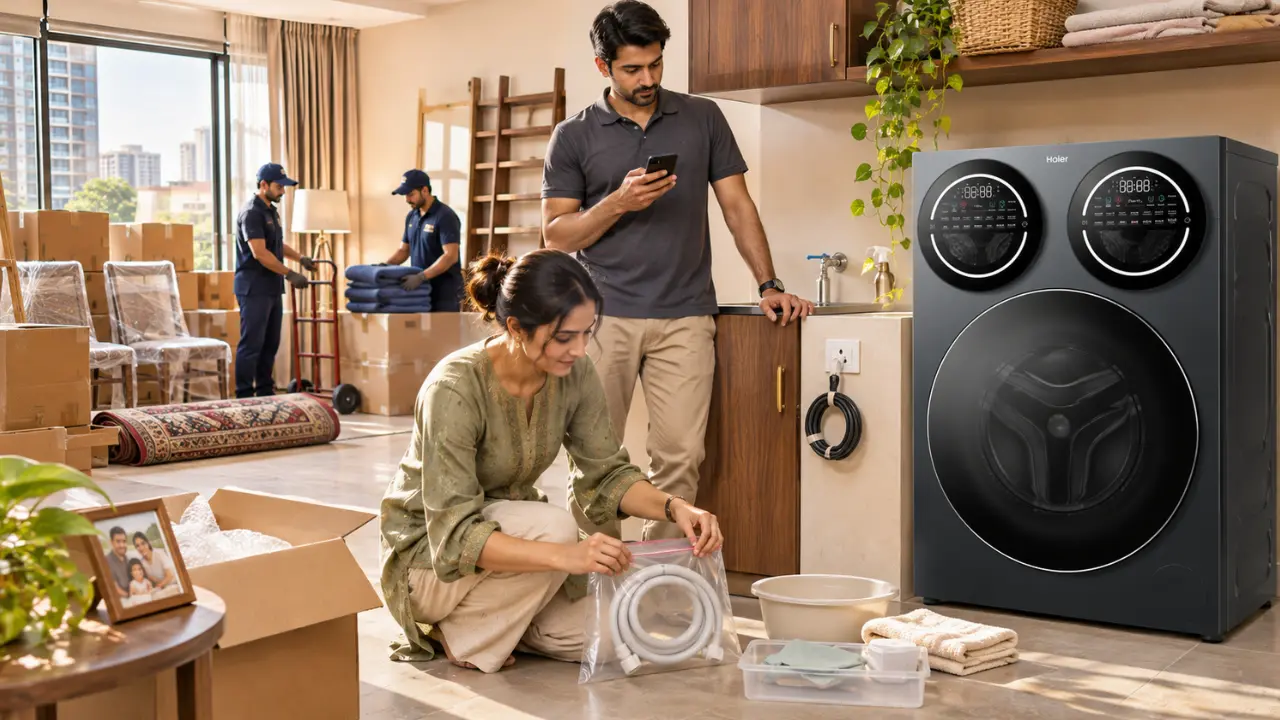

Be sure to get your washing machine ready when you move. Follow these steps for a complete guide on Preparing a Washing Machine Before Moving House in Indian Homes.
The truck is coming in tomorrow. Your furniture is in place, the kitchen cabinets are clear and the refrigerator is already scrubbed. There is one appliance that is more important to take care of than just bubble wrap: your washing machine.
A washing machine has water connections, drainage parts, a heavy drum and delicate moving parts which are not found in a television or a microwave. If not appropriately moved it can lead to leakage of water, any internal damage to the components or excessive vibration when you turn it on again.
So what are the ways to prepare the washing machine for a move?
This entails cleaning the unit, draining the excess water, unhooking the hoses, locking the drum and moving the machine up vertically. Every move counts, especially when moving from one apartment to another or moving cross-country.
Here are the steps you need to take to ensure that you pack your washing machine without missing out on any important details.
Why is it that a washing machine needs special preparation before moving?
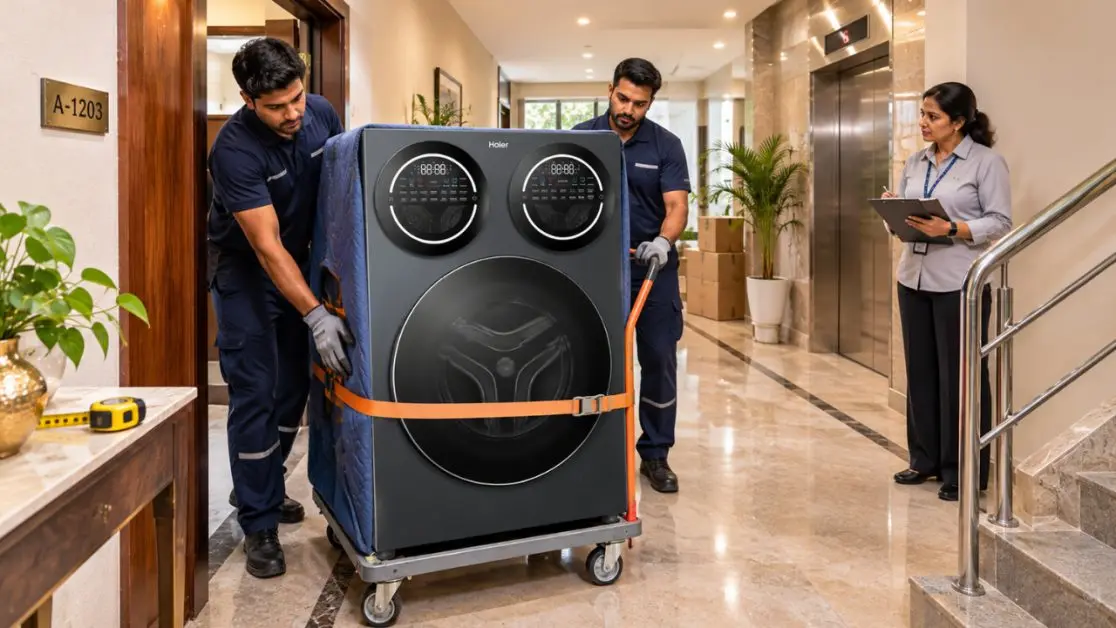
It may seem like a very solid machine, but the insides of a washing machine are designed to run in a level, stable position.
These components can be unnecessarily stressed during transport time due to sudden movements, sharp turns, and roads that are not level enough.
Three areas should be considered in detail:
- Drum assembly: If not properly fastened per manufacturer’s instructions, the drum and supporting parts can move too much during transport.
- Water connections: Water may leak from water inside of hoses and drainage parts while being handled.
- Electrical components: Moisture can lead to operational issues, damaged cables or improper reconnections can bring the same.
When the narrow stairs and many loading points come into play, the problem is tougher for Indian households when they transition between high-rise apartments or independent houses and cities.
These risks are minimized through proper preparation and ensure it is ready for installation at the new location.
24 hours in advance to relocation: Clean and empty the washing machine
A common error made when moving is loading the last load of laundry just before the packers.
Despite the machine’s emptiness, moisture may be present in the door seal, drainage system, detergent drawer and in the drum.
Complete a Drum Cleaning Cycle
If your washing machine has a specific drum cleaning cycle, run it as per the washing machine manual before taking it out.
This helps to eliminate the detergent residue and dirt that may be built up in the drum.
If the machine does not have this programme, use the manufacturer’s recommended cleaning method, not trying out chemicals from the household chemical store.
After cleaning:
- Empty drum of all remaining clothing.
- Clean door gasket and accessible surfaces.
- Wipe the detergent drawer as described in the instructions.
- Leave the door slightly open to allow moisture to evaporate.
- Pack away from the machine if it is damp.
Never use hard cleaning products or combine cleaning products.
Don’t Forget the Detergent Compartment
Sticky buildup may occur inside the dispenser as a result of detergent and fabric softener.
During transportation, these residues may spill or spread.
Clean and remove components from the dispenser as directed by the manufacturer. Give them time to dry before refitting.
Just a few minutes to clean now may save you from having to deal with stinky odor after you move into your new home.
How to Drain Water from a Washing Machine before relocating.
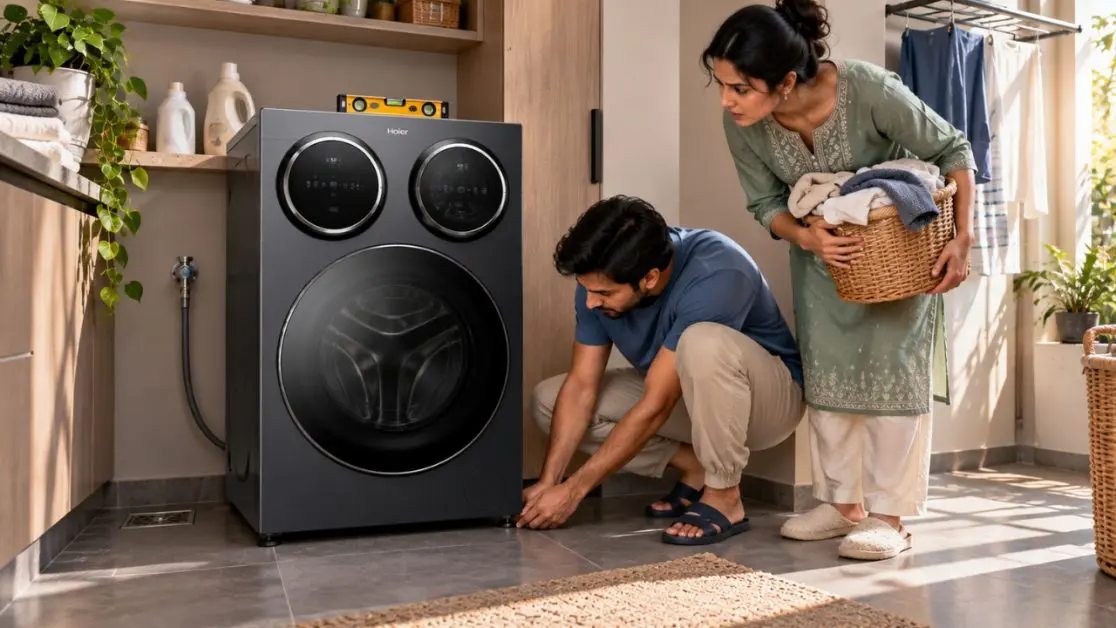
Some water may be trapped in the drainage system even after a wash cycle.
If you disconnect the appliance without draining it properly, water may be left on the floor of your bathroom or utility room.
Follow This Drainage Procedure
- Turn off and unplug the washing machine.
- Turn off all water lines to the appliance.
- Have towels and something shallow to catch the water around the drainage area.
- If any drain outlet exists, follow the user’s guide to drain the remaining water.
- Carefully disconnect the drain hose and let the water run into a container.
- Tie or fasten the empty hoses so that they will not drag when moving.
A few front-load washing machines have an accessible emergency drain arrangement, others have different arrangements.
Don’t assume that all washing machines drain the same way. Please read the instructions for your particular model before opening any filter or drainage part.
Cutting off the electrical lines and the water lines.
After cleaning and draining, it’s time to detach the external connections.
That’s where haste can cost you money.
Carefully remove Inlet Hose.
Only loosen the inlet hose when the water has been completely turned off.
As water may still be trapped in the connection, have a small bucket nearby.
Check the hose for cracks or damaged washers or visible damage. If any part is found to be worn out, make a suitable replacement before fitting the machine back in place.
Ensure the Power Cable is protected.
Unplug the appliance while grasping the plug and not the cord.
Tie cable loosely and tie it without sharp bends.
Don’t wrap the cable tightly around metal fittings or under the machine.
When in doubt about unplugging or turning off any plumbing or electrical lines, call a professional.
The most important part step: Fixing the Washing Machine Drum
Many homeowners find out the hard way that the washing machine’s drum must be treated differently while being moved.
Front load washers often incorporate a suspended drum assembly that will capture the movement during wash and spin.
That suspension system is not designed, however, to take uncontrolled motion within a moving vehicle, though.
Do Transit Bolts need to be used?
A large number of front load washing machines need to have re-installed transit bolts or transport restraints in order to be transported.
These restraints ensure that the internal assembly is securely held in place when moving.
Remember:
- Only use the transport restraints that are listed for your model.
- Install as per manufacturer’s instructions.
- Do not use common screws or blocks of wood or packing material in the drum.
- When operating the machine at the new location, prior to the first use, remove the transit bolts.
If the original transit bolts are lost, please call the manufacturer or an authorized service person for instructions.
If the washing machine is more complicated, it is especially recommended to seek the help of professionals.
The Difference Between Moving A Haier Triple Drum Washing Machine
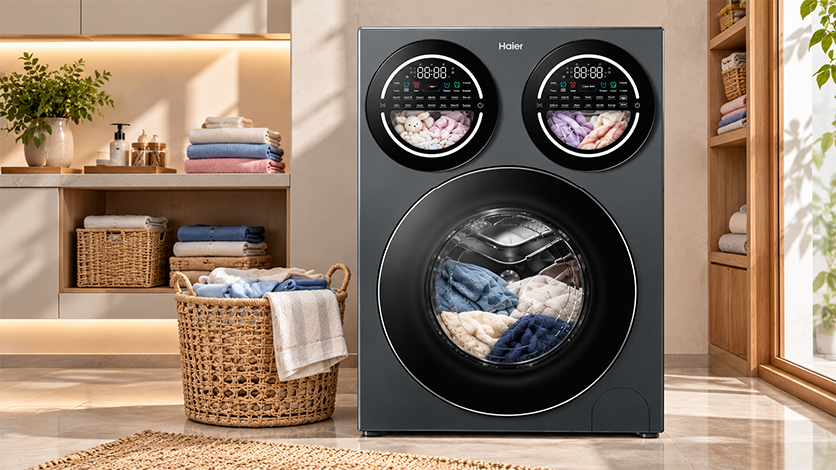
Today’s washing machines are more advanced, and with multi-drum models, there are other factors to consider when moving.
An example of this is the Haier Triple Drum Washing Machine (HW120-DM12LC3GNU1), which meets the needs of different laundry needs in the same machine.
There are three independent drums for various laundry tasks, such as washing baby clothes, heavy-duty washing, and delicate items.
Haier Triple Drum Washing Machine has a combined maximum washing capacity of 12 kg in three drums.
- 10 kg main drum: Best for larger loads of everyday laundry.
- 1kg Upper Drum: Additional washing area for smaller loads.
- 1 kg upper drum: Allows another small load to be washed independently.
The appliance has three separate Direct Motion Motors, and independent controls, so each drum can run through its cycle separately, working together without interfering with one another.
This arrangement offers more flexibility in managing the load of children’s clothes, delicate clothes, everyday laundry etc. for those Indian families who have to deal with office wear.
Nevertheless, it is a very advanced construction and relocation should never be done haphazardly.
Guided by the transportation instructions provided by the manufacturer or Haier’s certified maintenance team, please move the Haier Triple Drum Washing Machine (HW120-DM12LC3GNU1) according to the model. Do not think that the transport-restraint procedure is the same as in a conventional single-drum washing machine.
Technology Designed for Convenient Everyday Washing
After being installed at the new house, the Haier Triple Drum Washing Machine has a number of features, which make the management of household laundry easy.
Multi-Drum AI Wash
The machine has an AI recommendation system that suggests a suitable washing programme depending on the weight of the laundry, thereby assisting users to make proper selections.
Smart Dosing
The automatic dosing system dispenses detergent and softener, and has a specific storage capacity of 900ml detergent and 800ml softener.
Drum Essence Wash
This technology allows to combine detergent and water in advance to achieve dense foam for effective and gentle cleaning of a variety of fabrics.
Quick Clean
By cutting down a set wash time from 1 hour 29 minutes to 46 minutes, the Quick Clean feature is helpful when laundry must be done in a shorter time.
Door-Integrated Touch Panel
With built-in touch controls, washing settings and functions are easily accessible.
These attributes make the Haier Triple Drum Washing Machine a machine worth checking out for a new washing space in the home, especially when it comes to washing various types of clothes separately.
You can safely pack a washing machine by following these simple steps
When the machine is disconnected, and everything inside has been secured as per the manufacturer’s instructions, concentrate on securing the exterior of the machine.
Loose hoses should not hang behind or heavy objects on top of a washing machine when being carried.
Buy packing materials that are useful for keeping on hand.
| Packing material | Purpose |
| Bubble wrap | Resists scratching damage on exterior surfaces |
| Moving blanket | Provides padding when handling |
| Stretch wrap | Helps keep protective coverings in place |
| Strong packing tape | Avoids wrapping by securing tape directly to sensitive features |
| Appliance trolley | Allows for controlled movement by trained handlers |
| Original transit restraints | Installs internal parts in accordance with the manufacturer’s requirements |
If the appliance is a premium unit, it may be easier to move it in the future if the original packing and moving items are left on the appliance.
Is It Better to Transport a Washing Machine Upright?
Yes. Do not transport the washing machine on its back unless the manufacturer specifies otherwise.
It may create unnecessary risks if it is tilted or placed horizontally, causing residual water movement and damage to the internal components.
Please have moving staff do:
- Use a suitable appliance trolley.
- Avoid lifting the machine by its door, control panel or hoses.
- Ensure its stability during loading and unloading.
- Tie it down so it does not move around in the car.
- Never load heavy cartons or furniture on the top.
If the appliance will not fit safely through a doorway or staircase, ask for help, Do not push it through.
What to Check Before Installing the Washing Machine in Your New Home
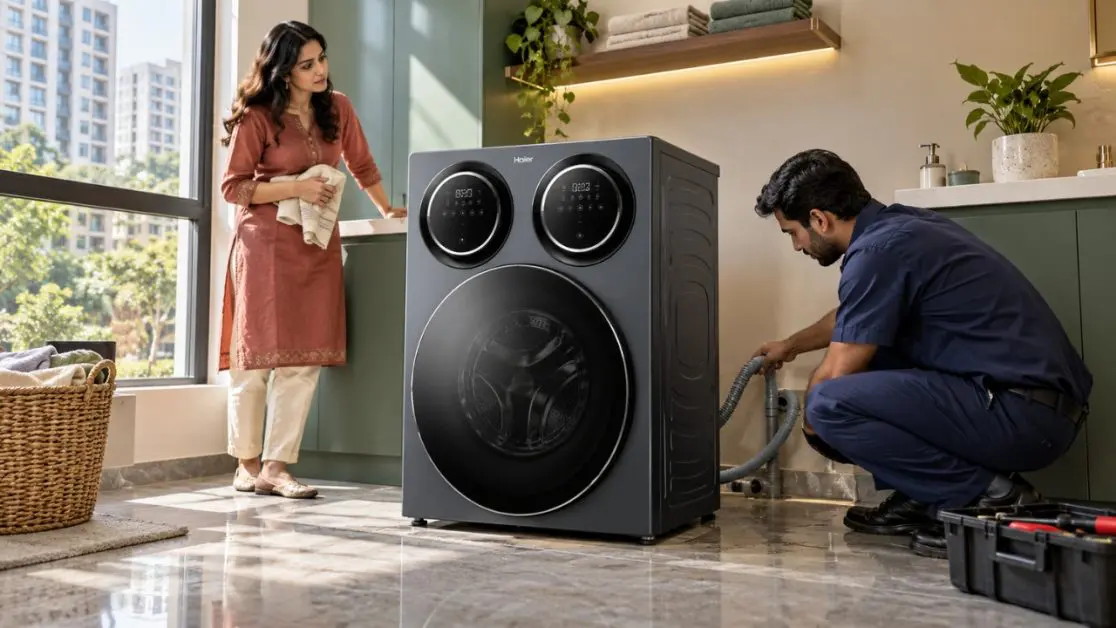
It’s not enough to just move the appliance.
When reconnecting, check the new installation area thoroughly.
Check the Available Space
Do a size up of the installation space including door clearance and hosing and ventilation requirements.
As an example, the Haier Triple Drum Washing Machine (HW120-DM12LC3GNU1) has dimensions of 600 × 600 × 850 mm (width × depth × height).
These are the dimensions of the appliances; installation space will be larger. Further clearance should be made of the manufacturer’s specifications.
Ensure that Water Supply and Drainage are inspected.
Make sure that the new location is equipped with:
- A suitable water connection.
- Proper drainage system.
- A flat surface that is level with the ground.
- An appropriately rated, properly earthed electrical socket.
- Suitable access for installation and maintenance.
Do not use inappropriate extension boards or improvised plumbing.
Remove Transport Restraints Before Operation
This is a crucial step.
Remove transit bolts or other shipping restraints before beginning a wash cycle, unless they were removed prior to shipping, according to the model instructions.
When the transport restraints are installed, running a washing machine can cause serious vibration or mechanical damage.
Once installed, ensure that the machine is level, connections are properly fitted and free from leaks and run the initial test recommended by the user manual.
Common Washing Machine Moving Mistakes to Avoid
Professional movers can be very forgetful about certain requirements when moving an appliance.
Here are some common errors to avoid:
- A damp machine: Moisture can cause a bad smell when stored.
- Failing to secure transit restraints: An unsecured drum assembly may be damaged while in transit.
- Placing the appliance on the floor by dragging the appliance: May damage the floor, feet/machine base.
- Leveling: An uneven installation can lead to an excessive vibration in the spinning process.
- Immediately following improper installation: Always check the connections, restraints and operating conditions first.
Just one more reminder: photograph the original hose connection and hose arrangement prior to disconnecting the appliance. These can be helpful to refer to while reinstalling.
Looking for a new laundry space? Explore Haier Washing Machines
When you are moving into a new home, you should think about all the appliances in your home and how you use them.
Maybe you had problems with multiple wash loads on your previous washing machine. Or your family requires greater flexibility with regards to washing delicate clothing apart from general clothing.
Haier Triple Drum Washing Machine (HW120-DM12LC3GNU1) meets these requirements with independent washing drums, AI assisted programme selection and Smart Dosing and dedicated washing controls.
With a combined washing capacity of 12 kg, it offers the flexibility to handle various loads in a single machine, and the separate drums help to organise laundry without having to wash all the different categories in the same machine.
Learn about the Haier Triple Drum Washing Machine (HW120-DM12LC3GNU1) and its capabilities.
If you need to move or reinstall, please reach out to Haier India’s official service support for relocation/reinstallation help.
Your smooth move starts with a proper preparation
You put in a lot of washables in your washing machine during the year. It can be taken care of a bit more prior to relocation so that it doesn’t suffer unnecessary damage on the journey.
Wash carefully, drain water, make sure that the drum is fastened in the proper position and handle it carefully. In the new house, make sure the house equipment is installed correctly first, before washing the clothes.
And if the move is also the start of a more organised washing machine routine, then venture into Haier India’s laundry machine range that offers you more flexibility for routine washing.
Frequently Asked Questions
1. How do I prepare my washing machine before shifting house?
Clean and dry the machine, drain residual water, disconnect the inlet and drain hoses, secure the internal drum assembly using manufacturer-approved transport restraints and pack the appliance for upright transportation.
2. Can I move a washing machine without transit bolts?
If your model requires transit bolts, moving it without them can increase the risk of internal damage. Contact the manufacturer for compatible restraints or professional relocation guidance.
3. Can a washing machine be transported lying down?
Keeping it upright is generally recommended. Transporting it horizontally may affect internal components or allow residual water to reach unsuitable areas. Follow your model’s transportation instructions.
4. Should I clean my washing machine before moving?
Yes. Cleaning the drum, detergent compartment and accessible seals helps remove residue and reduces the likelihood of unpleasant odours during transportation or storage.
5. Can I install my washing machine myself after moving?
Some connections may appear straightforward, but correct levelling, plumbing, electrical safety and removal of transit restraints are essential. Professional installation is advisable, especially for sophisticated multi-drum models.
6. What should I do if my washing machine vibrates excessively after relocation?
Stop the machine and check whether transport restraints have been removed and the appliance is correctly levelled. If the problem continues, contact an authorised service technician rather than repeatedly operating it.