
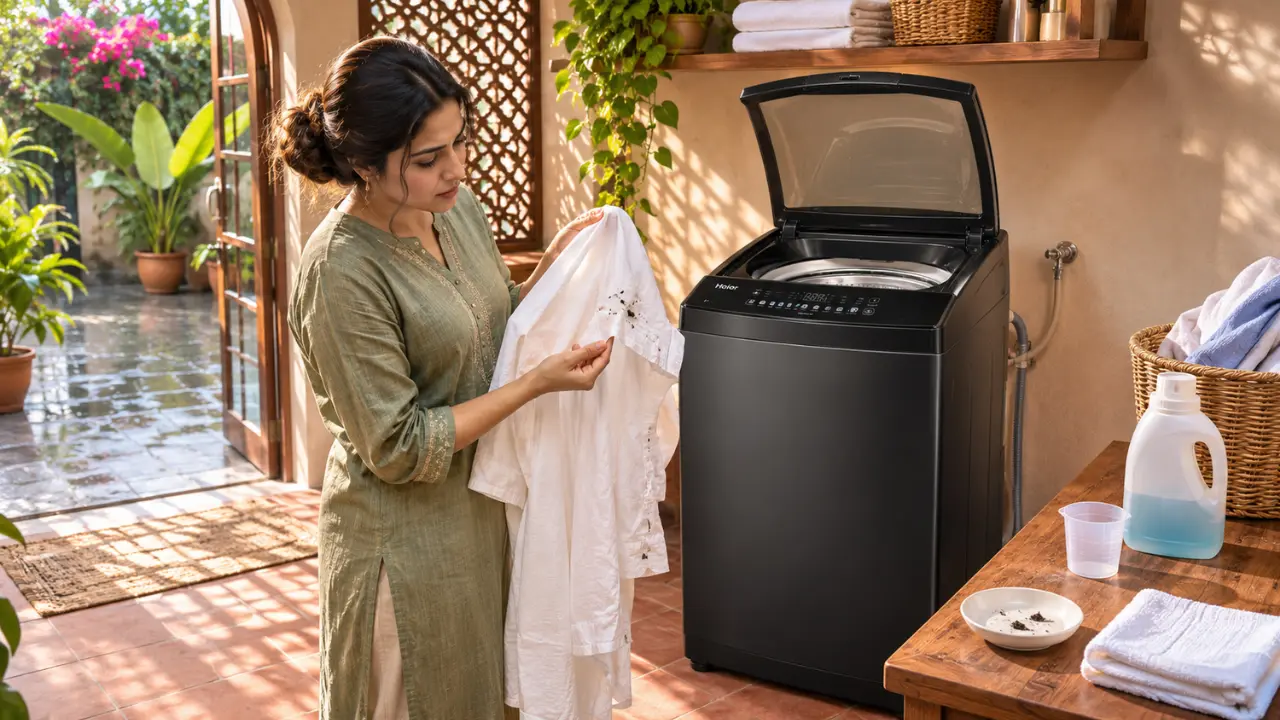

The washing cycle is complete, the clothes are clean and smell of fresh detergent, but then you notice tiny black particles sticking to a freshly washed white shirt. Upon closer inspection, a few more are scattered throughout the washing machine.
Where did they come from?
The most common causes of black flakes in a washing machine drum are detergent residue, fabric softener, lint, mould or grime. These substances slowly accumulate inside the machine and can come loose during subsequent wash cycles. In other instances, the deterioration of rubber components or contamination of the water supply may be responsible.
Black flakes do not always indicate a problem with the washing machine. However, they are a warning sign that something needs attention before the next load of laundry.
What Are Those Black Flakes Actually Made Of?

Not all black particles in washing machines are created equal. Some feel slimy when wet, while others look like tiny pieces of rubber or dried dirt.
Understanding their appearance can help you narrow down the possible cause.
| Appearance of Black Flakes | Possible Cause |
| Soft, slimy black particles | Mould or accumulated organic material |
| Sticky, dark flakes | Detergent and fabric softener build-up |
| Small, rubber-like fragments | Deteriorating rubber components |
| Hard, gritty particles | Sediment or mineral deposits in the water supply mixed with dirt |
| Dark, fibrous particles | Accumulated lint and fabric fibres |
Even when deposits have built up behind the drum or around less accessible internal components, the visible drum may appear completely clean.
How Black Flakes Develop Inside a Washing Machine
The problem rarely develops overnight. It typically starts with small amounts of residue left inside the machine after each wash.
1. Too Much Detergent Leads to Persistent Deposits
Using more washing powder when washing very dirty clothes seems reasonable, especially when washing children’s school uniforms or kitchen towels.
However, using more detergent does not necessarily make laundry cleaner.
Excess detergent may remain undissolved or may not be fully rinsed away. Over time, it mixes with body oils, fabric fibres and dirt, forming deposits that can darken and eventually come loose during laundry cycles.
2. Moisture Encourages Mould Growth
Laundry areas can become particularly humid during Indian summers and monsoon months. A washing machine installed in a poorly ventilated utility room may remain damp for hours after washing.
Closing the lid immediately after each wash can further restrict air circulation.
The combination of moisture and organic material from soiled clothing provides favourable conditions for mould growth. Some of this accumulated material can break away and appear as black flakes.
3. Frequent Cold Water Washing Causes Residue to Accumulate
Many everyday clothes can be washed in cold water. However, repeatedly washing oily kitchen linen, sweaty clothes and heavily soiled fabrics at low temperatures can contribute to residue build-up.
Some greasy materials are harder to clean at cooler temperatures.
Using an appropriate warm or hot water programme, where permitted by the garment care label, can help tackle greasy laundry soils more effectively.
4. Neglected Lint Filters
Fibre is released from clothing during every wash. Older garments and cotton towels tend to shed more.
If lint filters are not cleaned regularly, accumulated fibres can combine with moisture and detergent residue. Some of this material may eventually return to the wash water.
For households that wash clothes almost every day, regular filter maintenance is especially important.
A Simple Way to Find Out Where the Black Flakes Are Coming From

Before attempting to clean the entire appliance, spend a few minutes examining the problem.
- Remove all clothing from the washing machine.
- Switch off and unplug the appliance before inspecting accessible components.
- Check the lint filter for black, sticky deposits.
- Examine the detergent compartment for hardened detergent.
- Inspect visible rubber components for signs of deterioration.
- After reconnecting the appliance, run an empty rinse cycle and check whether new particles appear.
If black flakes continue appearing even when there are no clothes inside the machine, the source could be accumulated deposits within the appliance, incoming water or an internal component that needs inspection.
Avoid dismantling the drum yourself.
How to Remove Black Flakes From a Washing Machine Drum
Cleaning the visible drum is important, but it may not resolve the issue. Sometimes, a more systematic approach is necessary.
Clean the Lint Filter
Clean the accessible lint filter according to the manufacturer’s instructions. If the filter is designed to be washed under running water, rinse it and remove trapped fibres.
Securely reinstall it before using the appliance.
Run an Appropriate Drum Cleaning Cycle
If your washing machine has a dedicated tub or drum cleaning programme, use it. Otherwise, follow the cleaning procedure recommended in its user manual.
Use only compatible washing machine cleaning products in the recommended quantities.
Avoid experimenting with combinations of bleach, vinegar and other household chemicals. Combining cleaning products can create hazardous fumes and may damage appliance components.
Allow the Interior to Dry
After cleaning, use a soft cloth to wipe down accessible surfaces. When it is safe to do so, leave the lid open for ventilation and keep children and pets away from the appliance.
Minimising trapped moisture can help prevent further microbial growth.
Choosing a Washing Machine That Supports Better Laundry Hygiene
When purchasing a washing machine, it is important to consider lint management, suitable washing temperatures and consistent cleaning performance.
Haier India addresses these everyday laundry requirements through thoughtfully designed top-load washing machines.
Haier 8 Kg Advance In-Built Heater Top Load Washing Machine (HWM80-H688BK)
Designed for households with regular laundry requirements, this washing machine combines temperature-controlled washing with efficient lint removal.
Its features include:
- 2X Magic Filter to capture lint and other debris during washing.
- Advanced butterfly-shaped in-built heater for effective cleaning.
- Three hot water modes with temperatures of up to 60°C.
- Oceanus Wave Drum for gentle yet thorough fabric cleaning.
- 5-star energy efficiency rating.
- Softfall Technology for controlled lid closure.
The double filtration system is particularly beneficial when washing clothes that shed considerable lint, such as cotton towels and everyday household linen.
Haier 9 Kg Top Load Washing Machine (HWM90-H688BK)
For larger households, this 9 kg model offers additional capacity alongside convenient washing features.
It features:
- Dual Magic Filter to capture lint, fluff and other particles.
- Advanced in-built heater for effective laundry cleaning.
- Oceanus Wave Drum for thorough washing and gentle fabric handling.
- Stainless steel tub.
- Convenient rear control panel.
- 5-star energy efficiency rating.
Both models come with a four-year comprehensive warranty and a ten-year motor warranty, subject to applicable warranty terms.
While these technologies help support cleaner laundry, routine appliance maintenance and regular filter cleaning remain important.
Small Laundry Habits That Make a Lasting Difference
Preventing black flakes is much easier than having to clean up months of accumulated residue.
Here are a few changes you can make to your daily routine:
- Use detergent according to the laundry load and water hardness.
- Avoid using more than the recommended amount of fabric softener.
- Clean lint filters according to the user manual.
- Remove washed clothes promptly.
- Avoid overloading the washing machine.
- Clean the tub according to the recommended cleaning schedule.
- Allow sufficient ventilation between washes.
If black particles remain after cleaning, particularly if they resemble rubber fragments or are accompanied by unusual sounds, arrange a professional inspection through Haier service support.
Cleaner Clothes Begin With a Cleaner Washing Machine
Nobody wants to spend time removing black particles from freshly washed clothes. Fortunately, many instances of black flakes can be addressed through proper cleaning and better laundry practices.
Haier top-load washing machines offer practical functionality for the everyday laundry needs of Indian households, with features such as Dual Magic Filters, advanced in-built heaters and Oceanus Wave Drum technology.
Explore Haier India’s range of washing machines and select a model that best suits your family’s laundry requirements, washing habits and lifestyle.
After all, freshly washed clothes should come out cleaner than they went in.
Frequently Asked Questions
1. Are black flakes in a washing machine harmful?
Black flakes may contain mould, detergent residue, dirt and accumulated organic matter. Although not always harmful, they can compromise laundry hygiene, contribute to unpleasant odours and potentially irritate sensitive skin. Cleaning the washing machine before further use is advisable.
2. Why do black flakes appear even after cleaning the washing machine drum?
Residue may remain behind the inner drum, inside lint filters or around inaccessible components. Cleaning only the visible surfaces may not remove these deposits. Follow the manufacturer’s recommended cleaning procedure or seek professional assistance if the problem persists.
3. Can too much fabric softener cause black flakes?
Yes. Excessive fabric softener can leave a sticky residue that combines with detergent, dirt and lint. Over time, these deposits may darken, loosen and appear as black flakes during subsequent wash cycles.
4. Does hot water washing help prevent black flakes?
Appropriate hot water washing can help remove greasy laundry soils that contribute to residue accumulation. Haier top-load washing machines with advanced in-built heaters offer temperature-controlled washing. However, regular drum and filter maintenance remains necessary.
5. Can hard water cause black particles in a washing machine?
Hard water can contribute to mineral deposits that combine with detergent residue and dirt. Although mineral deposits are generally whitish, accumulated impurities may give them a darker appearance.
6. Can Haier Magic Filters help reduce unwanted particles in laundry?
Yes. Haier’s Dual Magic Filter technology is designed to capture lint, fluff and other particles during washing, supporting cleaner laundry. However, it does not eliminate the need for routine drum cleaning or prevent every possible cause of black flakes.