




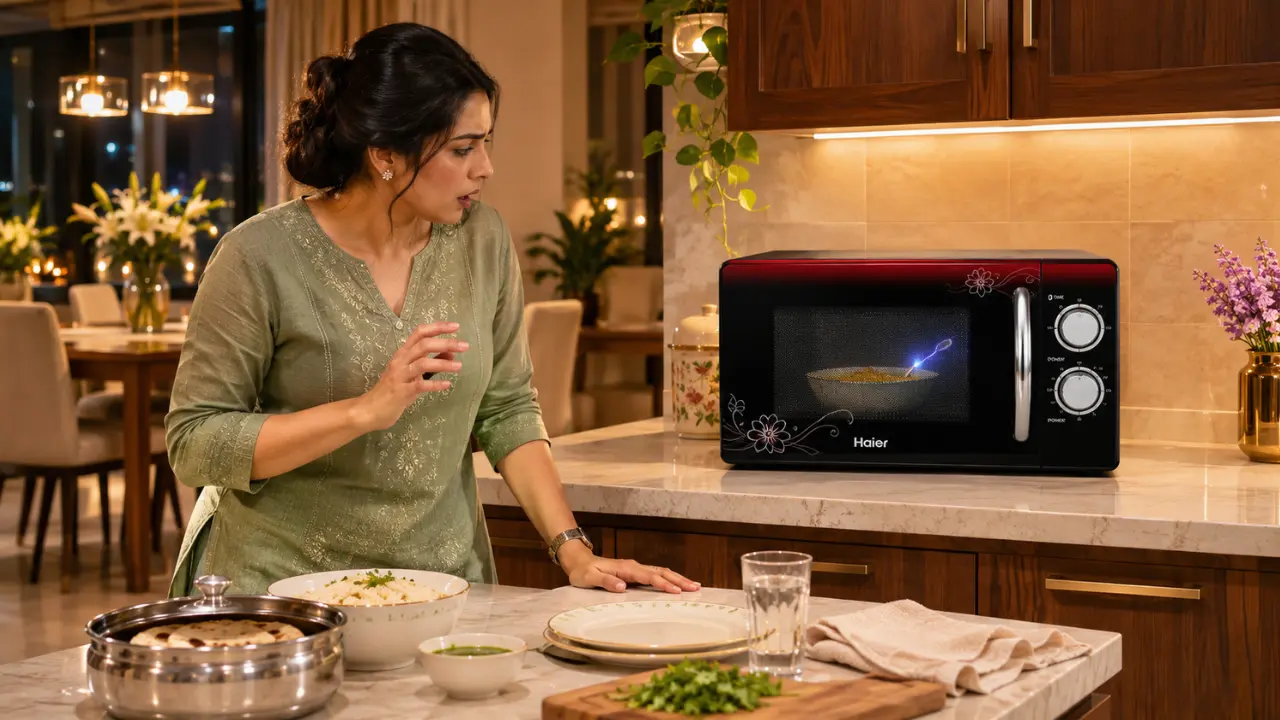

You put a bowl of leftover dal in the microwave, set the timer for two minutes and turn around to prepare dinner. Then there’s a loud crackling noise. Behind the glass door, a flash of light is seen.
It’s frightening when a microwave oven sparks inside, especially if it has been operating normally until then.
The good news? Not all sparks are a sign of serious mechanical problems. A missing steel spoon or a small piece of aluminium foil is to blame at times. In other cases, it could be a problem with the internal components that need to be fixed by a professional.
Knowing about the cause of the sparking in the microwave and when to turn it off can prevent additional damage.
What Causes Sparking Inside a Microwave Oven?
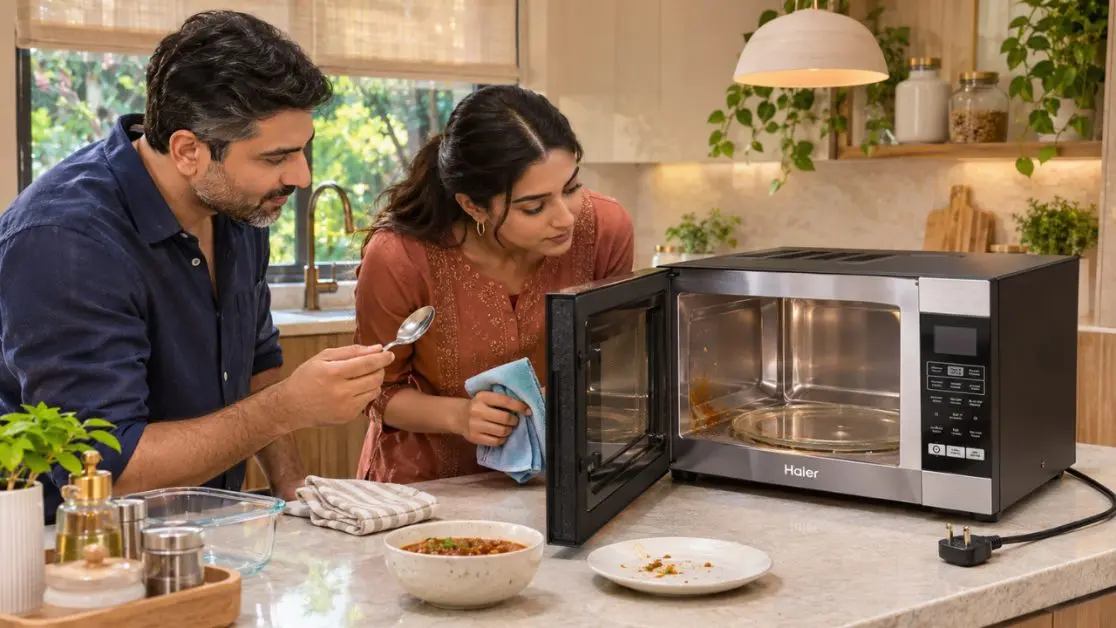
The most frequent causes of sparks in a microwave oven are metal objects, food residue, damaged interior surfaces or faulty components. The phenomenon is called electrical arcing, where an electrical discharge produces visible flashes or sparks.
The microwave oven is a device that uses electromagnetic energy to heat food. Under certain conditions, such as when this energy comes into contact with certain metallic surfaces, especially sharp edges or close proximity of metallic objects, strong electrical fields can develop, leading to arcing.
But it’s not always metal.
A dirty microwave cavity, damaged waveguide cover or a failing interior coating can also be a factor.
6 Common Reasons Why Your Microwave Oven Might Spark
1. Metal Utensils Left in the Microwave
Picture this. You are reheating yesterday’s rajma but the steel spoon for serving is still in the bowl.
That’s sufficient to cause a problem.
Microwave energy can reflect off metal; some shapes or positions can focus electrical fields, causing sparks.
Typical items that can arc are:
- Stainless steel utensils, such as spoons and forks.
- Exposed or crumpled aluminium foil.
- Plates with metallic gold or silver decoration
- Metal containers and takeaway packaging.
- Thin metal wire twist ties
Not all metal objects will spark. But if the microwave manufacturer has not made an exception for the cooking mode, it is better to stay away from metal.
2. Accumulation of Food Residues and Grease
Just a few drops of curry splashed against the wall of the microwave may not seem to matter.
However, food particles and grease can get baked on the inside surfaces over time. Carbonised deposits can cause localized overheating and electrical arcing.
This is especially true for Indian kitchens where gravies are often reheated, snacks are made and oil-heavy dishes are cooked.
Pay attention to:
- Dried food splashes around the cavity
- Oil accumulations in the upper interior area
- The particles are burned under the turntable.
- Remnants of food around the waveguide cover
These deposits can be prevented from building up by regular cleaning.
3. A Damaged Waveguide Cover
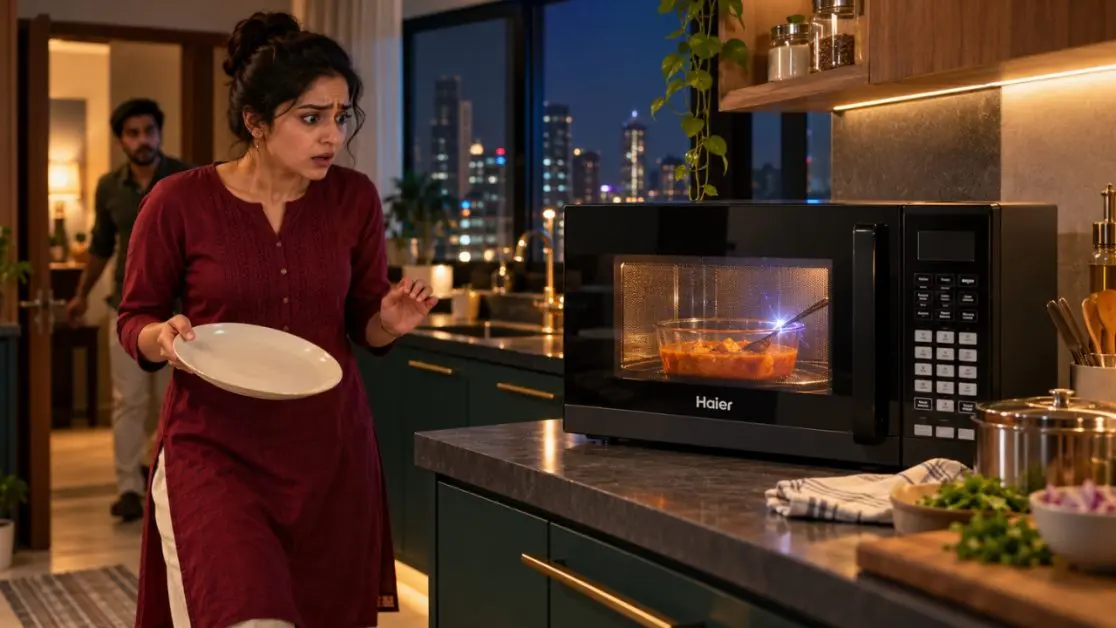
There is a small protective cover over the opening through which microwave energy enters the cooking cavity in most microwave ovens.
This is referred to as the waveguide cover.
It is used to keep the food particles and moisture out of the waveguide area.
If the cover is greasy, burned, cracked or otherwise damaged, arcing can occur.
Dark burn marks, visible deterioration or repeated sparks from the same spot are signs to investigate.
Do not take the cover off and keep operating the microwave. Arrange a professional inspection instead.
4. Scratches or Damage to the Interior Coating
The inside of a microwave oven is designed to withstand normal cooking conditions.
Deep scratches, corrosion or peeling protective coatings, however, can reveal areas that can spark.
This can occur if the abrasive scrubbers are used repeatedly, or if inappropriate utensils are used to damage the cavity.
If the microwave has a small, shallow scratch, it is not necessarily unsafe. However, if you see any visible arcing, damaged metal or corrosion, it should be evaluated by a qualified technician.
5. Using Unsuitable Cookware
Not all pretty serving bowls are microwave safe.
Some ceramic dishes may have metallic decoration, and some containers may not be microwave safe.
When buying cookware, make sure it is marked as microwave-safe.
Glass and ceramic containers that are microwave safe are typically good options for daily reheating.
Keep in mind that cookware that is microwave safe for reheating may not be appropriate for grilling or convection cooking. Always follow the instructions for the selected mode.
6. Internal Component Problems
If the sparks persist when no inappropriate utensils or food debris can be seen, the issue may be internal.
This could be due to faulty parts, electrical issues or deterioration of the microwave energy delivery system.
These problems can only be diagnosed with confidence when using a combination of visual and other diagnostic tools.
More significantly, microwave ovens have high voltage parts that can hold a potentially dangerous electrical charge even when the oven is unplugged.
Always have internal repairs done by a qualified service professional.
If Your Microwave Sparks, What Should You Do Right Away?
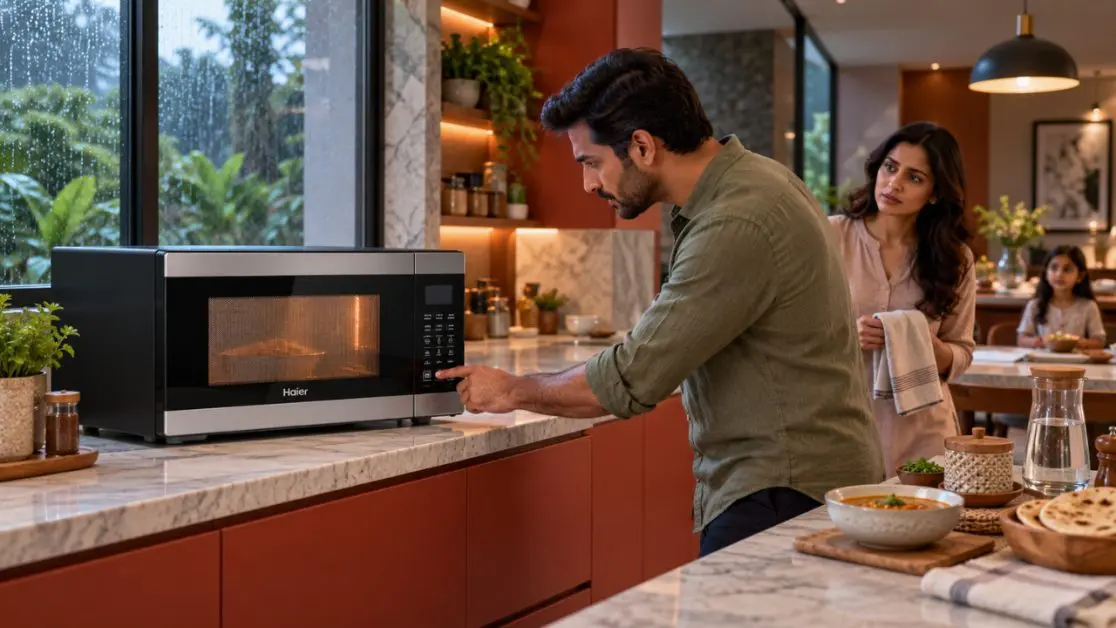
The first answer is more important than the actual cause.
Follow these precautions:
- Press the stop button on the microwave control panel to stop the microwave.
- Unplug the appliance, if safe to do so.
- In the event of smoke or fire, do not open the door and call the emergency services if needed.
- Wait for the appliance to cool down before checking the cooking space.
- Look for any metal objects, burnt food residue or any damage.
- If the cause is not clear or there is visible damage, do not restart the microwave.
Do not repeatedly turn the appliance on and off to determine if the sparks will reappear. Running the system can aggravate the issue.
How to Avoid Sparking in the Microwave Oven in Daily Cooking?
There are a few simple kitchen tips that can help prevent it.
Select the Proper Cooking Utensils
Follow the manufacturer’s guidelines for cookware and cooking functions.
Some convection microwave ovens have metal racks, rotisserie accessories or special cooking trays that are approved by the manufacturer.
These accessories can only be used in specific operating modes or combinations as described in the user manual. They should not be considered as microwave safe in general.
Maintain a Clean Cooking Cavity
Once the microwave has cooled, use a soft cloth and cleaning solution to clean up food splashes.
Do not use abrasive scrubbers, harsh chemicals or excess moisture around openings or electrical components.
Check the Interior from Time to Time
Check for any unusual marks, damaged coatings or deterioration around the waveguide cover.
If any part is damaged, stop using it and make an appointment for an inspection.
Don’t Operate a Microwave Without Food in It
If the microwave is used without any food or suitable load, it can reflect too much energy, which may lead to damage to the microwave.
Follow the manufacturer’s operating instructions.
Selecting Haier Microwave Oven for Everyday Indian Cooking
If you’re thinking about buying a microwave oven for the kitchen, versatility in cooking, easy controls and maintenance should be taken into account.
Haier India has convection microwave ovens for various cooking needs ranging from daily use for reheating to baking, grilling and family cooking.
Haier 28L Convection Microwave Oven With Dual Heating Element (HIL2801DBSJ)
The Haier 28L Convection Microwave Oven With Dual Heating Element (HIL2801DBSJ) is a microwave oven with a convection function that includes several useful features.
It has dual heating elements at the top and back, which provide heat distribution from multiple directions. Convection cooking is done by a back convection fan that circulates hot air.
Other features include:
- Cavity made of stainless steel for durability and easy cleaning.
- Combination cooking functionality
- Easy Jog Control for easy operation.
- High quality black glass exterior.
For homes seeking an interior that’s easy to clean and maintain, the stainless steel cavity is especially significant.
Haier 30L Convection Microwave Oven (HIL3001CBSH)
The Haier 30L Convection Microwave Oven (HIL3001CBSH) is suitable for families that like to try out new Indian recipes.
The appliance has 400 auto-cook menus, offering pre-set cooking combinations for a wide range of preparations.
Its features include:
- Bread Basket for preparing naan, paratha and kulcha.
- 9 pre-programmed Home Fry recipes
- Low-temperature cooking functionality
- Ghee and curd making options
- Cooks with a combination microwave, grill and convection.
These are all features that make it a versatile choice for families looking for something more than just reheating.
Haier 30L Convection Microwave With In-Built Air Fryer (HIL3001ARSB)
The Haier 30L Convection Microwave With In-Built Air Fryer (HIL3001ARSB) combines several cooking modes into a single device, making it an ideal choice for households that want to grill and air-fry.
It has 36 dedicated air-fryer menus, 305 auto-cook menus and a motorised rotisserie for grilling.
A stainless steel cavity makes it easy to clean the inside, and the five microwave power levels enable users to choose the appropriate setting for various cooking needs.
It also has a child-lock feature that helps prevent accidental use, but it’s important to remember that adult supervision and proper cooking methods are still necessary.
When to Call a Microwave Service Technician?
One case of an inappropriate utensil may have a clear cause. However, any damage or doubt that can be seen should never be overlooked.
Professional inspection is recommended where:
- Sparking occurs repeatedly
- The cover of the waveguide is burnt or damaged.
- The inside lining is flaking or rusting.
- A constant burning odor is present.
- The microwave makes strange electrical sounds.The microwave makes strange electrical noises.
- The appliance turns off the heating normally after an arcing event.
Haier India’s customer support team provides after-sales service to Haier microwave users.
Final Thoughts
If the microwave oven sparks, it’s a warning that should not be ignored. In some cases, it’s as simple as a missing steel spoon. Other times, the appliance might require professional service.
By practicing good cookware habits, cleaning regularly and conducting timely inspection, avoidable problems can be minimized.
If your home is looking for a new kitchen gadget, Haier India’s convection microwave range is there to help you with your daily cooking, baking, grilling and air-frying needs. Select a model depending on the needs of your family for cooking, observe the instructions for operation and ensure safe use during its operation.
Frequently Asked Questions
Is it safe to use a microwave after it sparks?
Do not continue using it until the cause has been identified and the appliance is confirmed safe. Visible damage, repeated arcing or an unexplained incident requires professional inspection.
Can a dirty microwave cause sparking?
Yes. Burnt food particles, carbonised residue and grease deposits can contribute to electrical arcing inside the cooking cavity.
Why does my microwave spark even without metal inside?
Possible causes include a damaged waveguide cover, burnt food residue, deteriorating interior coating or internal electrical faults.
Can I use metal racks in a convection microwave?
Only use manufacturer-approved racks in the cooking modes explicitly permitted by the appliance’s user manual. Accessories suitable for convection or grilling may not be suitable for microwave-only operation.
Can microwave sparking damage the appliance?
Yes. Repeated electrical arcing can damage interior surfaces and components. Stop operation immediately and seek professional assistance when necessary.