
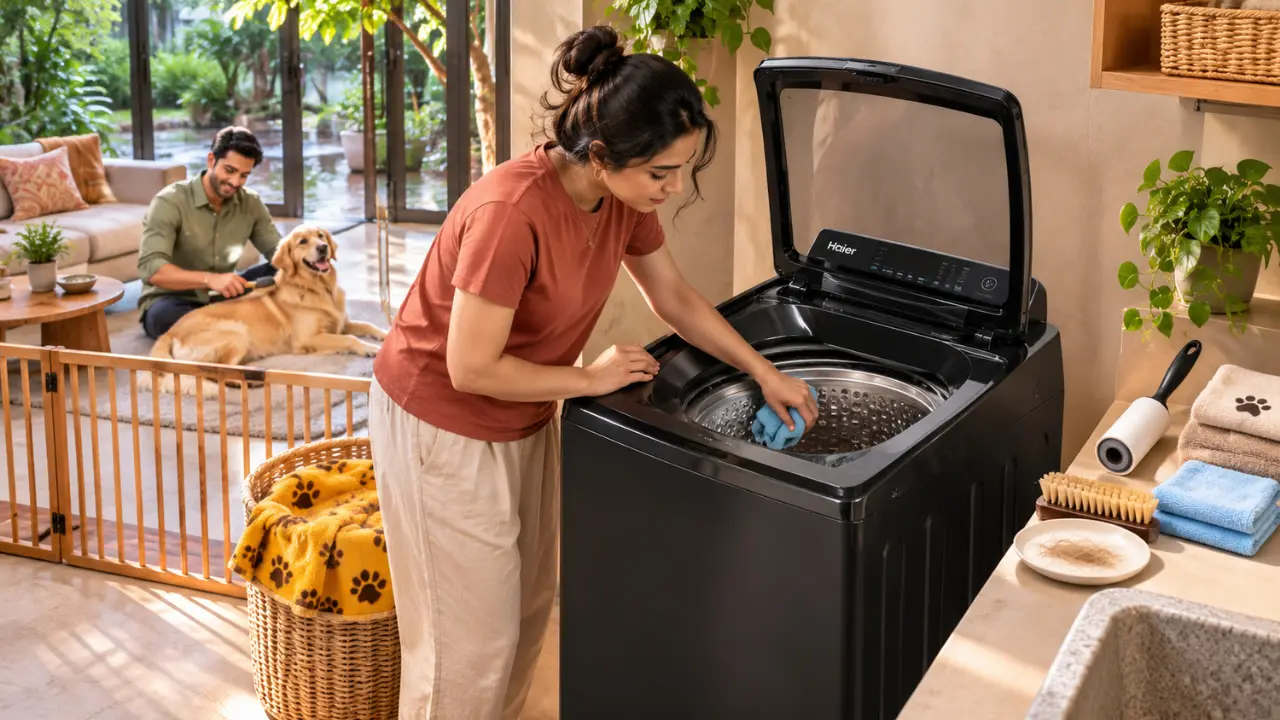

The dog has been bathed, the muddy paw prints have been cleaned off the floor and the dog’s favourite blanket is no longer in the washing machine. Everything looks clean until you see a small group of fur on the inside walls of the drum.
Pet bedding is not just dirty on the surface. It gathers loose hair, dander, saliva, body oils and outdoor dust. These impurities can stay in the washing machine even after washing.
When washing pet bedding, remove any visible pet hair, clean lint filters, wipe down the inside of the washing machine and its drum, run an empty wash cycle as per the manufacturer’s instructions and let the washing machine dry thoroughly.
Some care between laundry loads can make a big impact on daily washing hygiene.
What Happens to Pet Bedding After It Is Washed?
Pet bedding is prone to collecting multiple types of debris at once, unlike regular household laundry. For example, a Labrador blanket might have a lot more loose hair than a full load of regular cotton garments.
Common residues include:
- Pet hair caught around the drum and filters.
- Unpleasant-smelling natural body oils.
- Very small skin flakes and dander.
- Dirt and dust tracked inside from outside.
- A combination of detergent residue and fabric fibres.
- Microorganisms found in soiled bedding.
Pet blankets can get very smelly during the monsoon season. If the washing machine is closed right after, the problem can be exacerbated by moisture.
Before Your Next Load of Laundry, Follow This Cleaning Routine
You don’t need to do a major deep-cleaning job every time your pet’s blanket is washed. But a systematic cleaning process will help to prevent the transfer of residue to other clothes.
Step 1: Remove Loose Hair From the Drum
After the wash cycle, remove the bedding and check the drum.
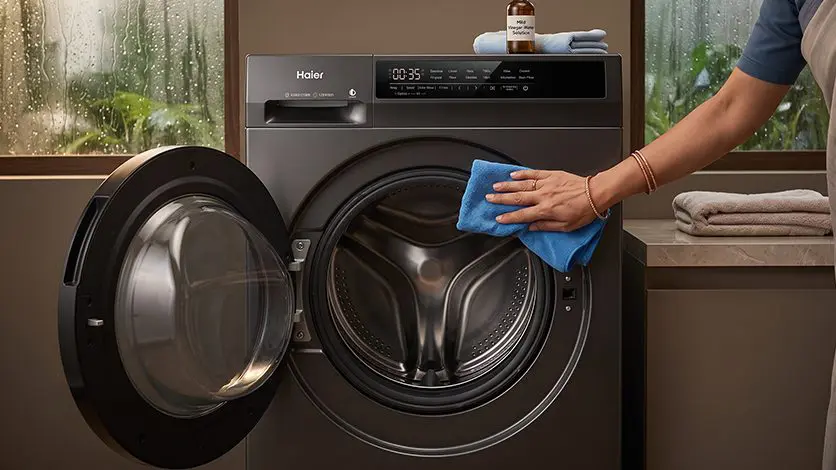
Turn off and unplug the washing machine before cleaning inside by hand. Dampen a microfibre cloth slightly and use it to pick up any visible hair on the drum walls, base and accessible edges.
If you have a front-load washing machine, be sure to check the creases of the rubber door seal. For top-load machines, check the areas around the top of the drum that are accessible.
Do not force hair into drainage holes.
Step 2: Empty and Clean the Lint Filters
This is likely the most neglected aspect of pet bedding washing.
Loose fibres and debris are trapped in lint filters during washing. These filters can become very loaded and may not be able to collect more particles.
To clean an accessible, removable lint filter:
- Take it out as per the washing machine’s manual.
- Be careful to remove any hair and lint that has built up.
- If allowed, rinse the filter with running water.
- Use a soft brush to remove stubborn debris.
- Securely replace the filter before using the machine.
In homes with long-haired dogs or more than one dog, filter maintenance is especially crucial.
Step 3: Run an Empty Cleaning Cycle
Once visible debris has been removed, reconnect the washing machine and use the recommended drum or tub cleaning cycle (if available).
Only use a washing machine cleaner that is recommended for your washing machine and use the correct amount.
If your machine doesn’t have a built-in cleaning programme, check the user manual for a suitable empty maintenance cycle.
Avoid mixing vinegar, bleach and other household cleaning chemicals. Some chemical mixtures can emit harmful gases, in addition to causing damage to the appliances.
Step 4: Clean and Dry the Interior Surfaces

When the cleaning cycle is complete, turn off the machine and clean up any residue.
Open the lid or door for a short period of time in a well-ventilated area, but ensure that children and pets are not allowed to access the machine.
This is a simple habit that allows moisture to evaporate, instead of staying inside the appliance.
Is Your Washing Machine Prepared for the Next Wash?
If you do a quick inspection, you can determine if more cleaning is needed.
| What You Notice | What You Should Do |
| Hair that sticks to the drum walls | Use a damp microfibre cloth to wipe |
| Excessive lint inside filters | Take out and wash easily accessible filters |
| Lingering pet odour | Perform a recommended maintenance cycle |
| Drum residue around the detergent | Wipe and rinse according to instructions |
| Water in the machine | Let the inside of the appliance dry out |
| Persistent drainage problems | Contact authorised service support |
If the unpleasant odours or drainage problems persist after regular cleaning, a professional inspection might be required.
The Cleaning Process Really Starts Before Cleaning Pet Bedding
Preparing the bedding before the washing machine is used can help to minimise the work required after the wash.
Remove the blanket outside and brush off any loose dirt. Remove any fur that has become embedded, especially around stitched edges and corners, with a lint roller or an appropriate vacuum attachment.
There are a couple more tips to follow:
- Separate pet bedding from personal clothes when washing.
- Look for machine-washable cushion covers and mattress inserts.
- Take out solid waste properly before washing.
- Do not put too many large blankets in the washing machine.
- Use the temperature guidelines on the care label of the bedding.
- Use an appropriate detergent and do not use too much.
Hot water can help to clean more thoroughly when the fabric allows. Some waterproof linings, synthetic fillings and some foam materials, however, might need different washing conditions.
How Haier Washing Machines Can Help Maintain Laundry Hygiene in Pet-Friendly Homes
Pets can make doing laundry more often a reality. Between sofa covers, old towels, pet blankets and everyday clothing, the washing machine has quite a workload.
To meet these daily needs, Haier India provides washing machines with convenient filtration features, superior heating performance and well-designed drums.
Haier 8 Kg Advance In-Built Heater Top Load Washing Machine (HWM80-H688BK)
This model combines characteristics that are especially important for households with a high frequency of laundry and lint build-up.
- 2X Magic Filter: It is a filter that is used to collect lint and debris while washing, which helps to keep laundry cleaner.
- Advanced In-Built Heater: It has a butterfly-shaped heating pattern and is capable of strong cleaning and germ killing.
- Three Hot Water Modes: Warm, Hot and Allergen Free with temperatures up to 60°C.
- Oceanus Wave Drum: Provides water action for a complete wash and gentle fabric care.
- Energy Star Rated: Promotes energy-efficient daily laundry.
The 8 kg capacity is a practical feature for households that need to wash their clothes regularly while also washing pet accessories that can be put in the washing machine.
Haier 9 Kg Top Load Washing Machine (HWM90-H688BK)
The 9 kg model provides extra washing capacity and handy daily functions for households that need more laundry.
These include:
- Dual Magic Filter technology to collect lint, fluff and other particles.
- Advanced In-Built Heater for powerful cleaning.
- Oceanus Wave Drum for gentle and thorough washing.
- Controlled lid closure by Softfall Technology.
- Easy operation with Rear Control Panel.
- 5-Star Energy Rating for energy-efficient washing.
If you wash larger blankets and removable pet bedding covers regularly, the extra capacity may be worth considering, depending on the appliance’s loading instructions.
Both models are covered by a 4-year comprehensive warranty and a 10-year motor warranty (as applicable).
These technologies help with the hygiene of everyday laundry, but it is still important to clean the filters and maintain the appliances regularly.
How Often Should You Clean Your Washing Machine After Pet Laundry?
Ideally, inspect the drum and lint filters after every pet bedding wash. If the bedding is very dirty or if there is visible residue and smell, a more comprehensive maintenance cycle may be required.
The frequency also depends on your pet’s shedding habits, bedding material and how often you wash its accessories.
Your washing machine might require more attention during the shedding season or during the monsoon months.
Cleaner Laundry for All in the Household
Pets will shed. Blankets will become soiled. It’s just a part of living with animals.
The key is to make sure that the residue from one wash doesn’t cause issues in the next.
Haier washing machines provide practical solutions to the diverse laundry needs of Indian households with thoughtful washing habits and features like Magic Filter technology, advanced in-built heaters and Oceanus Wave Drum.
Visit Haier India and discover the range of top-load washing machines that will suit your family’s laundry requirements, including your four-legged family members.
Frequently Asked Questions
1. Should I clean my washing machine after every pet bedding wash?
Yes, it is advisable to inspect the drum and clean the lint filters after every pet bedding wash. Run a recommended maintenance cycle if excessive hair, dirt or unpleasant odours remain inside the machine.
2. Can pet hair clog a washing machine?
Yes, excessive pet hair can accumulate in filters and drainage components, potentially affecting water drainage and washing performance. Removing loose fur before washing and regularly cleaning accessible filters can help prevent such issues.
3. Is it hygienic to wash pet bedding and human clothes in the same washing machine?
Yes, provided you wash them in separate loads and clean the washing machine appropriately between washes. Avoid mixing heavily soiled pet bedding with personal clothing, towels or children’s garments.
4. Does hot water help remove pet odours from bedding?
Hot water can help loosen body oils and remove odour-causing residues. The Haier 8 Kg Advance In-Built Heater Top Load Washing Machine (HWM80-H688BK) offers three hot water modes with temperatures up to 60°C. Always follow the bedding’s fabric care instructions.
5. Can I use vinegar to clean my washing machine after washing pet bedding?
Avoid using vinegar unless your washing machine manufacturer specifically recommends it. Instead, use an approved washing machine cleaner and follow the maintenance instructions provided in the appliance’s user manual.