
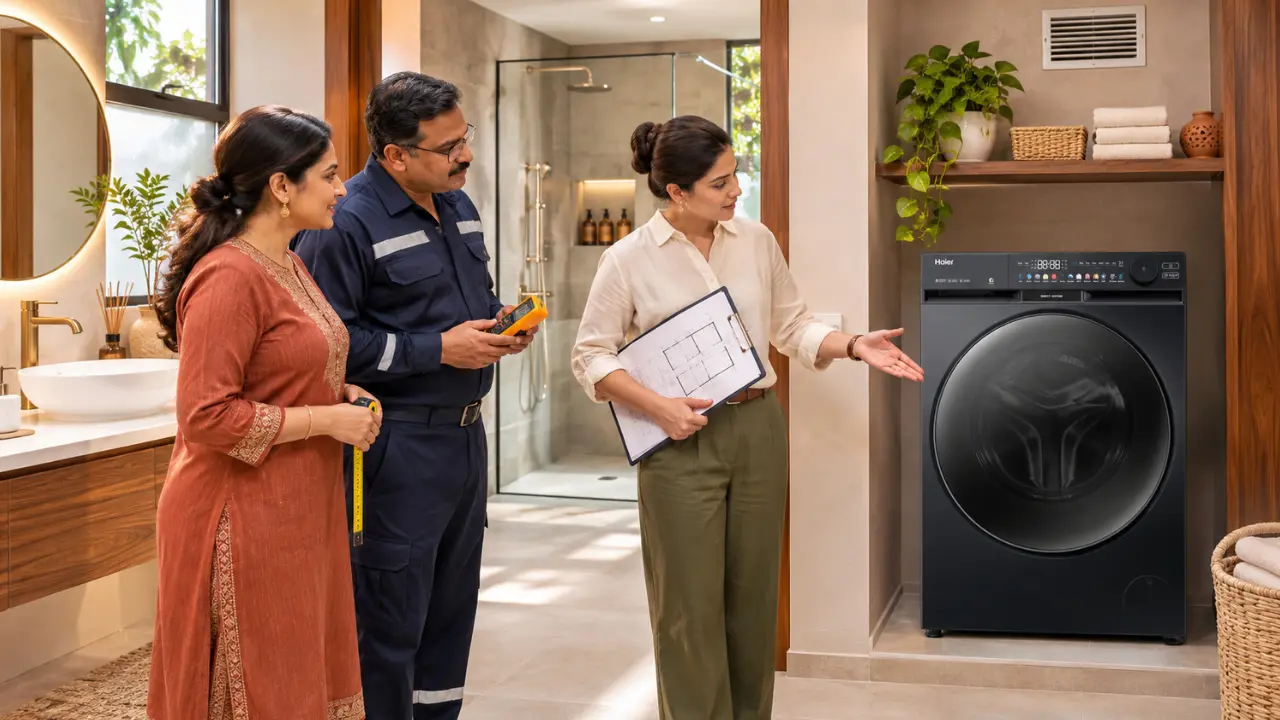

The space next to your bathroom washbasin seems like the ideal spot for a washing machine. You won’t need to give up any valuable kitchen or balcony space, and there is already a water connection nearby.
But there’s a catch. Bathrooms are one of the most damp rooms in an Indian house and washing machines rely on electrical parts which require protection from water.
So, is it possible to install a washing machine in a bathroom?
Yes, but only if there is an appropriate dry space in the bathroom, the electrical installation is appropriate for the location and the washing machine manufacturer allows it. Simply having enough floor space isn’t sufficient.
If you’re considering purchasing a washing machine for your bathroom, there are a few practical considerations to take into account.
Can You Place a Washing Machine in a Bathroom?
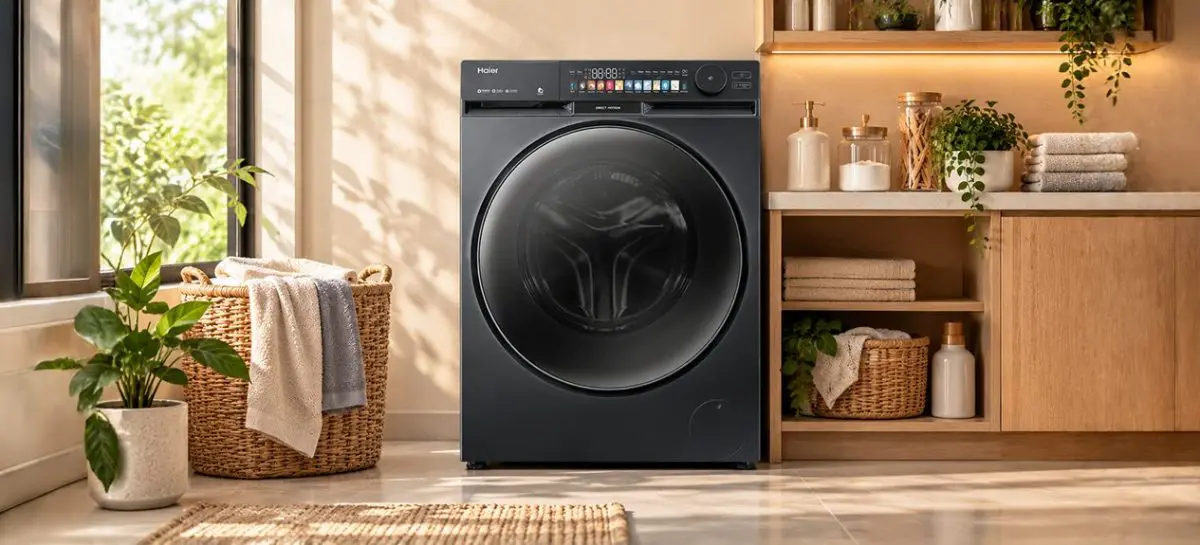
A washing machine can only be installed in a bathroom if the space is suitable for electrical safety, ventilation, drainage and installation by the manufacturer.
The biggest concern isn’t the machine using water. The risk of water getting in contact with electrical connections, controls or internal components.
Let’s take a look at an average Indian apartment bathroom. A person is taking a shower and water splashes on the floor, and the steam slowly fills the room. If the washing machine is several feet away, problems can still occur due to prolonged exposure to moisture.
Three conditions are worthy of special mention:
- Direct water contact: Sprays and splashes should not come in contact with the appliance or its electrical connections.
- Humidity: Condensation around the machine can be caused by poor ventilation.
- Electrical protection: Earthing, wiring and residual current protection are all important.
A bathroom equipped with a properly separated dry utility area may be acceptable, based on professional judgment. A small wet bathroom with water in nearly every corner is not a good installation.
Will the Washing Machine Fit?
The most common bathroom installation mistake is the measurement.
A washing machine may be a perfect fit between two walls but not enough space to open the door, hook up the hoses or reach into the machine for maintenance.
Check the Machine’s Dimensions First
For instance, Haier India’s F9 front load washing machine range comes in three capacities and different cabinet depths.
| Haier Washing Machine Model | Capacity | Width × Depth × Height |
| Haier F9 Front Load Washing Machine (HW90-DM14F9BKU1) | 9 kg | 600 × 500 × 850 mm |
| Haier 10 Kg Fully Automatic Front Load Washing Machine (HW100-DM14F9BKU1) | 10 kg | 600 × 600 × 850 mm |
| Haier 12 Kg F9 Front Load Washing Machine (HW120-DM14F9BKU1) | 12 kg | 600 × 600 × 850 mm |
These measurements refer to the appliance cabinet and not the total installation area.
The 9 kg variant has a shallower cabinet than the 10 kg and 12 kg variants. The difference could be important if planning a limited utility area, but installation clearances should still be checked.
Remember to Leave Space Around the Machine
Before finalising the location, check whether:
- The front door can open easily.
- There is sufficient room for water inlet and drain hoses.
- The appliance is mobile for servicing.
- Bathroom doors and cabinets are not blocked.
- The floor can be used to support the machine during spinning.
Don’t just fit a washing machine into a corner because it looks like it will fit.
The Following Are Electrical Safety Checks That You Should Never Overlook

Now it’s time to get serious about bathroom installation.
A washing machine uses electricity, water and moving parts. The wiring or the location of the socket can be a hazard, especially in a wet area.
1. Check the Earthing and Electrical Circuit
The appliance should be connected to a suitable electrical supply properly earthed to its specification.
The above models of Haier are rated for 220V or 220-240V at 50Hz.
But, just because the voltage matches doesn’t mean a bathroom circuit is safe.
A licensed electrician should check:
- Effective earthing
- The appropriate socket and circuit ratings are used.
- Suitable circuit protection
- Compliance with applicable bathroom electrical-zone requirements
2. Use the Correct Shock Protection Devices
Residual Current Devices (RCDs) or RCCBs (as they are known in India) are used to minimise the risk of electric shock by interrupting the supply when specific leakage currents are detected.
Under the applicable electrical standards, an electrician must decide on the type of protection and installation arrangement.
An RCCB is not a substitute for earthing or a way to make an unsafe bathroom installation safe.
3. Avoid Contact of Electrical Connections with Water
Do not use an extension board or loose multi-plug adaptor to plug a washing machine into a bathroom outlet.
Electrical connections should be installed and guarded in compliance with the relevant regulations and should not be located in areas where water is not allowed.
If the only socket is next to the shower, do not try to fix the issue with a plastic cover or make-up wiring. Get a professional opinion on the location.
What About Drainage, Water Supply and Ventilation?
The focus is on electrical safety, but plumbing and ventilation are equally important.
A Floor Drain Is Not Always Sufficient
The washing machine’s discharge arrangement must also comply with the installation requirements of a bathroom floor drain, which can be used for shower water.
If the drainage is not adequate, wastewater may back up or overflow onto the floor.
Check that:
- The drain hose is positioned and raised according to the manufacturer’s instructions.
- The drainage connection is capable of accepting discharge without overflowing.
- The water inlet hose is securely fastened.
- There is no leakage around the connections.
Do not set the machine on a surface where water is likely to accumulate under the machine.
Ventilation Matters More Than You Think
Indian toilets can stay damp for hours, especially during the monsoons.
If not properly ventilated, moisture can condense on surrounding surfaces and appliance parts.
An exhaust fan or appropriate ventilation system may be used to control humidity, but this does not make a wet bathroom safe for electrical appliances.
If condensation is a regular occurrence in the room, then a separate utility space may be a better option.
Haier F9 Washing Machines Are an Excellent Addition to Any Modern Laundry System
After you have decided on an appropriate installation site, selecting the right washing machine is much easier.
The F9 front load washing machine range by Haier India comes in 9 kg, 10 kg and 12 kg capacities, providing choices for households depending on their laundry needs and space constraints.
Several features are included in the range to make everyday washing easier.
One-Touch AI Wash for Everyday Convenience
The One-Touch AI Wash function automatically determines the washing parameters based on the fabric type, laundry amount and dirt level.
This can be very helpful in a busy Indian household where daily loads can consist of office wear, children’s clothes and regular cotton clothes.
Users can use the intelligent wash selection instead of manually adjusting multiple settings for each wash.
Direct Motion Motor for Smoother Operation
Haier’s Direct Motion Motor is directly connected to the drum, which can be operated more smoothly and reduce vibration and noise.
If the laundry room is near the bedrooms or shared living spaces, quieter washing can be a practical benefit.
But less vibration does not mean that levelling and a stable floor are not required.
Smart Features That Simplify Laundry
The F9 range also offers features such as:
- AI Colour Panel for an interactive washing interface.
- Night Wash for quieter washing cycles.
- Eco Wash for optimising washing resources.
- Dual Spray to help rinse away detergent residue.
- Supported smart laundry functions with Wi-Fi connectivity.
While these features can make day-to-day life easier, they are not to be taken as a sign of waterproofing or as a sign of approval for use inside a wet bathroom.
A Quick Bathroom Installation Checklist
When buying or installing a washing machine, check the following:
| Installation Check | What to Confirm |
| Bathroom location | An appropriate dry surface that is not exposed to splashes |
| Electrical supply | Correct earthing and appropriate circuit protection. |
| Socket position | Compliance with bathroom electrical-zone rules |
| Floor condition | Stable, level and free from standing water |
| Drainage | Proper hose placement and effective disposal of wastewater. |
| Ventilation | Adequate moisture control |
| Available space | Door clearance, hose space and service access |
| Manufacturer approval | Installation site as specified in the appliance instructions |
If any of these conditions are not possible, it is better to select another location.
Common Installation Errors That Can Cause Problems Later On
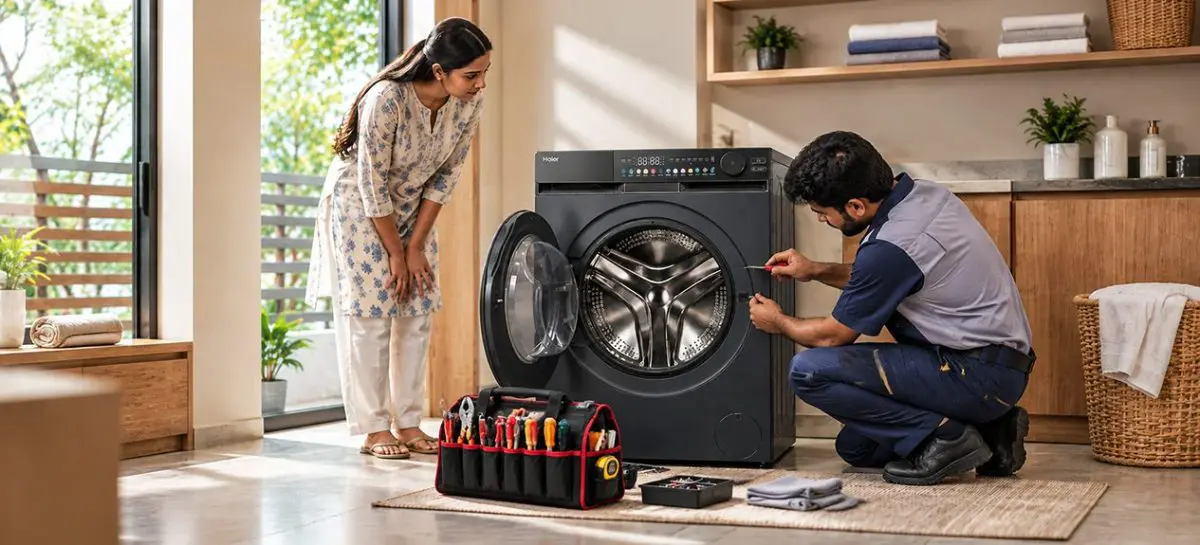
Some shortcuts might appear to be harmless during installation, but can cause unnecessary issues.
Placing the Machine Directly Next to a Shower
The appliance can be exposed to moisture even if it is splashed occasionally. Shower curtains should not be considered a reliable electrical barrier.
The Machine Should Be Placed on an Unstable Platform
A poorly raised platform can be hazardous when spinning at high speeds.
Install on a stable level surface according to the manufacturer’s specifications.
Failure to Follow the Manufacturer’s Instructions
There are installation limitations for different washing machines.
The product specifications provided with Haier’s F9 models are not bathroom specific. Please check the approved installation conditions with Haier before installation.
Select the Appropriate Washing Machine, Then Select the Appropriate Location
Installing a bathroom may seem like a convenient solution, particularly in Indian households where space is a critical factor. However, convenience should not be the only consideration when it comes to electrical safety.
If your bathroom is not large enough for a dry installation area that is properly protected, a kitchen utility corner, separate laundry space or a suitably sheltered service area might be a better choice.
If you are looking to switch to a new washing machine, Haier India’s F9 front load washing machine comes with 9 kg, 10 kg and 12 kg capacities, intelligent washing features, Direct Motion Motor technology and convenient controls.
Check out the Haier washing machine range and compare the models and choose the right capacity for your family.
Before installation, get the proposed installation site inspected by a qualified electrician and an authorised installation professional.
If you have a good washing machine, you deserve a good space in your home.
Frequently Asked Questions
1. Can I install a fully automatic washing machine in my bathroom?
Yes, but only if the bathroom has a suitable dry installation area, proper ventilation, safe electrical connections and adequate drainage. The installation must also comply with the manufacturer’s instructions and applicable electrical safety requirements.
2. Is it safe to use a washing machine in a bathroom with a shower?
Installing a washing machine near a shower is generally not recommended because of direct water splashes and moisture exposure. A separate dry area may be considered only after a qualified electrician confirms that the installation meets relevant safety requirements.
3. Does a washing machine need a separate electrical socket in the bathroom?
A washing machine should have a properly rated, earthed electrical connection that complies with the manufacturer’s requirements. A qualified electrician should assess the need for a dedicated circuit, suitable socket placement and appropriate RCCB protection. Avoid extension boards and multi-plug adaptors.
4. How much space is required to install a front load washing machine?
Space requirements depend on the model. For example, the Haier F9 9 kg Front Load Washing Machine (HW90-DM14F9BKU1) measures 600 × 500 × 850 mm. Additional clearance is necessary for opening the door, connecting hoses, ventilation and maintenance, as specified in the installation instructions.
5. Can bathroom humidity damage a washing machine?
Yes. Prolonged exposure to excessive humidity and condensation can affect electrical components and encourage corrosion over time. Proper ventilation helps manage moisture, but it cannot replace a suitable installation location or adequate protection against water exposure.
6. Which Haier washing machine is suitable for a bathroom with limited space?
The Haier F9 9 kg Front Load Washing Machine (HW90-DM14F9BKU1) has a 500 mm cabinet depth, compared with 600 mm for the 10 kg and 12 kg F9 models. Its shallower design may help when planning a limited laundry area. However, bathroom installation suitability must be confirmed separately with Haier and a qualified installation professional.