

The waistband is no longer snug around your waist. The material gathers around the knees, and the compression leggings that were once in perfect shape start feeling like regular track pants.
Sound familiar?
Compression leggings are not like normal cotton clothes. Their performance depends on the elasticity of the fabric, whether you wear them for morning runs, gym sessions, yoga classes or cycling. Unfortunately, everyday laundry practices can gradually reduce this elasticity.
The best way to wash compression leggings without losing their stretch is to use cold water, a mild detergent and a gentle wash programme. Do not use fabric softeners, excessive spinning or high-temperature drying. Always follow the instructions on the care label when washing.
By making a few adjustments to your laundry habits and choosing the right washing machine, you can keep your activewear looking and working well.
Why Are Compression Leggings Different from Regular Clothing?
The majority of sports compression leggings are made of a blend of polyester or nylon and elastane. Polyester and nylon provide durability, while elastane allows the fabric to stretch and bounce back.
This is the reason why compression clothing has a snug fit.
Elastic fibres, however, are sensitive to long-term exposure to heat, harsh chemicals and excessive mechanical stress. They can gradually be affected by repeated exposure to inappropriate washing conditions.
You might notice:
- Loose material around the knees and ankles.
- A waistband that is prone to slipping down.
- Lower compression while exercising.
- Small elastic fibres appear on the surface of the fabric.
- Asymmetrical stretching around commonly used areas.
These changes typically occur over several wash cycles, not overnight.
Before You Put Your Leggings in the Washing Machine
If you’re about to wash your leggings, there are some important things to keep in mind.
Taking care of your activewear starts long before you hit the start button.
It’s easy to leave your sweaty leggings in a gym bag until the next day after an evening workout. But during humid Indian summers, trapped moisture can cause unpleasant smells and make laundry more challenging.
Get Your Leggings Ready for Washing
Spend a minute following these simple steps:
- Turn the leggings inside out to expose areas that trap sweat and body oils.
- Empty any pockets containing tissues, keys or other belongings.
- Keep activewear away from jeans, towels and bulky cotton clothes.
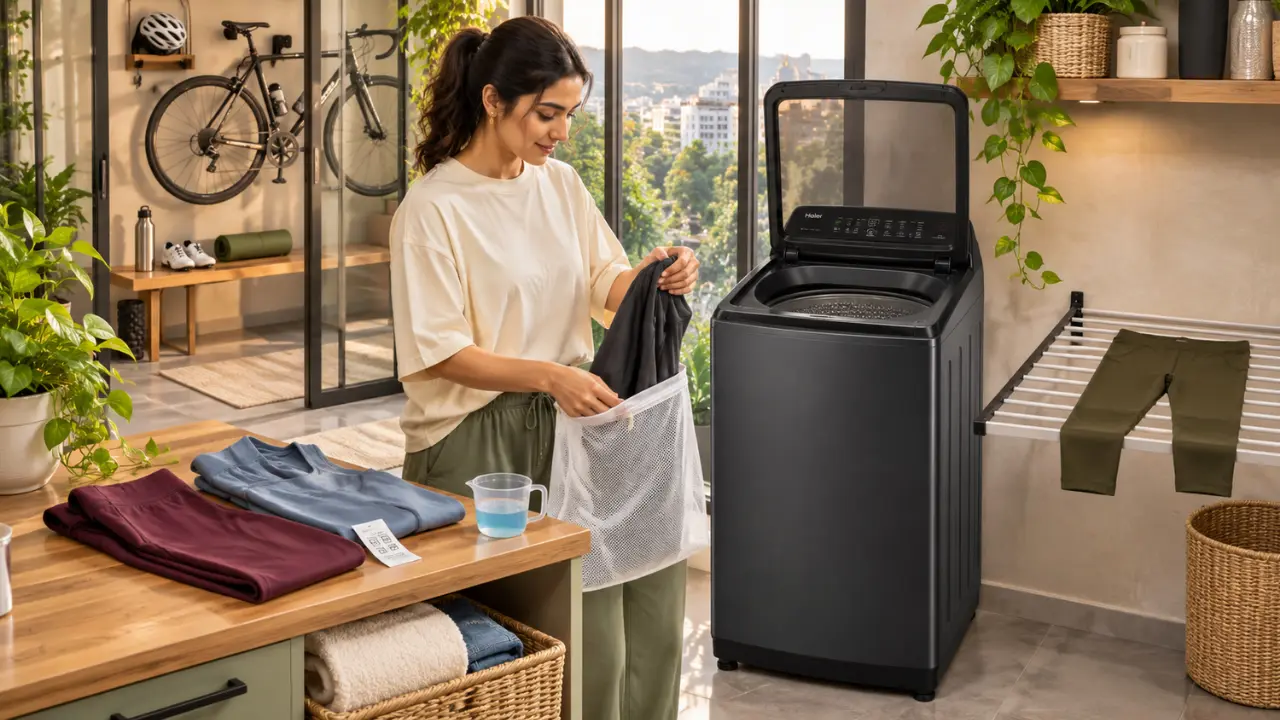
- Put leggings with delicate seams or mesh panels in a mesh laundry bag.
- Refer to the manufacturer’s guidelines for temperature and washing limitations.
Sorting is particularly important. A metal zipper on a pair of jeans can catch stretch fabric during washing, causing damage that is not easily fixable.
The Proper Way to Machine Wash Compression Leggings
It’s not always easy to wash each piece of activewear by hand, particularly if several family members exercise regularly. If the garment label allows, machine washing can be a convenient alternative.
1. Maintain a Low Water Temperature
Compression leggings can usually be washed in cold water. If the garment label allows washing at 30°C, that can be done as well.
Avoid unnecessary hot-water washes. Excessive exposure to high temperatures can cause elastane fibres to become weaker and less able to bounce back after being stretched.
Hot water is not necessary for sweaty clothes. The right detergent, washing action and rinsing are also crucial.
2. Select a Gentle Wash Programme
Compression leggings don’t require the same heavy washing action as soiled jeans or kitchen towels.
Choose a delicate or gentle wash cycle that is suitable for the garment’s care instructions. Gentler washing action helps minimise unnecessary friction and mechanical stress.
The Oceanus Wave Drum feature in selected Haier top-load washing machines is engineered to provide gentle yet effective washing through wave-like water movement. This is a convenient option for people who have delicate and stretchable clothes in their wardrobe.
3. Use Less Detergent, Not More
It might seem like a good idea to add more detergent if your gym clothes are really smelly. In practice, too much detergent can leave residue, particularly if it is not thoroughly rinsed off.
Use a mild detergent suitable for synthetic fabrics and follow the recommended dosage according to load size and water hardness.
Do not pour concentrated detergent directly onto your leggings.
4. Avoid Excessive Spin Speeds
If your washing machine has a spin setting, select a lower spin speed suitable for delicate fabrics.
Don’t squeeze all the water out of compression garments. Over time, excessive mechanical stress can lead to unnecessary wear of the fabric.
Three Laundry Products Your Compression Leggings Can Do Without

Not all laundry freshness products are suitable for performance fabrics.
Fabric Softeners
Fabric softeners may leave a residue on synthetic fabrics, which can affect the moisture-wicking capabilities of activewear.
Chlorine Bleach
Chlorine bleach may weaken fabric structure, cause discolouration and damage elastane fibres. Do not use it unless the garment manufacturer says it is allowed.
Harsh Stain Removers
Fabric colour and elasticity may be affected by aggressive stain treatments. If the mark is localised, gently treat the affected area with a suitable mild detergent according to the care label.
Drying Compression Leggings: Where Many People Go Wrong
Careful washing can be undone by inappropriate drying practices.
In summer, drying black compression leggings under intense sunlight may seem like the easiest solution. But exposure to excessive heat and direct sunlight can cause the fabric to deteriorate and fade.
Instead:
- Let leggings air-dry in a shaded, well-ventilated area.
- Avoid twisting or wringing the fabric.
- Place them flat on a drying rack, if possible.
- Do not use high-temperature tumble dryers.
- Only store them when they are completely dry.
During the monsoon season, avoid drying wet leggings under an iron or near a room heater. Instead, use an indoor drying space that has good air circulation.
How Often Should You Wash Compression Leggings?
Ideally, wash sports compression leggings after every sweaty workout.
When the fabric remains in close contact with the body, sweat, body oils and dirt build up. If these deposits remain for a few days, they can cause long-lasting odours.
If you have a lot of sportswear to wash, you can wash similar items together in appropriately sized loads, particularly when several family members are active.
Simply don’t leave wet gym clothes in a closed laundry basket for too long.
Choosing a Haier Washing Machine for Everyday Activewear Care
In a modern household, one doesn’t wash only one type of fabric. There are office shirts, school uniforms, bedsheets, gym clothes and sometimes a heap of muddy sportswear.
A washing machine that can handle various fabric care needs can make a significant difference to daily laundry routines.
Haier 8 Kg Advance In-Built Heater Top Load Washing Machine (HWM80-H688BK)
This model offers a combination of fabric care features and everyday washing convenience.
It has the following main characteristics:
- Oceanus Wave Drum for gentle yet thorough washing.
- Delicate wash programme for compatible sensitive fabrics.
- 2X Magic Filter to collect lint and debris.
- Several washing programmes for various laundry needs.
- 5-star energy rating.
- Advanced in-built heater for compatible laundry that needs heated washing.
The Delicate programme is especially relevant for washing machine-washable activewear, while the filtration system helps collect unwanted lint circulating during washing.
Haier 9 Kg Top Load Washing Machine (HWM90-H688BK)
This model provides additional washing capacity and convenient fabric care options for families with bigger laundry needs.
It comes equipped with:
- Oceanus Wave Drum.
- Delicate wash programme.
- Dual Magic Filter.
- Advanced in-built heater.
- Rear control panel.
- Softfall Technology.
- 5-star energy rating.
Both models come with a four-year comprehensive warranty and a ten-year motor warranty, subject to applicable warranty terms.
While these washing machines have built-in heaters, compression leggings are best washed using cold water or an appropriate low-temperature setting unless the care label says otherwise.
Give Your Activewear the Care It Deserves
Compression leggings are an investment in everyday comfort and physical activity. They don’t need a complicated laundry process to maintain their stretch. They require suitable washing conditions and a little consistency.
Small choices can make a big difference in maintaining the original fit of garments, from using cold water and avoiding fabric softeners to letting them dry naturally.
Explore Haier India’s collection of premium washing machines and discover innovative fabric care solutions tailored to the diverse laundry requirements of contemporary Indian homes.
Frequently Asked Questions
1. Can you wash compression leggings in a washing machine?
Yes, provided the garment care label permits machine washing. Use cold water, a mild detergent and a Delicate wash programme to minimise unnecessary stress on elastic fibres.
2. Does hot water ruin compression leggings?
Repeated exposure to hot water can weaken elastane fibres, reducing their elasticity and ability to retain their original shape. Cold water is generally preferable for washing compression leggings.
3. Should you wash compression leggings after every workout?
Yes, particularly after sweaty workouts. Regular washing helps remove accumulated sweat, body oils and dirt while preventing persistent unpleasant odours.
4. Can compression leggings regain their stretch after becoming loose?
Compression leggings that have permanently lost their elasticity are unlikely to regain their original fit. Proper washing and drying practices can help prevent further deterioration.
5. Can I use fabric softener when washing compression leggings?
It is best to avoid fabric softeners, as they can leave residue on synthetic fibres and interfere with the moisture-wicking properties of performance clothing.