

A geyser can look perfectly fine from the outside, yet the condition of its inner tank determines how well it withstands years of heating, cooling and continuous contact with water. This becomes particularly important in Indian households, where water quality, supply pressure and daily usage can vary considerably.
When purchasing a storage water heater, two tank technologies frequently enter the discussion: copper tanks and glass-lined tanks. Both have distinct characteristics, but their construction, corrosion resistance and long-term maintenance requirements are different.
So, which one should you choose?
The answer depends less on which material sounds more premium and more on how the geyser will perform under your household’s actual water conditions.
Copper vs Glass-Lined Geyser Tanks: Understanding the Fundamental Difference
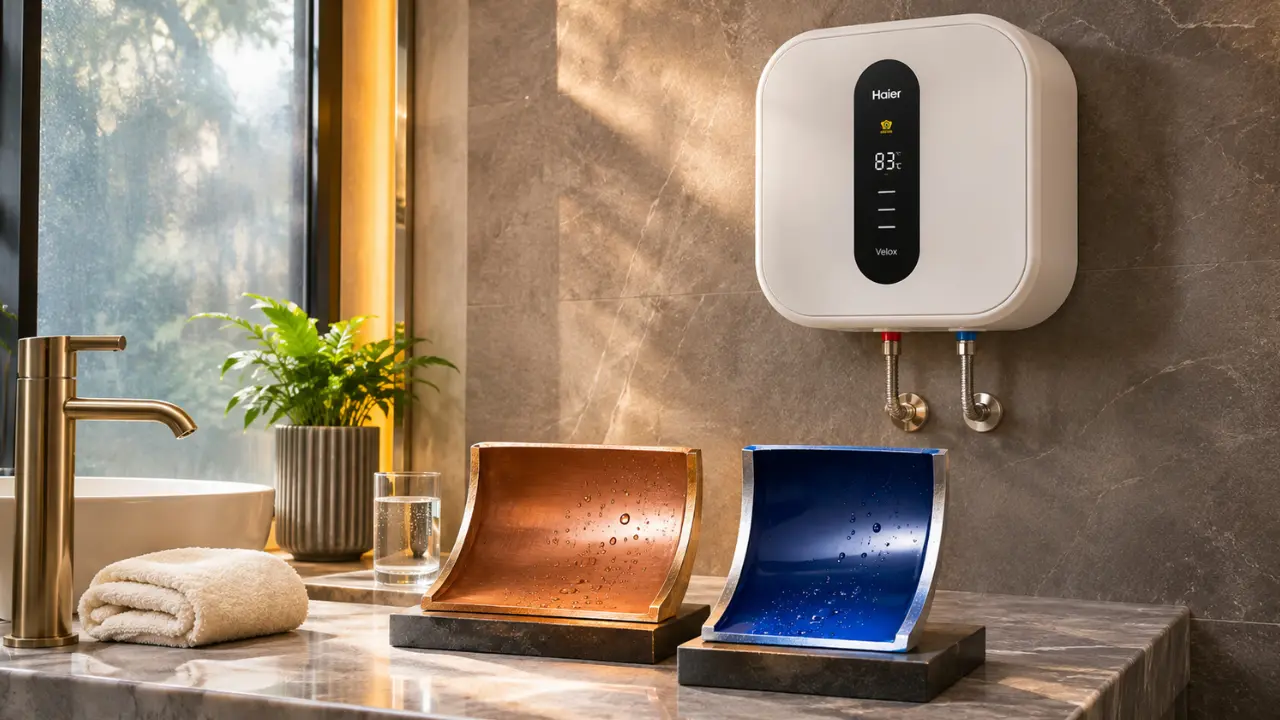
The primary difference between copper and glass-lined geyser tanks lies in their construction and protection against corrosion.
A copper tank uses copper as its principal tank material. A glass-lined tank, meanwhile, generally consists of a steel body protected internally by a specially formulated glass or enamel coating.
Both are designed to hold and heat water, although their approaches to durability differ.
How Does a Copper Geyser Tank Work?
Copper is widely recognised for its excellent thermal conductivity. It transfers heat efficiently and has traditionally been used in several water-heating applications.
Its notable characteristics include:
- High thermal conductivity, allowing heat to spread efficiently through the metal.
- Natural resistance to certain forms of corrosion.
- Good mechanical workability for manufacturing.
- Susceptibility to corrosion under particular water chemistry conditions.
However, copper’s thermal conductivity does not automatically mean a copper-tank geyser heats water faster or consumes less electricity. Heating-element power, tank capacity, insulation and operating conditions also influence performance.
What Makes a Glass-Lined Tank Different?
A glass-lined geyser tank generally uses a protective enamel coating bonded to the interior surface of a steel tank.
This coating creates a barrier between the stored water and the underlying metal, helping minimise direct exposure to corrosive elements.
The construction offers several advantages:
- Protection against corrosion when the lining remains intact.
- A robust steel structure supporting the tank.
- Compatibility with protective components such as magnesium anode rods.
- Suitability for storage water heaters designed for regular household use.
Glass lining should not be confused with a tank manufactured entirely from glass. The structural strength comes primarily from the metal tank, while the lining provides corrosion protection.
Why Tank Material Matters More in Indian Homes
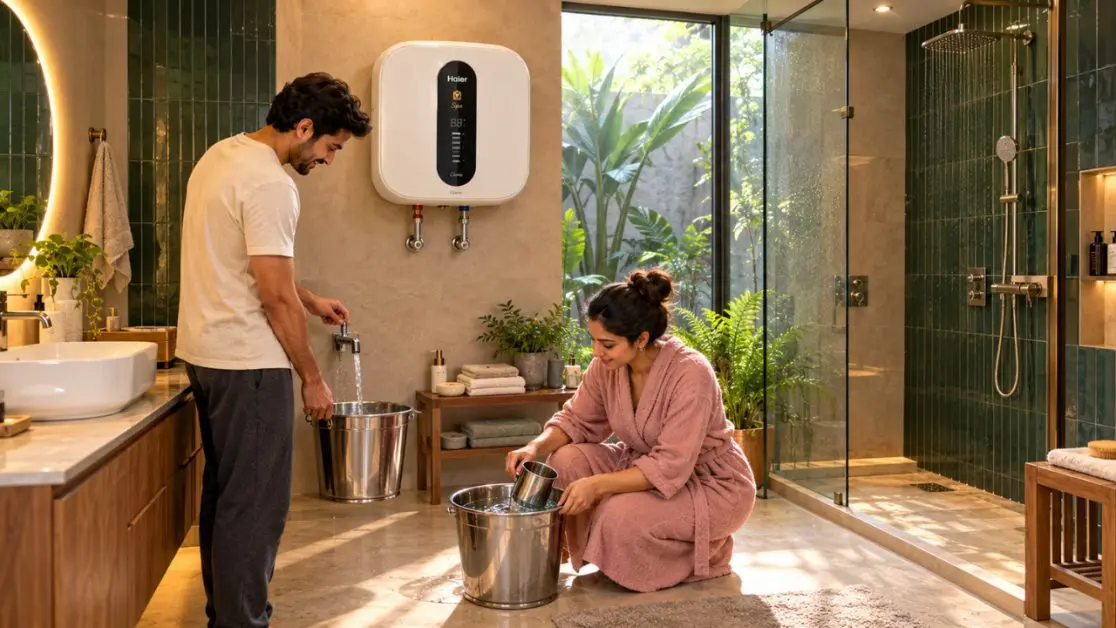
Consider two households.
One receives relatively soft municipal water, while the other depends on borewell water containing substantial dissolved minerals. Both families purchase similar-capacity geysers and use them every morning.
Their maintenance requirements may differ considerably.
Water chemistry influences corrosion, mineral deposits and the condition of internal components. This is precisely why selecting a geyser based solely on tank material can be misleading.
1. Corrosion Resistance
Copper naturally resists many forms of corrosion, but it is not immune to deterioration.
Depending on water chemistry, copper may experience pitting or other corrosion-related damage.
Glass-lined tanks take a different approach. Their protective coating helps isolate the steel from water, reducing corrosion exposure.
However, imperfections or damage in the lining can expose the underlying metal. This is why protective anode rods and appropriate maintenance remain important.
2. Performance With Hard Water
Hard water contains dissolved minerals, particularly calcium and magnesium.
When heated, these minerals can form scales on internal surfaces and heating elements.
Neither copper nor glass-lined tanks completely eliminate this problem.
Glass lining primarily addresses corrosion protection rather than preventing mineral deposits. Similarly, copper’s thermal properties do not make it immune to scaling.
For homes using hard water, periodic inspection and appropriate servicing can be more valuable than relying on tank material alone.
3. Heating Efficiency
Copper conducts heat more effectively than steel, but the relationship between tank material and electricity consumption is not straightforward.
In an electric storage geyser, the heating element transfers energy directly to the water.
Consequently, factors such as the following deserve attention:
- Heating-element wattage.
- Quality of thermal insulation.
- Storage capacity.
- Thermostat operation.
- Frequency of hot-water usage.
A well-insulated glass-lined storage geyser can therefore offer efficient everyday performance without requiring a copper tank.
How Haier India Approaches Glass-Lined Water Heater Technology
Haier India offers storage water heaters designed around practical household requirements, including corrosion protection, heating performance and operational safety.
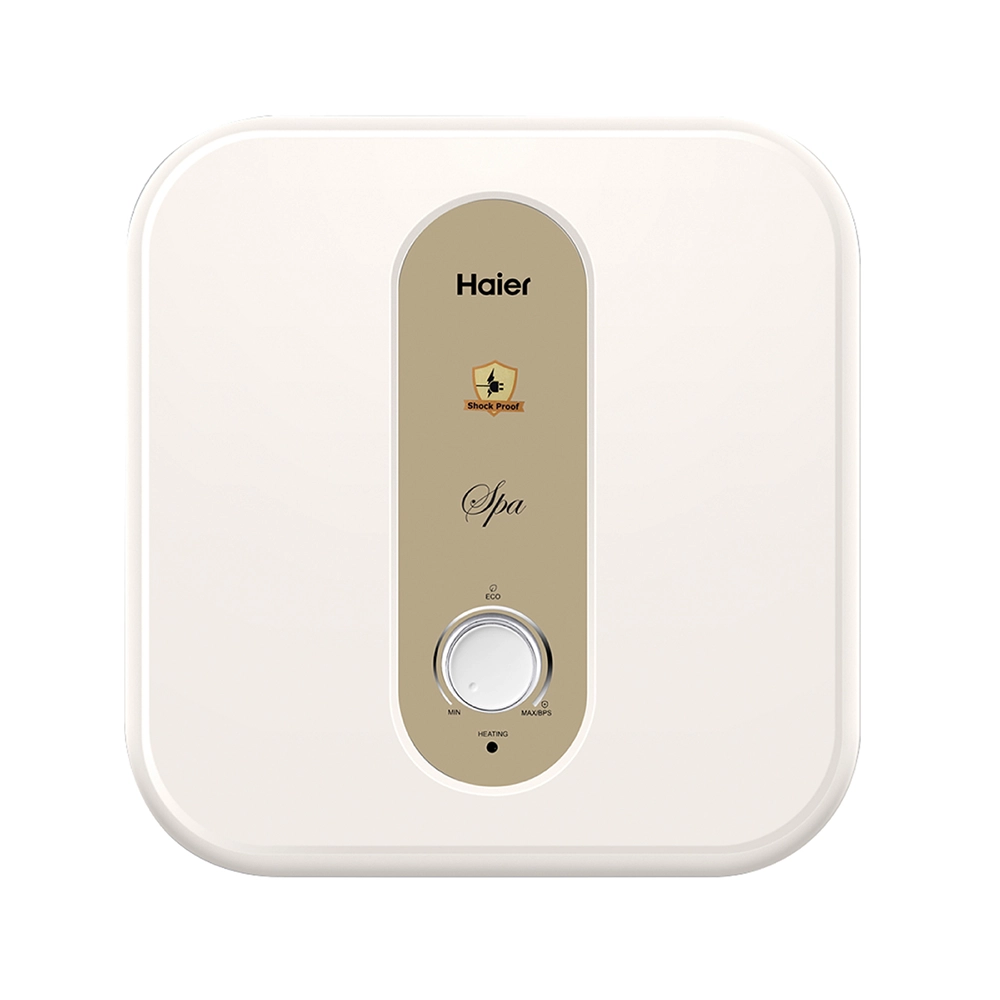
The Haier 15L Square Ivory 5 Star Water Heater (ES15V-SDI) and Haier 25L Square Ivory 5 Star Water Heater (ES25V-SDI) are particularly relevant examples.
Both models feature glass-lined tank technology intended to enhance durability and corrosion resistance.
Rather than depending on the tank lining alone, these water heaters combine several complementary features.
Glass-Lined Tank for Long-Term Protection
The glass-lined tank construction helps protect the internal metal surface against corrosion.
For Indian households using a storage geyser regularly, this provides an important layer of protection against water-related deterioration.
Both the ES15V-SDI and ES25V-SDI also feature magnesium rods, which provide supplementary corrosion protection.
Incoloy 800 Heating Element
The two Square Ivory models feature an Incoloy 800 heating element designed for durability.
This is particularly relevant because heating elements remain exposed to repeated heating cycles and mineral deposits.
The heating element and tank lining serve different purposes, but together they contribute to the overall water-heating system.
8-Bar Rated Working Pressure
Water pressure deserves attention, especially in high-rise residential buildings.
Both models support an 8-bar rated working pressure, making them suitable for installations where the actual operating pressure remains within their specified limits.
Correct installation and compatible plumbing remain essential.
Additional Protection and Convenience
The Square Ivory models also incorporate:
- Shock Proof technology for electrical leakage protection.
- Dual Thermal Proof technology for overheat protection.
- IPX4 water splash resistance.
- A multi-usage valve incorporating pressure-relief and related functions.
- Bacteria Proof System mode that heats water to 80°C to inhibit bacteria.
- RSC U-turn Flow Technology designed to improve water circulation.
- PUF insulation to help retain heat and reduce reheating requirements.
Both models carry a 5-star energy rating and list a four-year product warranty and seven-year tank warranty, subject to applicable terms.
Choosing Between Haier’s 15L and 25L Glass-Lined Geysers
Once you understand tank construction, selecting the appropriate capacity becomes the next important decision.
Haier 15L Square Ivory 5 Star Water Heater (ES15V-SDI)
The 15-litre model is worth considering for households with moderate hot-water requirements.
Its compact square design can suit bathrooms where available installation space is limited, provided the required mounting clearances are maintained.
It offers glass-lined tank protection alongside the safety and heating features discussed above.
Haier 25L Square Ivory 5 Star Water Heater (ES25V-SDI)
For households requiring a larger stored volume of hot water, the 25-litre model offers additional capacity.
This may be particularly useful where family members bathe consecutively or hot-water consumption is relatively high.
It retains the glass-lined construction, 8-bar pressure rating and other protective technologies found in the 15-litre version.
The choice ultimately depends on bathing habits, incoming water temperature and the amount of hot water required per use.
Which Tank Type Should You Choose?
There is no universally superior material for every water condition.
Copper tanks offer excellent thermal conductivity and useful corrosion-resistant properties. Glass-lined tanks, meanwhile, use a protective barrier to reduce direct contact between water and the structural metal.
For homeowners evaluating a modern storage water heater, a glass-lined tank supported by an anode rod, suitable heating element and proper insulation offers a practical combination of features.
Before purchasing, check:
- The water quality in your area.
- The geyser’s rated working pressure.
- Tank capacity and household consumption.
- Heating-element specifications.
- Tank warranty and maintenance requirements.
A geyser should be evaluated as a complete appliance, not merely as a metal container.
Make Tank Protection Part of Your Geyser Buying Decision
The difference between copper and glass-lined geyser tanks is ultimately about how each material manages heat, corrosion and long-term exposure to water.
For Indian households seeking a storage water heater with protective tank construction and practical safety features, Haier India’s Square Ivory range offers options worth exploring.
Explore the Haier 15L Square Ivory 5 Star Water Heater (ES15V-SDI) and Haier 25L Square Ivory 5 Star Water Heater (ES25V-SDI) on the official Haier India website to choose a capacity and configuration suited to your home’s hot-water requirements.
Frequently Asked Questions
Is a glass-lined geyser tank better than a copper tank?
A glass-lined tank offers protective enamel coating against corrosion, while copper provides high thermal conductivity and natural resistance to certain corrosion conditions. The better choice depends on water chemistry, product construction and maintenance.
Can a glass-lined geyser handle hard water?
Yes, but glass lining does not prevent mineral scaling. Regular maintenance may still be necessary, particularly in areas with high water hardness.
Does a copper tank heat water faster?
Not necessarily. Although copper conducts heat efficiently, heating speed in an electric storage geyser primarily depends on heating-element power, water volume and operating conditions.
How long does a glass-lined geyser tank last?
Its service life depends on water quality, coating integrity, anode condition, operating pressure and maintenance. A tank warranty should not be interpreted as a guaranteed lifespan.