




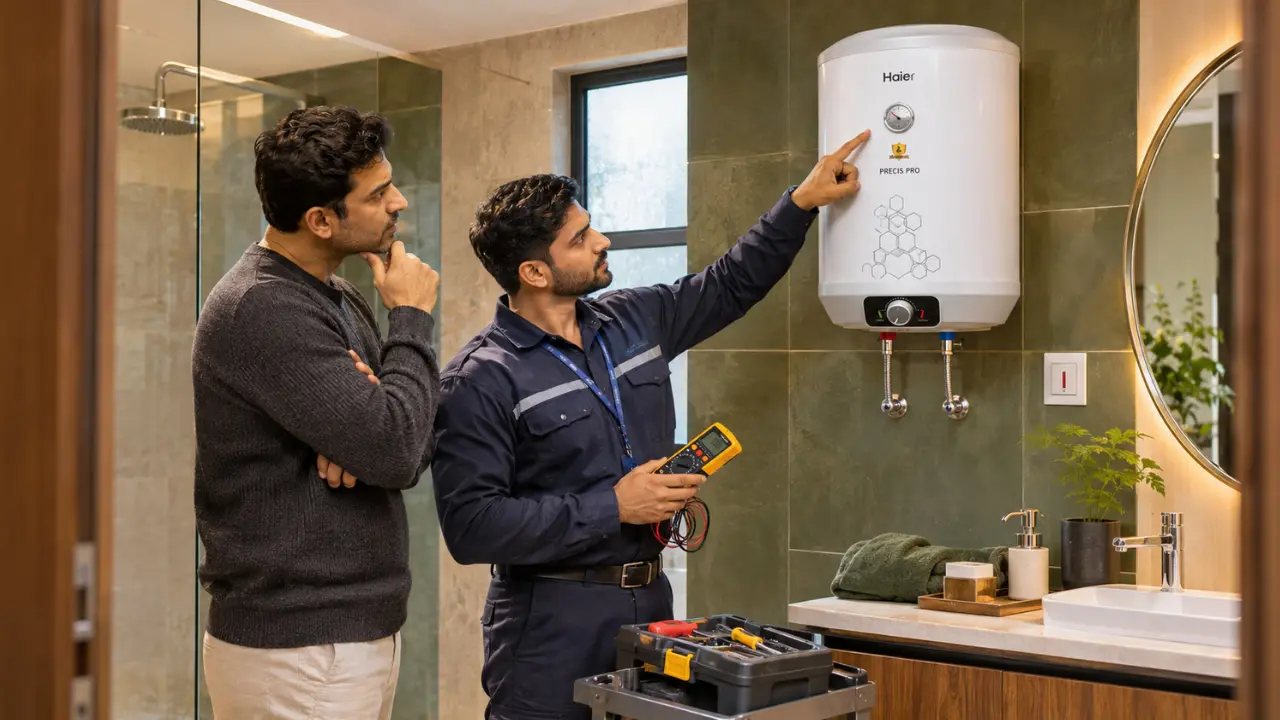

The geyser has been turned on for 20 minutes, but the water is not very hot. After another 10 minutes, you think it might take longer. Still nothing. The power indicator looks normal, and there is no apparent problem.
In such cases, a question that often arises is whether the geyser heating element is broken?
A heating element is responsible for converting electrical energy into heat inside a water heater. If it starts to malfunction, the appliance may take longer to heat water, provide inconsistent temperatures or fail to heat water at all.
But not all heating issues are a sign of a broken element. Knowing the signs can help Indian households recognize potential problems, prevent unsafe repairs and determine when professional servicing is needed.
What Happens When a Geyser Heating Element Starts Failing?

The heating element transfers heat to the water surrounding it inside an electric storage geyser. The heating cycle is controlled by a thermostat set to the desired temperature.
Mineral deposits, corrosion and repeated heating cycles can impact the element’s performance over time.
This is especially important in Indian households where the water from the borewell or groundwater might have a higher calcium and magnesium content.
These minerals build up on the heating element and form an insulating layer which disrupts heat transfer.
If an element is damaged, it may cease to generate heat completely. However, there are typically some signs to look out for before that occurs.
6 Warning Signs of Geyser Heating Element Failure
1. Water Takes Unusually Long to Heat
Water heats up very slowly.
Assume that your storage geyser was previously able to provide hot water of adequate temperature during the normal heating time. Recently, however, the same quantity of water takes considerably longer.
This is a change that needs to be noted.
Mineral deposits can build up around the heating element, affecting the efficiency of heating, and a failing heating element can not function properly.
If the water is coming in, check if it is cooler than normal before assuming that the element is broken. In the winter months in North India, the inlet water is naturally colder, which means that the heating time is longer.
If the delay continues under similar usage conditions, schedule a check.
2. No Hot Water from the Geyser
One of the most obvious signs of trouble with the heating system is the complete lack of hot water.
Possible causes include:
- A burned out heating element.
- A malfunctioning thermostat
- A tripped thermal cut-out
- An electrical supply problem
- Damaged internal wiring
The key difference is that these faults can have the same symptoms.
The heating element needs to be replaced, but a technician must inspect the appliance first to determine this.
3. The Water Temperature Continues to Rise and Fall
One morning the water was pleasantly warm. The next day, it is only lukewarm.
This is an inconsistency which can be a sign of thermostat, electrical connections or heating element issues.
The amount of hot water already used also affects the temperature that is provided in storage geysers.
If the geyser is not heating properly even after it has been given enough time to heat a full tank, it is recommended that it be professionally inspected.
4. Unusual Sounds When Heating
A slight humming noise does not necessarily mean it is a problem. If the popping, crackling or rumbling sounds are continuing, however, it may be a sign of sediment build-up in the storage tank.
Water can be trapped in the heating element and localised heating can cause unusual sounds as deposits build up around the heating element.
The noises are not necessarily a sign of failure of the element.
However, if sediment buildup is ignored, it can lead to decreased heating efficiency and unnecessary strain on internal parts.
5. Circuit Breaker Trips Repeatedly
This is a warning sign that needs to be addressed right away.
When the circuit breaker or residual current device keeps tripping when the geyser is in use, it may be due to insulation failure, electrical leakage due to moisture or damaged wiring.
Electrical leakage can also be caused by a faulty heating element.
Never repeatedly reset the breaker to see if the issue goes away.
Switch off the geyser and arrange professional servicing. Water heater electrical problems are not a normal occurrence.
6. The Geyser Does Not Heat Up to the Desired Temperature
There are a number of reasons why a water heater might not heat up, such as thermostat issues, overheating protection activation, or a heating system malfunction.
In some cases, too much sediment can lead to abnormal heating.
The heating element might still work.
Checking the thermostat, protective devices and heating element together is necessary to make an accurate diagnosis, not replacing parts by trial and error.
Is It Always the Heating Element? A Quick Troubleshooting Guide
There are a number of geyser issues that are similar to heating element failure. Knowing the difference can save from needless repairs.
| Observed problem | Possible explanation | Recommended action |
| No hot water | Fault in the heating element, thermostat or power supply. | Set up the electrical and component inspection |
| Slow heating | Mineral scaling, colder inlet water or deterioration of the elements | Monitor usage and ask for servicing if it is ongoing |
| Unusual rumbling | Sediment accumulation | Schedule professional maintenance |
| Repeated breaker trips | A fault in the wiring or electrical leakage. | Turn off the geyser right away |
| Water temperature fluctuates | Inconsistent heating or thermostat fault. | Request technical diagnosis |
This is only a preliminary guide. The true cause should be determined by professional testing.
When to Call a Geyser Service Technician?
Not all changes in temperature are service calls. But some symptoms should never be overlooked.
If You Are Using the Geyser, Stop Using It Immediately:
- The circuit breaker keeps blowing.
- Sparks, smoke or a burning odor is noticed.
- Water leakage around electrical equipment.
- The geyser emits strange electrical crackling noises.
- There are signs of electric shock or tingling when touching connected fixtures.
If this is the case, turn off the power only if it is safe to do so and call a qualified technician.
For persistent slow heating, insufficient hot water or unusual operating noises, schedule an inspection before the problem worsens.
What Is a Technician Likely to Inspect?
A qualified service professional can check the electrical continuity and insulation of the heating element, the thermostat operation, internal wiring and mineral build-up.
The service may include the removal of deposits, electrical troubleshooting and replacement of damaged parts, depending on the results.
It is not advisable for homeowners to open the geyser casing or to replace the elements themselves.
How Haier Water Heaters Solve Heating Performance and Durability Issues
As important as capacity and appearance is the construction of the heating elements of a storage water heater.
Haier India provides water heaters that have been designed with the heating performance, tank durability and protective features.
The three models to consider are Haier 15L PRECIS ABS 5 Star Cylindrical Water Heater, Haier 15L REGENTA Cylindrical 5 Star Water Heater and Haier 25L REGENTA Cylindrical 5 Star Water Heater.
Haier 15L PRECIS ABS 5 Star Cylindrical Water Heater (ES15V-PRECIS)
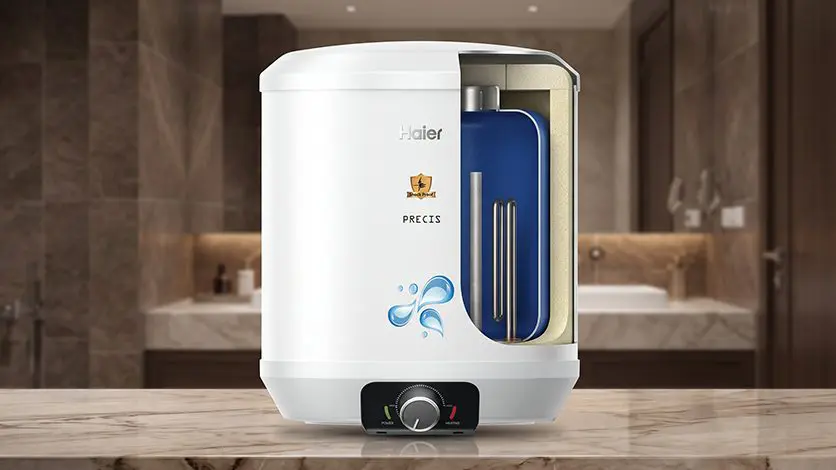
The Haier 15L PRECIS is equipped with an Incoloy 800 stainless-steel heating element, which is durable and has a longer service life.
It has a glass lined storage tank for corrosion protection and PUF/EPS insulation to keep the heated water in the tank and minimize frequent reheating.
Additional features include:
- Overheating protection with Dual Thermal Proof technology.
- Shock Proof electrical safety technology
- Working pressure 8 bar
- IPX4 water resistance
- Bacteria Proof System and RSC water circulation technology.
The PRECIS is a 15 litre capacity, 5-star energy rated storage water heater that is a practical choice for households looking for a compact storage water heater.
Haier REGENTA 15L and 25L Cylindrical 5 Star Water Heaters
The Haier REGENTA range offers two sizes:
- Haier 15L REGENTA Cylindrical 5 Star Water Heater (ES15V-REGENTA (I))
- Haier 25L REGENTA Cylindrical 5 Star Water Heater (ES25V-REGENTA (W))
Both models are equipped with a 2.2 kW Incoloy 800 heating element, which is optimized for fast heating and durability and stability.
They have CrystalShield tanks that help prevent bacterial growth and Dual Thermal Proof technology to protect from overheating.
Other features include Shock Proof technology, an 8-bar pressure rating, IPX4 water resistance and PUF/EPS insulation.
The 15 litre tank might be suitable for households that have moderate hot water needs, whereas the 25 litre hot water tank offers extra storage for higher hot water consumption.
Importantly, the construction of the durable heating element does not preclude the need for maintenance, especially in hard water applications.
Some Simple Habits That Could Help Prevent Heating Element Issues
While it is not always possible to prevent the failure of a heating element, it is possible to minimize the strain that can be avoided by using the heating element sensibly and maintaining it in a timely fashion.
Consider these practices:
- Schedule routine maintenance as recommended by the manufacturer.
- If your home is supplied with hard water, have mineral deposits checked.
- Don’t use unnecessarily high temperatures for regular use.
- Install geysers with the correct earthing and electrical protection.
- Never operate a storage geyser when the tank is empty.
- Look into the issue of recurring heating issues rather than turning the appliance on and off again and again.
If your household uses borewell water, it may also be helpful to talk to a qualified service professional about the hardness of your water, which can help you determine the maintenance needs.
Ensure a Reliable Hot Water Supply with Haier India
When a geyser heating element doesn’t get hot, it’s not a topic of conversation. However, its state has a direct effect on the heating efficiency and on the convenience of daily use.
Early detection of abnormal heating patterns, professional maintenance and choosing a water heater with long-lasting parts can make a significant difference.
If you are thinking of replacing or upgrading your current water heater, check out Haier India’s PRECIS and REGENTA storage water heater models.
With Incoloy 800 heating elements, protective technologies and thoughtfully designed storage tanks, these Haier water heaters offer practical solutions for dependable everyday hot-water requirements.
Visit shop.haierindia.com to discover the Haier India water heater range and select the appropriate model for your household.
Frequently Asked Questions
Can a geyser heating element be repaired?
A failed heating element generally requires replacement rather than repair. A technician should first confirm that the element is defective.
How long does a geyser heating element last?
There is no universal lifespan. Water hardness, usage frequency, operating temperature and maintenance influence its service life.
Can hard water cause heating element failure?
Yes. Hard water can produce mineral deposits that interfere with heat transfer and contribute to overheating or premature deterioration.
Is slow heating always a sign of element failure?
No. Colder inlet water, sediment accumulation, thermostat problems and electrical faults can also increase heating time.
Should I replace the entire geyser if the heating element fails?
Not necessarily. If the tank and other components remain serviceable, replacing the heating element may be sufficient. A technician can assess the appliance’s overall condition.