




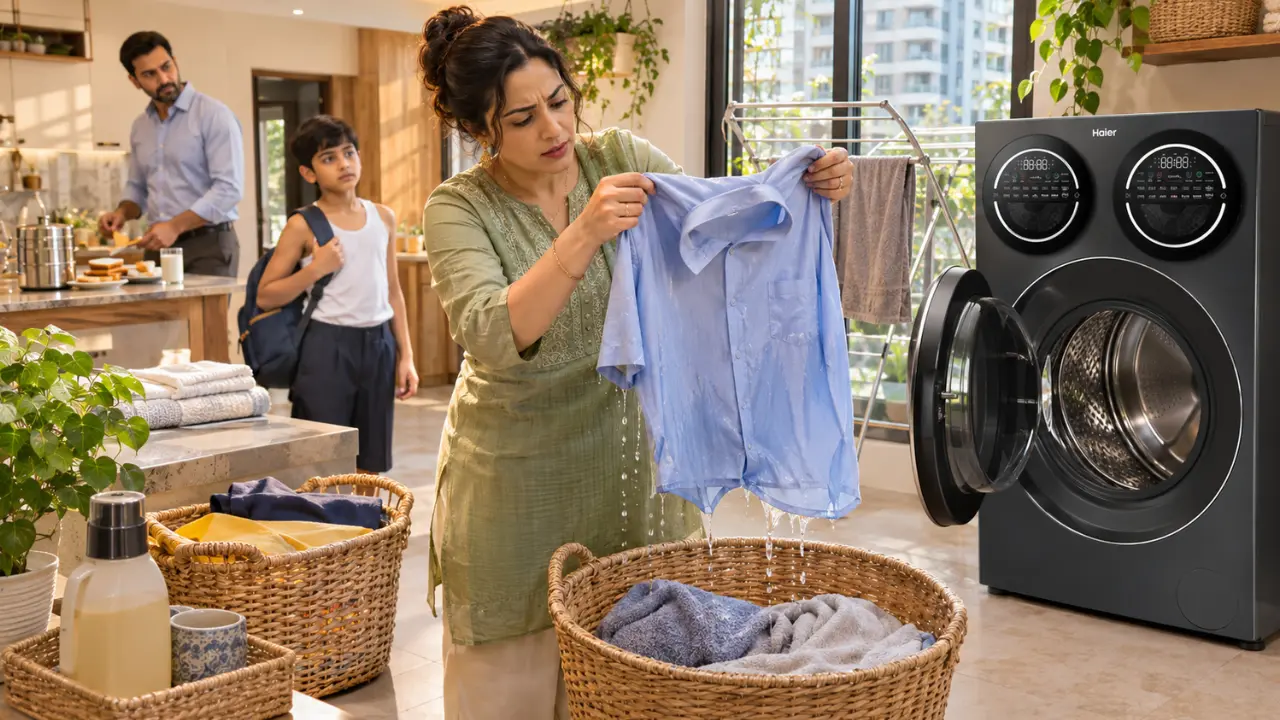

The washing cycle is complete. You go to the washing machine and you’re expecting clean clothes to hang up to dry. Rather, your favourite cotton shirt is dripping water, the towels are too heavy and your bed sheet has absorbed half of the washing machine’s water.
There’s a definite problem here that things haven’t gone according to schedule.
If clothing is still dripping wet when you take them out of the washing machine, it is likely the spin cycle, drainage or load or wash settings are not working properly. In some cases, it’s as simple as changing the laundry. Sometimes, a blocked pipe or mechanical problem must be addressed.
It’s good to know what happens in the last few minutes of a wash cycle before you assume that your washing machine needs repair.
Soaking Wet Clothes Are a Common Problem When Washing with a Washing Machine
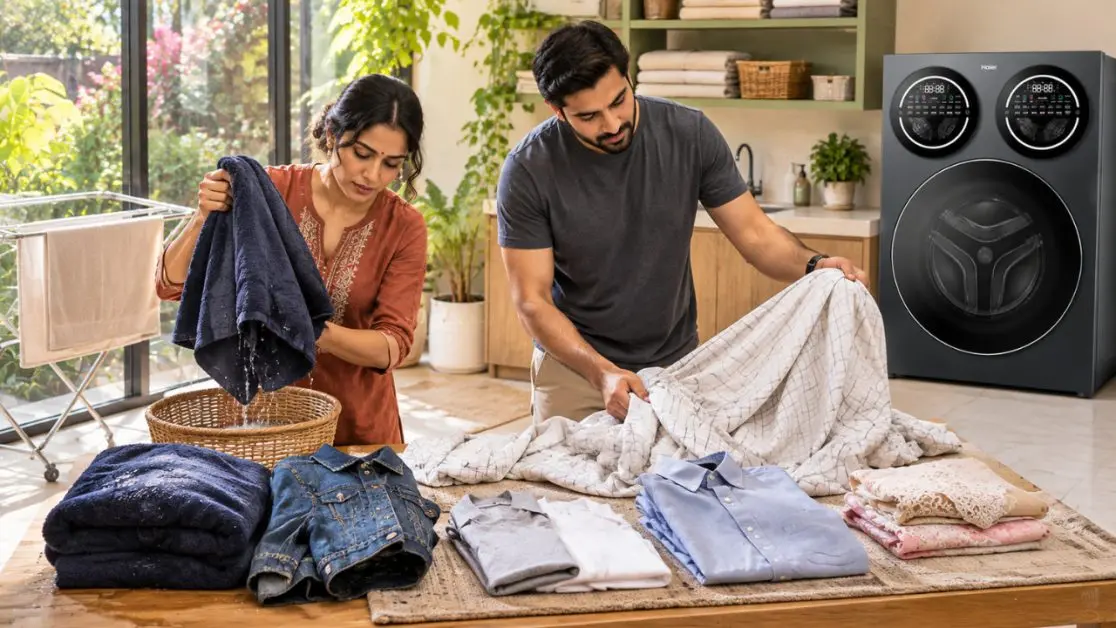
A washing machine doesn’t completely dry your clothes. The spin cycle spins the drum at high speeds, which drains a lot of water out of the fabrics through the drum holes.
Then the water is removed by the machine’s drainage system.
If either process is interrupted, your laundry will have more moisture than you would expect.
There are a number of things that could get in the way:
- Overloading: Too many clothes will hinder free movement and will influence the distribution of loading.
- Heavy clothing: Lots of weight on one side of laundry can make it difficult to spin.
- Drainage issues: The water is unable to drain out of the drum effectively.
- Incorrect programme selection: Some fabric-care programmes are designed to apply a more subtle spinning process.
- Motor problems, pump or components: Any motor or pump related problems can impact spin performance.
Interestingly, the moisture content of the fabric also has an impact on the moisture content that remains. A thick cotton towel of course will hold more water, than a light polyester t-shirt, even if it is spun through the machine.
2. Your Washing Machine Could Be Overloaded
With the laundry basket already full, it’s easy to pile on the final two towels. After all, it takes time to run another cycle.
Sadly, overloading can be detrimental.
When the drum is too full, there won’t be enough space for clothes to tumble around. The machine may not be able to distribute the weight evenly during spinning which may affect the spin performance during spinning.
To Fix an Overloaded Washing Machine
Here are some quick tips:
- Take off a couple of heavy clothes from the drum.
- Alternate large bed linens from regular clothes.
- Adhere to the instructions for loading the washing machine and the programme you have chosen.
- If necessary, run the spin cycle again.
Note that wash machine capacity is for dry loads only; loads under certain programmes may be lower.
It’s a fact that when it comes to laundry distribution, Indian households using clothes, towels, and everything in between from office wear to heavy bath towels can benefit.
3. An Unbalanced Load Can Interrupt the Spin Cycle
Now picture washing one heavy bedsheet with two light T-shirts. Now consider washing one heavy bedsheet with two light t-shirts.
The bedsheet could collect on one side while the drum is spinning, leading to imbalance. The washing machine might slow down, try to re-distribute the load or cut back on the last spin.
This is of special importance when washing:
- Heavy denim jackets and jeans.
- Large bed sheets and duvet covers.
- Thick cotton towels.
- Machinable blankets (e.g. wool and cotton).
- List small loads with one unusual item (clothing).
What Should You Do?
When safe to do so, stop the machine, shuffle the clothes and resume the appropriate spin program.
If the problem persists, inspect to see if the washing machine is level on a firm surface.
If the machine is not installed properly, it can be subjected to excessive vibration, causing disturbance to the normal operating.
4. It Could Be the Drainage System
A fundamental difference: Washing machines with a poor drainage system can also have trouble finishing their spin cycle.
If water is left in the drum after washing, the issue could be the drain hose, a pump filter or drainage pump.
The Indications of a Washing Machine Drainage Problem Include:
Look out for these symptoms:
- Water can be seen in the drum.
- After the cycle clothes are abnormally damp.
- The machine halts prematurely from the programme.
- Error code is displayed.
- The flow of water is considerably reduced.
If the drain hose is bent or blocked, it may prevent water from draining. Also, small items such as lint, coins, etc., can prevent access to drains.
Always turn off and unplug the appliance before examination. Use the manufacturer instructions to inspect parts that are accessible; there may be water trapped in the filter when it is opened.
If not, don’t try to fix the drainage on your own; call an authorized service professional instead.
5. Do You Have the Correct Spin Speed?
All washing programmes may not be the same amount of moisture removal.
Gentler spinning is recommended for delicate fabrics, and for most common cotton items, the spinning can be increased if the label calls for it.
This can result in clothes being damp without any fault being detected by a low-spin programme.
When choosing a fabric to fit your baby, you need to know its spin speed and how it’s cared for.
The spin speed is expressed in revolutions per minute (RPM). In general, the faster they spin, the more water they can extract, but this varies based on fabric type, load balance and programme settings.
Here Are Some Actionable Tips:
- Cotton garments: Use appropriate higher spin setting (where applicable).
- Fragile fabrics: Use a special program that lessens fabric stress.
- Woollens: Check the wool programme on the washing machine and the label on the garment.
- Bedsheets: Make sure to not overload and select an appropriate spin setting.
Before increasing spin speed, always refer to the care label of the garment.
6. If a Technical Fault Is Caused by Wet Laundry
At times, you’ve done everything. The drum is not overloaded, drainage is normal and the programme chosen is suitable.
But clothes are still wet.
This is where the possibility of a technical issue increases.
This can happen due to a malfunctioning drainage pump, a motor problem, a sensor problem or another part that causes the spin cycle to work improperly.
Do not restart the appliance repeatedly if it makes unusual grinding noise, vibrates a lot, smells of burning or gives out frequent error messages.
Professional diagnosis is a better alternative.
How Haier Triple Drum Washing Machine Is Helping People to Make Their Laundry More Intelligent

In modern Indian homes, they don’t wash a single kind of clothes.
School uniform, office shirts, delicate clothes, gym wear and a few clothes that need to be washed, folded and put away.
It will be easier to deal with these various laundry needs when the washing machine is flexible.
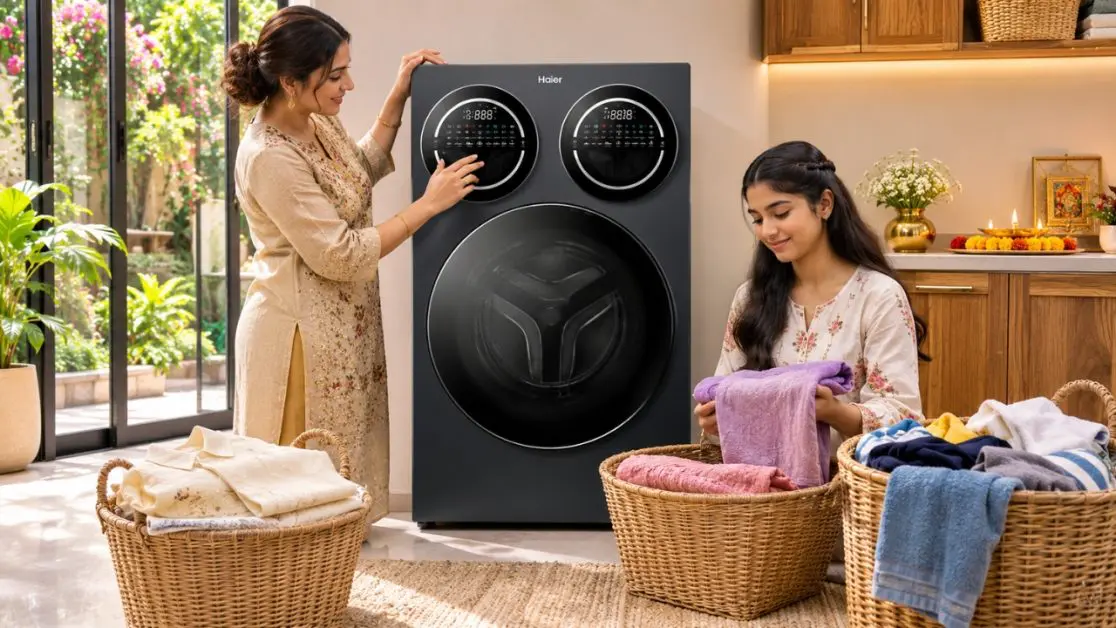
The Haier Triple Drum Washing Machine (HW120-DM12LC3GNU1) is dedicated to this common problem, which combines 3 independently rotating drums and intelligent washing functions.
Households can do laundry by the type of garments and the nature of washing, instead of putting all the garments in one load.
A Trio of Free Drums for Various Laundry Requirements
Haier Triple Drum Washing Machine (combined maximum capacity: 12 kg) is divided into:
- Large day-to-day load: 10 kg main drum is suitable.
- 1 kg top drum: For smaller and independent loads.
- Upper drum (1 kg): Extra flexibility for washing selected garments separately.
The drums are each equipped with their own Direct Motion Motor and have independent controls.
All three drums can be played at once and all three cycles can be in sync with each other.
This way you can avoid mixing small, light clothes with larger loads of laundry just to get the work done more easily.
It also enables users to choose suitable washing cycles for various loads, and not wash all the fabrics in the same way.
Artificial Intelligence Dynamic Balance to Improve Drum Stability
Load balancing is important in spinning.
Haier Triple Drum Washing Machine features AI Dynamic Balance that is based on the concept of dual side drums as counterweights, where the upper and lower drums automatically balance each other during operation.
This is especially true in a multi drum appliance where there could be multiple laundry loads running at once.
Balanced design promotes coordinated drum operation; while proper loading is crucial it is still necessary.
Up to 1200 RPM Spin Speed
It has a specified spin speed of 1200 RPM in the Haier Triple Drum Washing Machine.
The ability of the spinning mechanism to draw the water from appropriate fabrics, dependent on the program and the load of the machine.
However, not all garments will be spun at 1200 RPM. Lower speeds are used for delicate programmes to protect clothes.
Multi-Drum AI Wash and Smart Dosing
The appliance has other functions besides spinning, which are designed to make daily laundry management easier.
The Multi-Drum AI Wash program will suggest washing programmes according to the weight of laundry, which helps users select appropriate washing programmes for different loads.
Smart Dosing automatically feeds detergent and fabric softener, with separate storage spaces of 900 ml and 800 ml.
The machine also has the Drum Essence Wash option which mixes detergent and water ahead of time to form thick foam for scrubbing various fabrics.
These features help to facilitate a more organized washing process, especially for households that have several types of laundry or wash each week.
What to Look for Before Running Another Wash?
When clothes are still dripping out after washing, it does not mean that the washing programme has to be repeated again.
A quick assessment can save unnecessary washing time!
| What You Notice | Possible Reason | Recommended Action |
| Clothes are soaking wet | Spin cycle incomplete | Examine controls and perform a suitable spin cycle |
| The drum is filled with water. | Drainage obstruction | Safely check easily accessible drainage parts |
| Machine shakes excessively | Unbalanced load | Re-distribute clothes and review levelling |
| Delicates feel wetter | Low-spin programme | Follow fabric-care instructions |
| Problem occurs repeatedly | Possible technical fault | Arrange professional inspection |
The problem lies in figuring out if the problem is due to laundry habits, programme selection or the actual fault in the appliance.
Simple Techniques for Reducing the Dampness of Clothing When They Come Out
Some regular practice can keep the washing and spinning process effective.
- Separate laundry into like items: Do not put a heavy blanket in with a few light items.
- Respect the machine’s capacity: Cleaning should be done with an appropriate amount of space for movements.
- Select the right programme: Select the right spin setting according to the label.
- Review pockets: Coins and small items may cause issues in drainage parts.
- Keep the appliance in good condition: Clean and maintain it in accordance with the manufacturer’s guidelines.
- Don’t ignore unusual vibrations: If vibrations persist, deal with it early.
Last but not least: do not leave clothes in the washing machine for several hours after washing. While it’s possible for properly spun laundry to get a bad odor if it sits wet for too long.
Make Every Laundry Cycle More Practical with Haier
Soaking wet clothes doesn’t automatically mean your washing machine is damaged. In many situations, the problem is easily solved by improved loading, by choosing the right programme, or by maintenance.
The Haier Triple Drum Washing Machine (HW120-DM12LC3GNU1) is a washing machine that takes a different approach to washing everyday.
It offers three separate drums, programme recommendations based on artificial intelligence, Smart Dosing and a spin speed of 1200 RPM for extra flexibility to households with diverse laundry needs.
Introducing the Haier Triple Drum Washing Machine, and how our design thinking approach to washing technology makes it an integral part of your family’s life.
Frequently Asked Questions
Why are my clothes still wet after the spin cycle?
Clothes may remain excessively wet because of an unbalanced load, overloaded drum, low spin speed, drainage obstruction or mechanical fault. Check the selected programme and load distribution first.
Can I put soaking wet clothes back into the washing machine?
Yes, if the machine has drained properly and the garments permit spinning, you can select an appropriate spin-only programme. Avoid restarting if the machine shows a fault or contains standing water.
Does a higher RPM mean clothes will come out completely dry?
No. Higher RPM generally helps extract more water, but a washing machine’s spin cycle does not replace a tumble dryer. Some residual moisture is normal.
Why does my washing machine wash properly but fail to spin?
Possible reasons include load imbalance, incorrect settings, drainage problems or a technical fault. If basic troubleshooting doesn’t resolve the issue, arrange professional servicing.
Is the Haier Triple Drum Washing Machine suitable for different fabric types?
The Haier Triple Drum Washing Machine (HW120-DM12LC3GNU1) features three independently controlled drums and multiple washing programmes, including Cotton, Silk, Soft and Gentle options. This enables users to manage different compatible fabric loads separately.