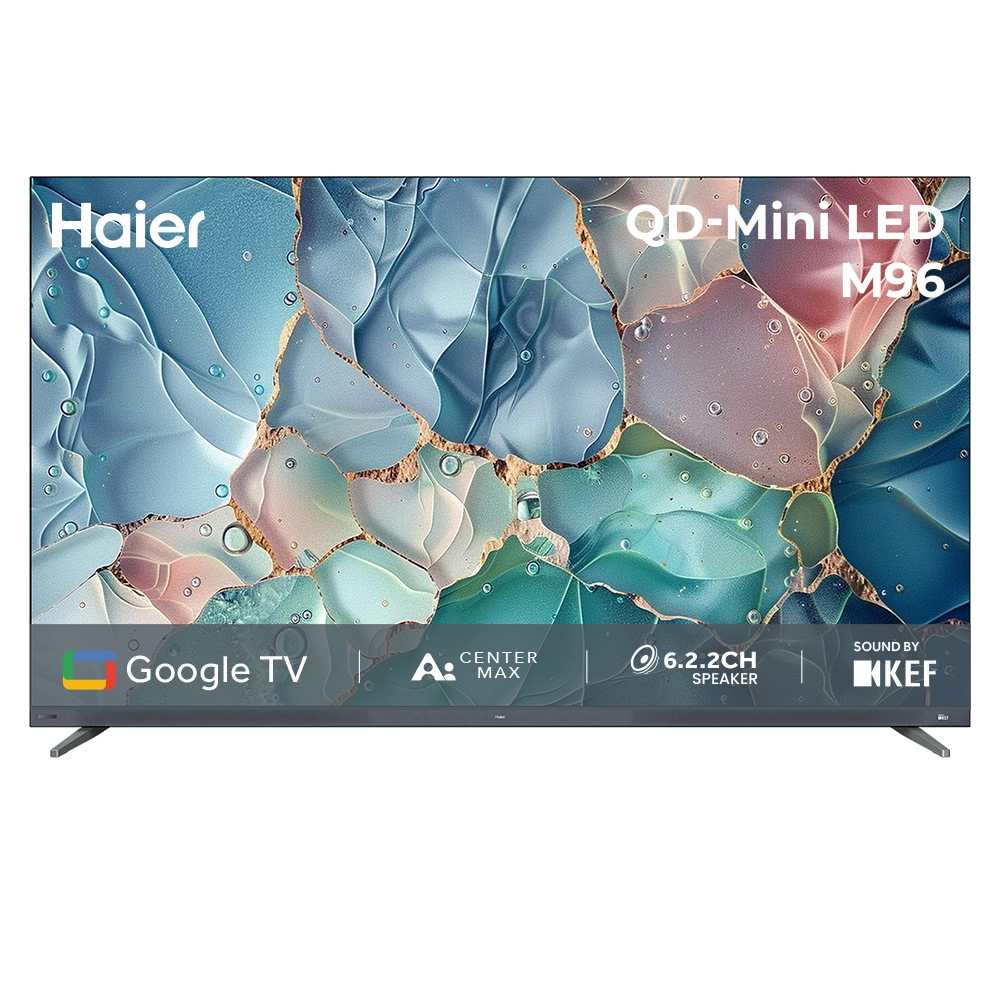
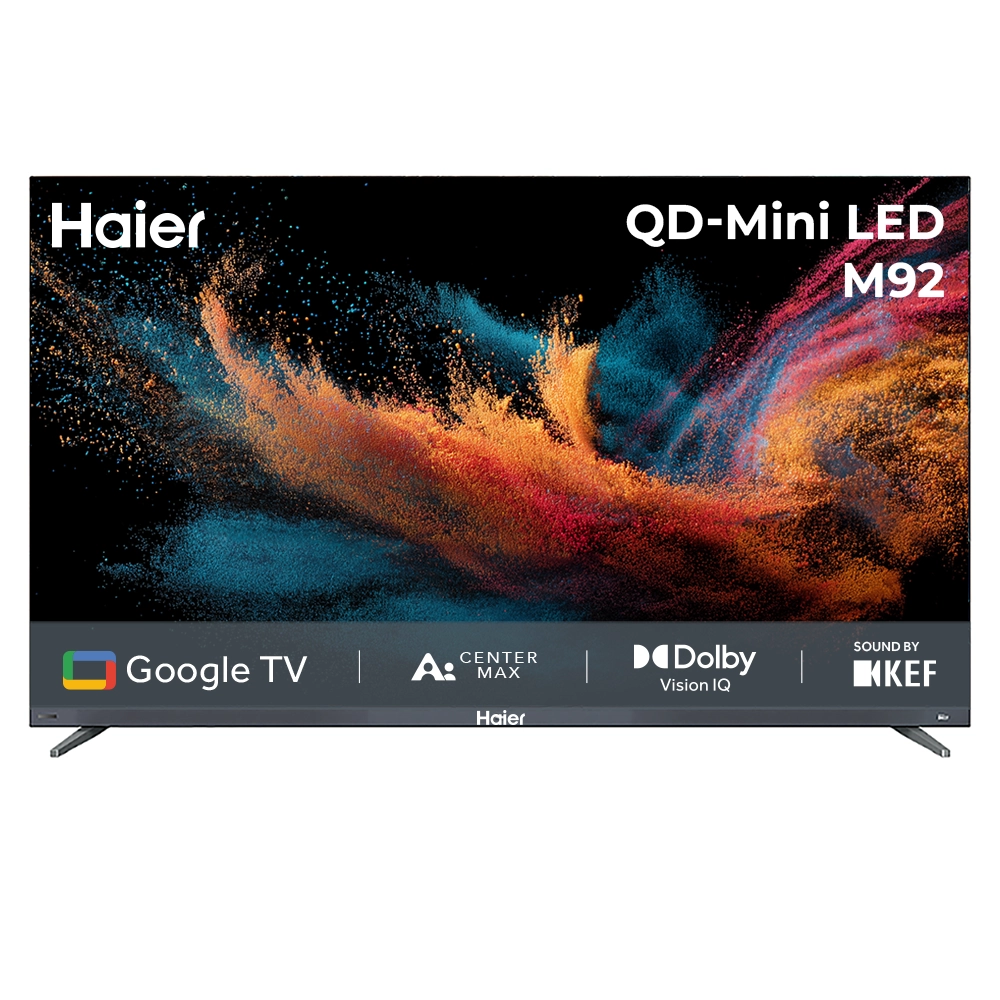
New M96 Series 254cm(100) QD-Mini LED AI Smart Google TV
₹4,19,990 ₹44,833 Cash back
MRP (Incl. of all taxes) ₹7,99,990Save ₹54,833.

.webp)
.webp)
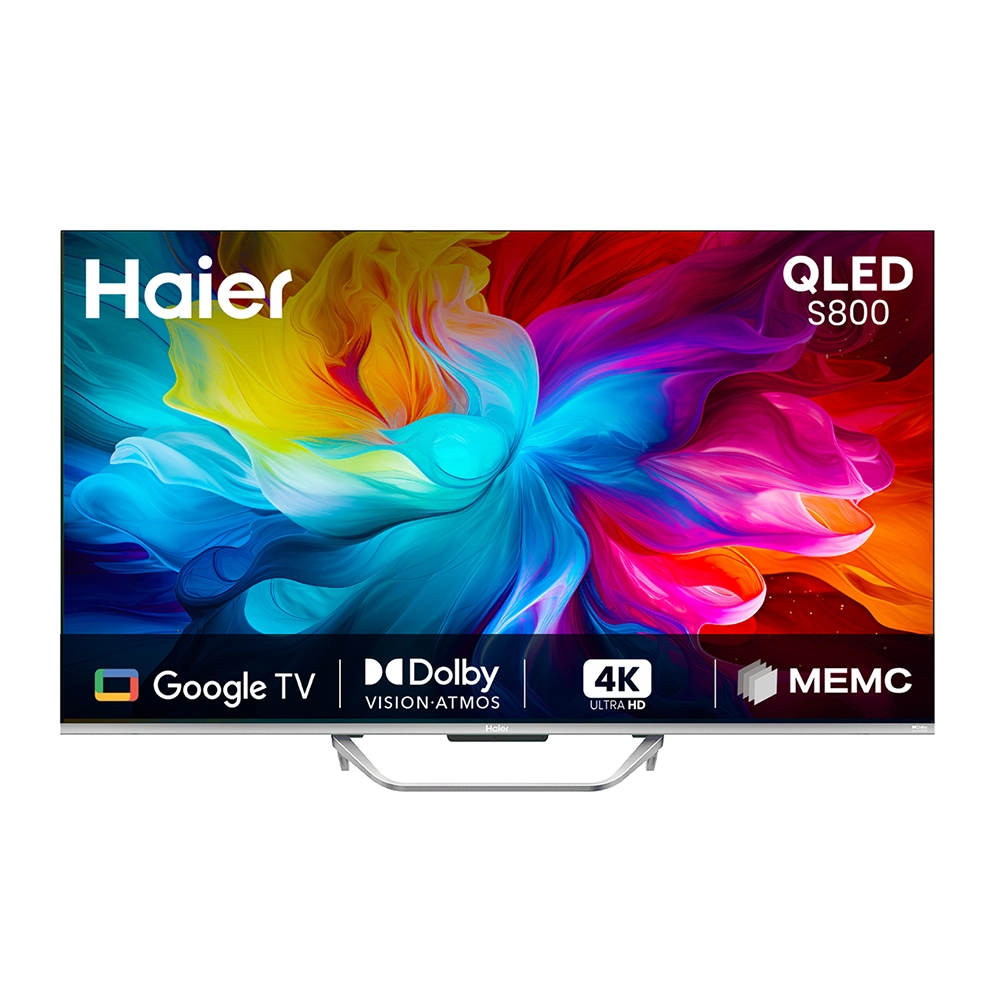
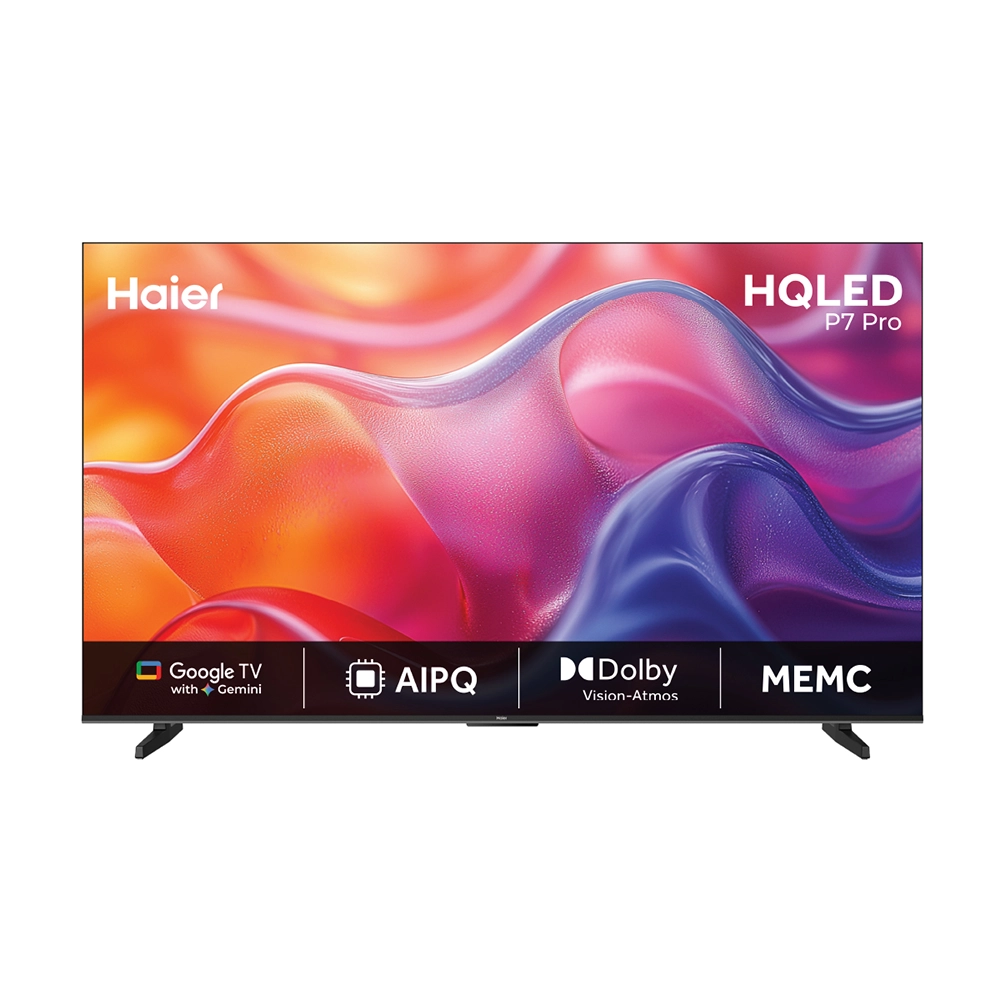
A 75-inch TV has a diagonal of about 190 cm, a width of around 166 cm, and a height of about 93 cm. It fits well in a 10 x 12 ft or larger room, with seating placed 8 to 10 feet away.
A 75-inch works well in most standard Indian living rooms of 10 x 12 ft or larger. An 85-inch needs at least a 12 x 14 ft room, with seating placed 9 feet or more away for comfortable viewing.
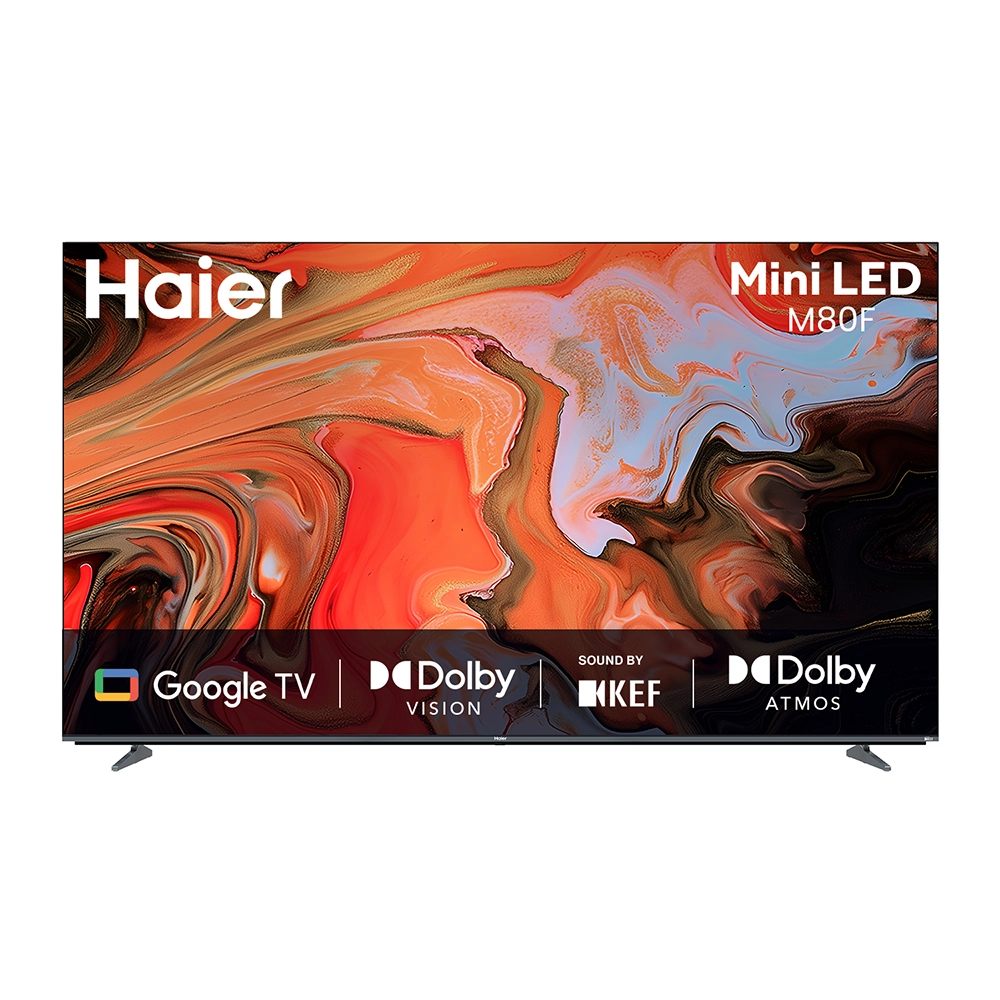
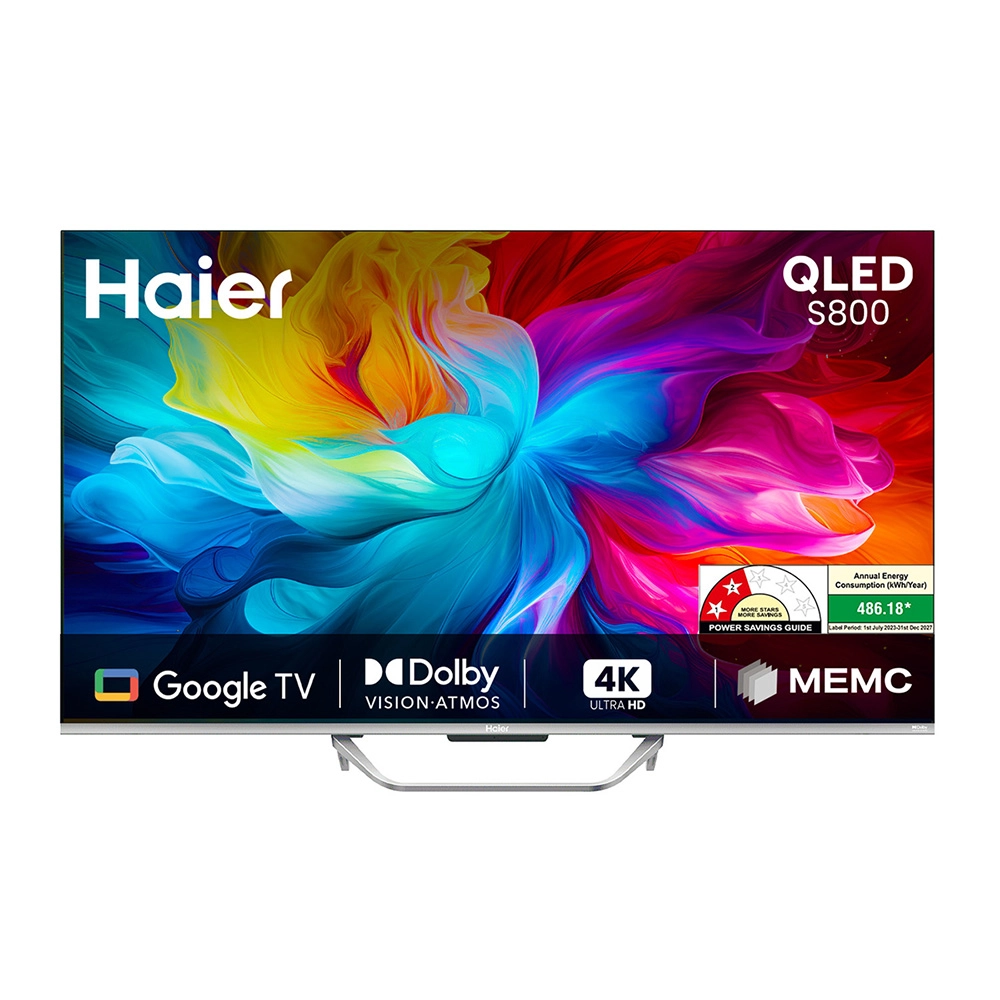
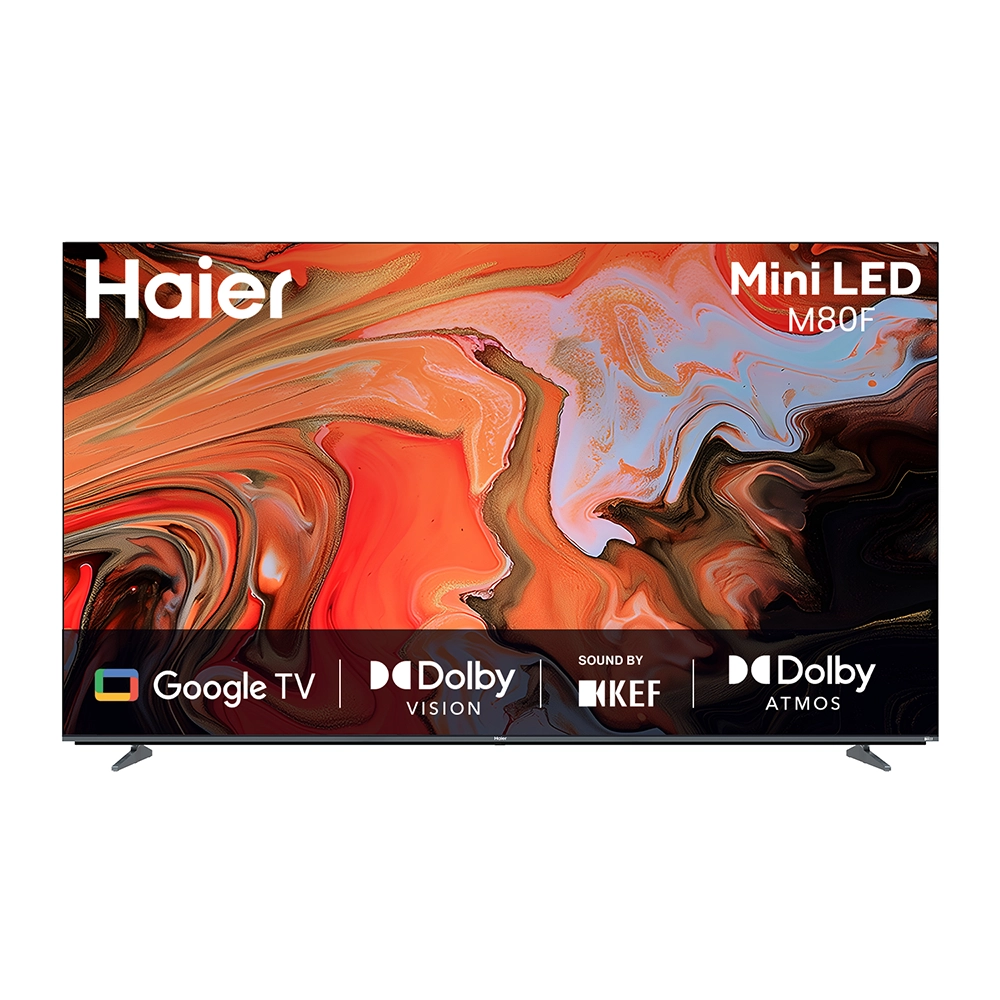
The right pick depends on room size and budget. Haier's 75-inch Mini LED and 100-inch QD-Mini LED are strong premium picks, while the 100-inch S90 QLED offers a more accessible entry into the giant-screen category.
4K is a resolution, while QLED and OLED are panel types. Most big-screen TVs today are 4K by default. Between QLED and OLED, QLED handles bright rooms better, while OLED delivers deeper contrast in dim rooms.
LED is the most affordable option and works well in bright rooms. QLED adds richer colour and higher brightness. OLED delivers the deepest blacks and best contrast, but costs more, especially at 75-inch and larger sizes.
For 4K panels, plan for 2.4 to 3.2 metres from a 75-inch panel, 2.7 to 3.6 metres from an 85-inch panel, and 3.1 to 4.2 metres from a 98-inch panel. Sitting closer than this can make individual pixels visible.
For viewers who watch a lot of movies, sport, or gaming content, yes. A larger screen creates a more immersive experience, especially when paired with 4K resolution, Dolby Vision, and Dolby Atmos audio.
Haier's 75-inch range starts at ₹79,990 for the K85 4K UHD and rises to ₹1,06,990 for the M70 Mini LED. The 100-inch options are priced at ₹3,22,990 for the S90 QLED and ₹4,19,990 for the M96 QD-Mini LED.
Home viewing in India has steadily shifted toward larger screens. Where 55-inch was the aspirational upgrade a few years ago, 65-inch and 75-inch panels now sit comfortably in mid-range and premium homes.
The big screen TV category has expanded well beyond that. Panels at 75, 85, 98, and even 100 inches are on shop floors, and prices for a large-screen TV have dropped enough for buyers to consider them realistic upgrades rather than luxury purchases.
Haier's big-screen lineup is designed for exactly this shift, covering 75-inch TV, 85-inch TV, 98-inch TV, and 100-inch TV options across 4K UHD LED, QLED, Mini LED, and QD-Mini LED technologies, each engineered to deliver a genuinely immersive experience in large Indian living rooms and dedicated home-theatre setups.
The shift to larger screens has been driven by two things: panel manufacturing has matured enough to keep per-inch costs falling, and Indian broadband speeds now support 4K streaming without visible compromise. A 75-inch TV that once felt oversized in a standard living room now fits well in most 3 BHK homes, and an 85-inch TV has moved from enthusiast territory into a realistic upgrade for buyers with a larger room.
Screen size describes the diagonal, not the width. Here is how the popular giant sizes compare, along with the recommended viewing distance for 4K panels:
Screen Size | Diagonal | Width | Height | Recommended Viewing Distance |
75-inch | 190 cm | 166 cm | 93 cm | 2.4 – 3.2 m |
85-inch | 216 cm | 188 cm | 106 cm | 2.7 – 3.6 m |
98-inch | 249 cm | 217 cm | 122 cm | 3.1 – 4.2 m |
100-inch | 254 cm | 221 cm | 124 cm | 3.2 – 4.3 m |
Room-size guidance follows naturally: a 75-inch fits well in a 10 x 12 ft room, an 85-inch needs at least 12 x 14 ft, and a 98-inch or 100-inch TV works best in living rooms of 14 x 16 ft or larger.
Price bands in India in 2026 vary by panel type and screen size:
75-inch 4K UHD: ₹75,000 to ₹1,20,000
75-inch QLED / Mini LED: ₹1,00,000 to ₹1,80,000
85-inch 4K LED / QLED: ₹1,50,000 to ₹3,00,000
98-inch 4K LED / QLED: ₹2,50,000 to ₹4,50,000
100-inch QLED and Mini LED: ₹3,00,000 to ₹7,00,000
Festive offers, exchange programmes, and no-cost EMI plans can bring the effective big smart TV price down in each band. Current pricing across sizes is on the Haier Big Screens.
Once you've picked the screen size, the next real decision is the panel type. On a large 75-inch or 100-inch screen, the panel matters even more than it does on a 43-inch or 55-inch screen, since any flaws in contrast, brightness, or colour show up bigger. Here's how the main options compare on a big screen.
They answer different questions. 4K is a resolution of 3840 by 2160 pixels; QLED and OLED are panel types, so a single TV can be 4K and QLED together, or 4K and OLED together. On any big-screen TV in 2026, 4K is essentially the default, so the real choice is between QLED and OLED at the panel level.
QLED usually gets brighter, which helps in daylight-lit living rooms. It's also more affordable in larger sizes and available up to 100 inches.
OLED delivers deeper blacks and pixel-level contrast, which shines in dim, curtain-controlled rooms. It's typically limited to 65- or 77-inch at consumer prices; 85-inch and 100-inch OLEDs remain in the premium segment.
For most Indian living rooms with mixed daylight, a 4K QLED works better than a 4K OLED at the same size. For a dedicated home theatre, OLED still leads.
At the big-screen level, this is really a three-way trade-off between price, brightness, and contrast:
LED (4K UHD LED): the most affordable route into 75-inch and 85-inch sizes. Solid brightness, decent contrast, and reliable for daily use. Best suited to bright living rooms where budget matters.
QLED: a step up from LED with a quantum-dot layer that adds richer colour and higher peak brightness. Still uses an LED backlight, so contrast isn't as deep as OLED, but the trade-off often works well for sunlit rooms and larger sizes.
OLED: self-lit pixels, no backlight. Delivers the best contrast, deepest blacks, and widest viewing angles of the three. Costs more, especially at 75-inch and above.
Mini-LED and QD-Mini-LED sit between QLED and OLED. They use thousands of tiny backlight zones instead of a few dozen large ones, which delivers stronger contrast than plain QLED while retaining high brightness. For a big-screen buyer who wants close-to-OLED picture depth in a bright room, Mini LED is often the balanced pick.
The best big-screen TV India shoppers pick isn't the largest model their budget allows. It's the one that matches their room, seating distance, and daily viewing habits. Here is how four popular Haier big-screen models compare, spanning 75-inch and 100-inch:
Model | Panel | Resolution | Refresh | Sound |
Haier K85 (75") | 4K UHD LED | 4K | 60Hz | Dolby Audio |
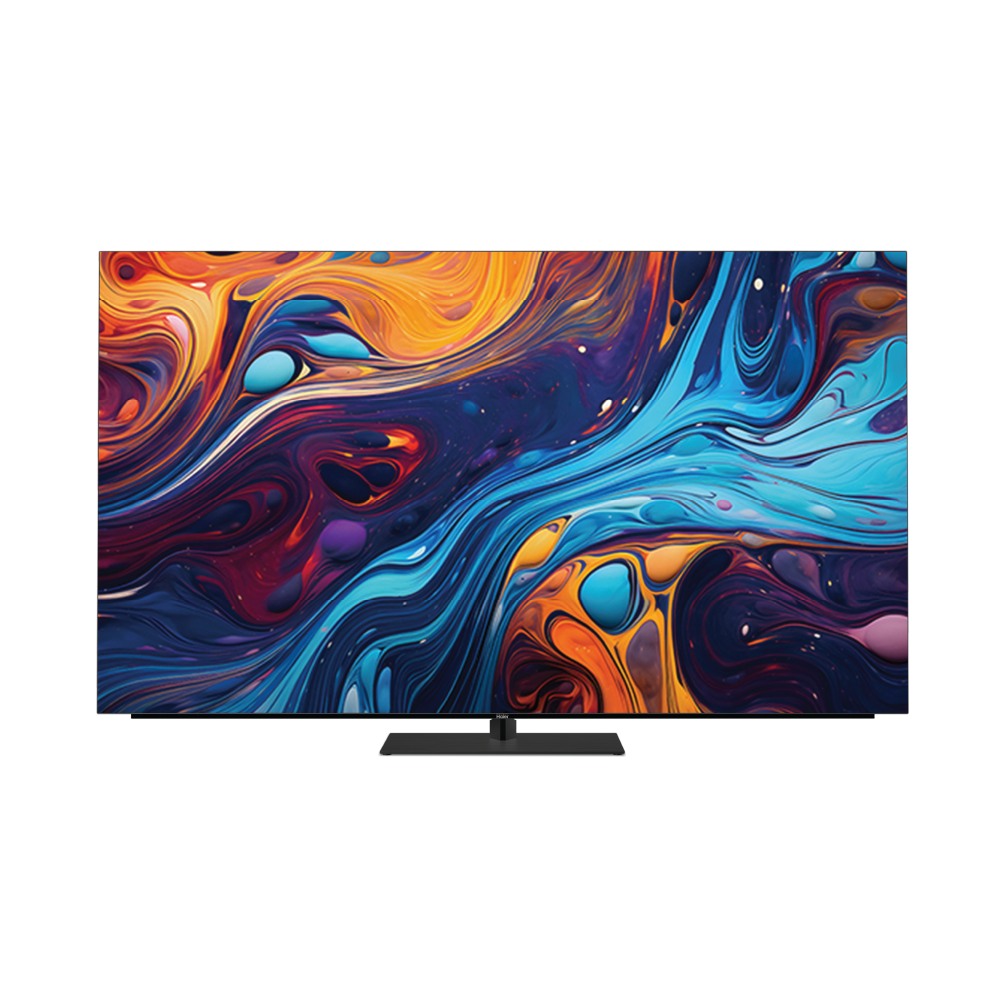
Haier M70 (75") | Mini LED | 4K | 60Hz + MEMC | 30W Dolby Atmos |
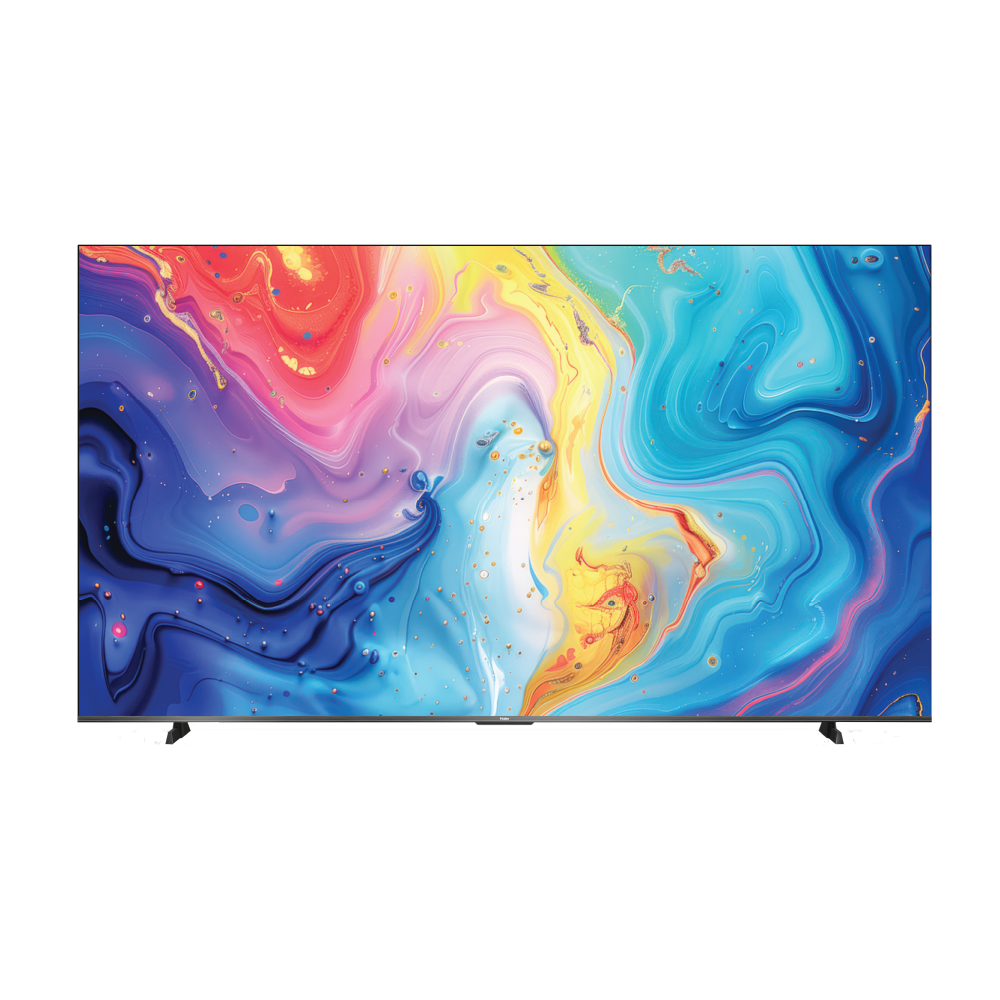
Haier S90 (100") | QLED | 4K | 144Hz | 55W by KEF |
Haier M96 (100") | QD-Mini LED | 4K | 144Hz | 90W by KEF |
For a mid-sized living room, the 75-inch models offer a balanced upgrade. For a dedicated home theatre TV setup or a large living room, the biggest TVs Haier currently sells, the 100-inch S90 QLED and M96 QD-Mini LED, deliver a cinema-scale experience with a 144Hz refresh rate, Dolby Vision IQ, and KEF-tuned audio.